
No Minimum Deposit Casino UK: What £1 Really Means
 Available in GB
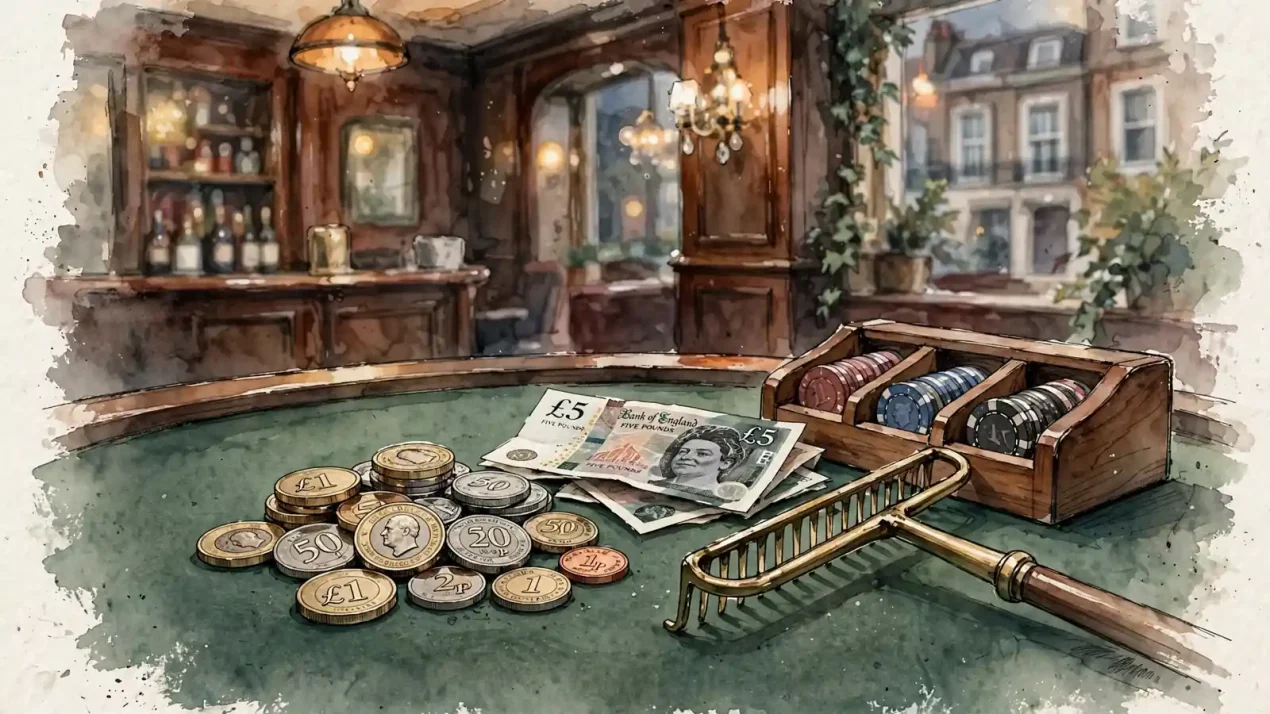
A low opening deposit does not guarantee low withdrawal thresholds or qualifying payments for bonuses and free spins.
What “No Minimum Deposit” Means in Practice
The phrase “no minimum deposit casino” sounds more absolute than it is. In Britain, it generally points to a casino whose cashier accepts a very small opening payment, rather than to an account that can be used without money. A deposit is still required before real-money play begins. The distinction matters because the cashier, the promotion page and the withdrawal rules may each describe a different threshold.
Some UK casinos accept a deposit of £1. Strictly speaking, “no minimum” is a loose label. The account is not free of conditions; it has a small cashier minimum.
A specialist review recorded six UK Gambling Commission-licensed casinos accepting genuine £1 minimum deposits. In that review, NetBet was the only UKGC-listed casino identified with a £1 cashier minimum. Operators alter cashier settings, payment routes and promotional terms. The neat little number is less stable than the phrase built around it.
Casino Guides: UK Deposit and Site Options
Three thresholds hiding behind one phrase
A low-deposit casino can impose separate rules at three stages:
- Opening the balance — the cashier decides the smallest payment it will accept.
- Activating an offer — the promotion decides whether that payment is large enough to qualify.
- Releasing winnings — the withdrawal system decides whether the balance may be cashed out.
These stages should not be treated as interchangeable. A casino may accept £1 into the account while reserving its welcome offer for a larger qualifying deposit. The payment has then done exactly what the cashier promised: it has funded the account. It has not necessarily unlocked a bonus.
That difference is easy to miss because promotional language tends to sit close to the deposit button. A headline may mention free spins or bonus funds, while the terms place a separate minimum qualifying deposit beneath it. The cashier minimum belongs to the account. The promotional minimum belongs to the offer. One does not automatically replace the other.
The same separation applies when money leaves the account. A low opening payment does not guarantee that a withdrawal can be requested for the same amount. The operator may set a different threshold for cashing out, and the payment method may have its own conditions. Thus, a casino with a very small entry point can still require a larger balance before funds are released.
What a £1 deposit actually proves
A successful £1 payment proves one narrow thing: the selected cashier route accepted that amount. It does not, by itself, prove that every payment method at the same casino accepts £1. It does not establish eligibility for a welcome promotion. Nor does it establish that a later withdrawal will be processed at that level.
Non-GAMSTOP Casinos UK: What “Not on Gamban” Means
This is why descriptions such as “online casinos with no minimum deposit UK” need careful reading. The useful question is not whether a site carries the label, but which part of the account has the low threshold. The answer may concern the first payment only. Elsewhere, the operator can maintain separate rules for promotional participation and withdrawals.
The wording also matters when comparing “no minimum deposit online casinos” with ordinary low-deposit casinos. The practical category is a casino that accepts a very small deposit, with the exact condition attached to that payment determining what happens next.
Cashier wording is not a promise about the whole account
A cashier minimum is a technical entrance rule. It says how much money must be sent through a particular deposit route for the transaction to be accepted. It says nothing on its own about the value of an offer, the games covered by promotional terms or the amount that may later be withdrawn.
That is also why a phrase such as “casinos with no minimum deposit” can create a false sense of simplicity. The low figure is attractive because it reduces the cost of testing an account, but it does not erase the structure around the account. The deposit, promotion and withdrawal systems remain separate pieces of the same arrangement.
For British players, the relevant context is a UKGC-licensed online casino. A small cashier minimum therefore sits inside an account governed by the operator’s licence conditions, rather than floating free of them. The low entry point is real, but narrow in meaning.
Small door, separate rooms.
Minimum Deposit Tier
As low as £1
Typical Withdrawal Minimum
£1 to £20
Regulated Market
UK Gambling Commission (UKGC)
Recommended online casinos
- SpinFormulaBonus: 550% Up To £15,000 + 550 FS · Payout speed: 1-3 business days
- NightWinBonus: £900 + 400 free spins · Payout speed: 1-3 business days
- EvoSpinBonus: 125% up to €2500 + 125 Free Spins · Payout speed: 1-3 business days
- WinBeastBonus: €5000 + 500 FS + €650 Freebet · Payout speed: 1-3 business days
- DieselwinBonus: Welcome Pack 250% up to £4000 + 200 FS · Payout speed: 1-3 business days
- ZombillionBonus: Welcome Pack 250% up to £4000 + 200 FS · Payout speed: 1-3 business days
- ChanzeBonus: Slots Welcome Bonus #1 200% up to €500 · Payout speed: 1-3 business days
- BritsinoBonus: Welcome Package – Get your £2,200 + 2,000 FS · Payout speed: 1-3 business days
- NightLuckBonus: Welcome Pack + 805% Up To 6400€ + 280 FS · Payout speed: 1-3 business days
- AmunbetBonus: Join now and get 450% up to 2,700 GBP + 450 FS · Payout speed: 1-3 business days
A £1 Balance, Real-Money Play and the Cost of a Small Start
A £1 deposit becomes meaningful only when it is considered as playable money rather than as a badge on a cashier page. Once credited, it can form a real-money balance from which ordinary casino stakes are deducted. The appeal is obvious: a small amount can test whether the games, interface and account arrangements suit the player without committing a larger sum at the outset.
That modest balance has a short life, however. Many online slots accept stakes between £0.10 and £0.20 per spin. At the lower stake, a pound represents ten spins if every spin loses; at the higher stake, it represents five. Those are arithmetic possibilities, not promises of a particular playing time. A winning spin changes the balance, while a losing sequence can reduce it quickly. The casino does not turn a small deposit into a miniature entertainment budget by courtesy.
What a pound can actually do
The distinction between a minimum deposit and a minimum stake matters here. The former concerns the amount needed to place funds into the account. The latter determines how quickly those funds are committed during play. A casino may accept a £1 opening balance while offering games whose lowest available stake is higher than the amount that feels comfortable for that balance. The cashier and the game lobby therefore answer different questions.
Where a slot offers a £0.10 stake, a £1 balance permits a series of small real-money spins. At £0.20, the same balance is divided into fewer attempts. This makes low-stake games more relevant to a no minimum deposit casino in the UK than the headline deposit figure alone. The practical value lies in the relationship between the balance and the available stake, not in the word “minimum”.
£2 Minimum Deposit Casinos in the UK: What to Expect
The balance also has no protective quality. A £1 deposit is not a trial token, and real-money play does not become risk-free because the starting figure is small. Each spin uses money from the account, and any resulting win belongs to the game’s ordinary settlement rules. A tiny starting amount limits the initial exposure; it does not alter the character of the wager.
The price of moving a small amount
Payment costs can be disproportionate when the deposit itself is only £1. A flat charge that seems minor beside a larger transaction can consume a substantial share of a small balance before a game is opened. A specialist review has reported transaction fees of £1 to £3 for some payment providers. That is a provider-specific warning, not a universal charge attached to every low-value deposit.
The effect is simple. If a payment route adds a fee, the amount leaving the player’s payment account may exceed the amount credited to the casino balance. A £1 deposit can therefore produce a cost that is larger than the playable sum. In that situation, the apparent economy of a small start exists only on the casino side of the transaction. The payment route has its own arithmetic.
This is why the amount displayed in the cashier should not be treated as the complete cost of beginning real-money play. The casino may show the deposited sum clearly while the payment provider applies its own terms elsewhere. The two figures can coincide, but they need not. Small money makes the difference unusually visible.
A £1 deposit allows you to test the casino interface and games, but it does not guarantee eligibility for welcome bonuses or a specific number of spins.
A balance measured in spins
For low-stake play, a £1 balance is best understood as a limited number of decisions rather than as a general casino bankroll. At £0.10 per spin, ten unsuccessful spins exhaust the balance. At £0.20, five do so. Any win interrupts that sequence, but no fixed number of spins follows from the deposit because outcomes are variable.
That framing also explains why “real money” is more than a promotional phrase. The money can be wagered at the game’s cash stakes, and the account balance rises or falls with the results. A small deposit does not create a separate practice mode. It creates a small financial position inside the ordinary game.
The same point applies across searches for no minimum deposit online casinos and no minimum deposit real-money casinos: the useful question is not merely whether the cashier accepts a small amount, but whether the available games permit stakes compatible with it. Slots offering £0.10 to £0.20 spins provide a clear illustration. Other games may present a different stake structure, so a £1 balance cannot be assumed to work identically across the whole catalogue.
A small beginning can be rational when its purpose is limited: to place a few low-stake spins, observe the account in real-money conditions and keep the initial exposure narrow. It becomes less economical when a payment fee absorbs much of the transaction or when the available stake is poorly matched to the balance. The pound is not magic money. It is simply a small balance, carrying all the ordinary costs and uncertainties of play.
£3 Minimum Deposit Casinos in the UK: What to Know
Bitcoin Deposits and the Limits of What Can Be Verified
Bitcoin occupies an awkward place in discussions of British online casinos. It promises a payment system detached from banks, while the UK gambling framework does the opposite: it ties lawful deposits to identifiable, regulated payment routes. The result is a subject where general claims travel faster than dependable details.
For gambling deposits in Britain, the permitted routes are debit cards, e-wallets funded by debit cards and bank accounts. The Gambling Commission’s ban on credit-card gambling, introduced in 2020, also covers attempts to bring credit into the transaction through another payment service. A wallet does not become acceptable merely because it sits between the casino and the card issuer. If credit-card funds can be used for gambling, the arrangement is not compliant.
That distinction matters when Bitcoin appears in the same sentence as a British casino. A cryptocurrency wallet is not the same thing as a debit card, a bank account or an e-wallet funded by debit. Bitcoin transactions also do not turn into ordinary British gambling payments simply because an operator labels the cashier “crypto-friendly”. The label is commercial language, not a substitute for the payment rules governing operators serving the British market.
What a Bitcoin minimum deposit would actually mean
A minimum deposit is a cashier condition: the smallest amount an operator agrees to accept through a particular payment route. With Bitcoin, the displayed amount may be converted from pounds into cryptocurrency at the time of payment. That creates a practical complication, since the Bitcoin value changes while the cashier condition remains expressed in a national currency.
Bitcoin vs. UK Regulation
While Bitcoin offers decentralisation, British players using UKGC-licensed casinos must still adhere to regulated payment frameworks. Cryptocurrency transactions do not exempt an operator from local licensing obligations or the ban on credit-card funding.
A supposed “no minimum” offer can therefore mean several different things. It may describe a casino that has no stated lower threshold for opening an account. It may refer to a promotion that awards free play without a cash deposit. Or it may simply be loose wording for a small minimum deposit. None of these descriptions proves that a British customer can fund a regulated casino account with Bitcoin without a minimum.
Nor does a low figure in a cryptocurrency wallet establish that the casino will accept the transaction. The operator may impose its own cashier rules, require identity checks, restrict the payment route or return a payment that does not match the account conditions. A blockchain transfer can be technically possible while the gambling transaction remains unacceptable to the operator.
The phrase “no minimum deposit Bitcoin casino” thus hides two separate questions. First, does the operator accept Bitcoin at all? Second, does it offer a British account with no minimum deposit through that route? The existence of one answer does not supply the other.
British regulation comes before the coin
Operators selling remote gambling to customers in Great Britain must hold a licence from the UK Gambling Commission. Offshore casinos sit outside that system and do not hold a UKGC licence. Bitcoin does not alter the operator’s licensing position, and the language of decentralisation does not create an exception for a casino that serves British customers.
This is where the romantic story of cryptocurrency meets the rather unromantic machinery of gambling regulation. A coin may cross borders easily; a lawful operator still has obligations attached to the customer, the account and the payment. British gambling is not made offshore merely because the cashier displays a wallet address.
£4 Minimum Deposit Casinos in the UK: How They Work
A British player is not criminally liable for using an offshore casino without a local licence, but that does not give the site the protections or oversight attached to a UKGC-licensed operator. Advertising offshore or unlicensed online casinos to the British market is restricted. The distinction is not decorative. It separates a regulated gambling service from a website that happens to accept visitors from Britain.
Why named Bitcoin claims require restraint
Specific casino names are often presented as proof of a wider market: one operator is said to accept Bitcoin, another to offer a tiny cryptocurrency deposit, and a third to combine Bitcoin with free spins. Such statements can become outdated when payment providers change, cashier systems are redesigned or an operator’s British licence position changes.
A named casino should not be described as offering a no-minimum Bitcoin deposit in the United Kingdom without current, operator-specific confirmation. The same caution applies to claims that a particular Bitcoin casino is UK-licensed, supports British accounts or permits withdrawals through the same cryptocurrency route. A general description of British payment rules cannot establish any of those particulars.
This also explains why the words “no minimum deposit” need careful handling. A casino may accept a small pound-denominated deposit through one approved method while offering no Bitcoin option at all. Another may display Bitcoin on an international site while excluding British customers. A third may accept cryptocurrency elsewhere but not through the account available to customers in Great Britain. One cashier, three realities.
The safer interpretation is narrow: Bitcoin searches describe an interest in cryptocurrency-funded gambling, but they do not prove that a specific British casino accepts Bitcoin or that a no-minimum Bitcoin deposit is available. What can be said with confidence is that British gambling deposits must fit the country’s permitted payment framework, and credit-card funding cannot be smuggled into that framework through a wallet or intermediary.
Financial Risk
Small deposits can be quickly exhausted by transaction fees or high-stake games, and a low entry point does not make real-money play risk-free.
That leaves Bitcoin claims where they belong: as operator-specific matters requiring current confirmation, not as a general feature of no-minimum-deposit casinos in the United Kingdom.
Casino Sites, Small Stakes and the Withdrawal Threshold
A low cashier minimum answers only the first question: how much money can enter the account. It does not answer how much must remain there before a withdrawal request can be made. This distinction is easy to miss on online casino sites with a very small opening deposit, where the first transaction looks like the whole financial arrangement. It is not.
The cashier may accept a £1 deposit while the withdrawal page sets a higher floor. A session can therefore end with a positive balance that is real, visible and still unavailable for immediate cash-out. The money has crossed the entrance threshold; it has not necessarily crossed the exit threshold. Casino architecture has always had this slightly theatrical quality: the door opens more easily than it closes.
A small-stakes game does not remove that condition. Many slots accept bets between £0.10 and £0.20 per spin, so a modest balance may be enough to place several real-money spins. The cost of a spin and the minimum amount needed to withdraw belong to different parts of the system. One describes the game interface; the other describes the cashier.
Non-GamStop Curacao Casino Sites: What to Know
That is why descriptions of slots with no minimum deposit can be misleading when they blur play and payment. A slot does not, by itself, have a deposit policy. The casino account supplies the balance, the game deducts the stake, and the cashier later applies its own withdrawal rules. The phrase “no minimum deposit slots” is therefore best understood as shorthand for access to slots after a small or qualifying account funding, not as a promise that the games can be played without money entering the account.
The gap becomes more visible when the balance is modest. Suppose a small deposit produces a win: the resulting amount may exceed the stake by enough to continue playing, yet remain below the casino’s withdrawal minimum. A player can either keep using the balance, leave it untouched, or add more funds in an attempt to reach the cashier threshold. None of those choices changes the operator’s rule.
The available figures vary sharply between operators. A specialist review places minimum withdrawals at many UK casinos between £10 and £20. A separate specialist review covering debit cards and some e-wallets gives a lower range of £1 to £5 for minimum withdrawals. These figures should be read as descriptions of particular offers and payment arrangements, not as a universal tariff for every online casino site in the UK. The payment method can matter as much as the casino brand.
This creates two distinct meanings behind a low-entry offer:
- Low-cost access to play: the account accepts a small deposit and the chosen slot permits a small stake.
- Low-cost access to winnings: the same account and payment route allow a withdrawal at the balance then available.
The first may exist without the second. That is the practical endpoint of a low-deposit session. Before treating a small win as cash that can leave the account, the withdrawal page, payment-method conditions and any applicable balance restrictions need to be read together. A small beginning does not guarantee a small exit threshold.
The Deposit Tiers: £1, £5 and £10 Are Not Interchangeable
The phrase “no minimum deposit casino UK” is slightly misleading. A casino does not generally remove the cashier minimum altogether; it sets a lowest permitted amount. In the British market, that lowest rung can be £1, but it is a narrow exception rather than the shape of the market as a whole.
A specialist review identified six UK Gambling Commission-licensed casinos accepting a genuine £1 minimum deposit. That makes the £1 tier real, not merely promotional language. It also makes it rare. A casino may advertise a low entry point while presenting a different figure for another payment route, account type or offer. The cashier, rather than the headline, determines what can actually be paid in.
£1 Tier
A rare exception found in a specialist review of six UKGC-licensed casinos.
£5 Tier
A relatively low starting threshold offered by some operators.
£10 Tier
A common entry point and typical minimum for direct banking.
The next rung is £5. Some operators accept that amount as the smallest ordinary deposit, placing them between the unusual £1 accounts and the more common £10 entry point. A £5 cashier minimum therefore signals a relatively low starting threshold, but it does not turn the account into a £1 casino. The distinction matters when a balance is being opened with a carefully limited sum.
A specialist review of UK casino deposit levels placed the typical minimum for casinos accepting direct banking at £10, while noting operators setting it at £5 or £20. That is a price ladder, not a single national tariff. Direct banking sits within the same commercial landscape as cards and e-wallets, but the amount shown in the cashier can still vary from one operator to another.
The £20 tier is consequently not an error or an obstacle unique to unusual casinos. It is simply a higher entry point than £5 or £10. Calling all three accounts “low deposit” conceals the practical difference: a £1 balance leaves very little room for error, while a £20 starting payment commits considerably more money before play begins.
The Main Distinction
Cashier minimums, promotional requirements, and withdrawal thresholds are three separate rules.
The most important separation is between the cashier minimum and the qualifying deposit for a welcome offer. A platform can technically accept £5 and still require £10 before a particular promotion activates. The smaller payment reaches the account; it does not necessarily reach the promotion.
This is where the expression “no deposit minimum casino” can create the wrong expectation. A low minimum deposit describes access to the cashier, not automatic access to every incentive attached to the account. A £1 payment may be accepted as real money while being excluded from a welcome package altogether. A £5 payment may be valid for play but remain below an offer’s qualifying threshold.
The figures therefore describe different gates:
- £1 — a rare entry tier confirmed in a specialist review for six UKGC-licensed casinos.
- £5 — a lower-than-£10 cashier minimum offered by some operators.
- £10 — the direct-banking minimum identified as typical by that specialist review, and also a qualifying threshold used by some bonuses.
A “top” or “new” minimum deposit casino is not established merely by displaying the smallest number. The meaningful comparison is whether the amount applies to the intended account, whether it is accepted in the cashier, and whether the desired promotion recognises it. The lowest door may lead to a room with fewer privileges.
When a Small Deposit Meets a Larger Cash-Out Minimum
A £1 deposit and a £1 withdrawal are separate settings. The first governs the smallest amount accepted by the cashier; the second governs the balance required before a payout request can be made. A casino may therefore allow a very small payment while placing a higher floor beneath withdrawals. The welcome mat is not the exit.
A specialist review gives the lower end of stated withdrawal minimums as a range from £1 to £5, depending on the operator and the payment route. That range matters because a balance created from a small deposit may remain below the cashier’s payout threshold even after a modest win. Funds can be visible in the account without being immediately withdrawable.
The distinction is particularly important for a £1 starting point. Debit cards and some e-wallets can support transactions of that size, but the same method does not guarantee a £1 cash-out. A casino may accept the deposit and still require the balance to reach a higher withdrawal minimum. In that situation, “no minimum withdrawal” is not a safe description unless the operator’s current terms explicitly say so.
The practical question is not simply whether a site accepts a small deposit. It is whether the account can release a balance at the level that matters. The cashier rules should be read in two directions:
- the smallest permitted deposit;
- the minimum balance required for a withdrawal;
- any difference between payment methods;
- whether the stated threshold applies to cash winnings as well as returned deposit funds.
A specialist review also reports that many UK casinos set their withdrawal floor above £1, while some restrict particular payment methods at the £1 level. These are operator-specific conditions, not a universal feature of British online casinos. Even where a low withdrawal minimum appears, the available route may affect how the request is handled.
This makes the phrase “instant withdrawal casino” rather less magical than it sounds. Speed cannot remove a threshold. A payout may be processed promptly once the balance and verification requirements are satisfied, but a fast system does not turn an ineligible amount into a withdrawable one. The small deposit is an entry condition; the cash-out minimum is the accounting boundary at the other end. Two different doors.
Cards, E-Wallets and Mobile Billing at the £1 Level
A small cashier minimum is not created by the payment brand alone. It is set by the operator, the payment processor and sometimes the route by which the money arrives. At one UK casino, cards and an e-wallet may share the same minimum while direct banking carries a higher one. At another, the difference may disappear entirely. The cashier is therefore less a universal price list than a local arrangement.
Visa and Mastercard debit cards are accepted almost everywhere in the British market and can support low minimum deposits. They are the plainest route to a small starting payment: the money comes from a bank account, and the card network is familiar to the operator. A low card minimum does not, however, mean that every other method available on the same site will accept the identical amount.
Do
- Check the specific withdrawal minimum for your chosen payment method.
- Confirm if your deposit meets the qualifying criteria for a welcome bonus.
Don’t
- Assume a low deposit amount guarantees access to all promotional offers.
- Expect a £1 deposit to always allow for a £1 withdrawal.
E-wallets can also be suitable for a small deposit, provided the wallet itself is funded from a debit card or another permitted source. This is the practical distinction behind searches for a PayPal casino with no minimum deposit in the UK. PayPal is a payment method, not a promise that every casino using it will set a £1 cashier minimum. The operator’s cashier decides the threshold, and that threshold may differ from the one shown for cards.
Mobile billing has a different character. Pay-by-phone services can place the charge through a mobile account, and the lowest deposit tier is associated with particular mobile-billing methods rather than with every casino or every phone contract. Availability can therefore change with the operator, the account and the payment route. “Pay by mobile” is not a market-wide setting.
There is one route that has disappeared from the lawful British cashier: the credit card. Since the UK Gambling Commission’s 2020 ban on credit-card gambling, UK-licensed casinos cannot take gambling deposits from credit cards. The same principle applies when credit-card money is routed through a wallet or a money service designed to fund play. Permitted deposits must come from a debit card, a debit-funded e-wallet or a bank account.
The small deposit, then, is a question of method and operator together. The card may be accepted; the wallet may be listed; the phone charge may exist. None of those facts, alone, fixes the cashier minimum.
Slot Spins on a Small Balance
A modest balance changes the character of slot play. It is not a promise of a long session, nor a hidden route around the casino’s ordinary conditions. It simply makes the arithmetic visible: each spin removes a defined part of the money available, and a low stake allows that balance to last longer than a larger one.
Many slots accept bets between £0.10 and £0.20 per spin. At the lower end, a small starting balance can support more individual spins than it would at a higher stake. That does not alter the outcome of any spin, and it does not make the game safer or more predictable. It changes only the pace at which the balance is used.
The distinction matters when looking at casino slots with a very low entry point. A casino may permit a small amount to be placed in the account, while the practical playing experience still depends on the game’s minimum stake. If the chosen slot starts above the available balance, it cannot be played at all. If its minimum fits, the balance becomes a limited sequence of chances rather than an unlimited invitation.
Named games such as Gates of Olympus and Mega Moolah can illustrate the point, but their titles do not establish what stake will be available in every British casino. The relevant detail is shown in the game information and may vary with the operator’s configuration. A familiar name is not a substitute for checking the actual betting range.
Low-stake play also gives the balance a slower rhythm. That can feel more manageable, though it remains gambling: losing spins reduce the balance, and winning spins do not create a dependable pattern. The small figure at the start can make the session look harmless. It is still money being risked.
A no-minimum-deposit casino is therefore not the same thing as a no-cost slot session. Once real-money play begins, every spin has a price, even when that price is measured in pence. Small stakes, not small wording, determine how quickly the balance moves.
Does a no minimum deposit mean I can play for free?
No. A deposit is still required before real-money play begins; the term usually refers to very small opening payments.
Can I use a credit card for small deposits in the UK?
No. UKGC-licensed casinos are prohibited from accepting credit cards for gambling deposits.
Why is my balance not withdrawable?
Your balance may be below the operator’s specific withdrawal threshold, which is often higher than the minimum deposit.
PayPal and Welcome Offers: The Deposit Still Has to Qualify
PayPal can appear in a casino’s cashier without making every small deposit eligible for its welcome offer. The payment route and the promotional threshold are separate decisions, even when they meet on the same screen. A platform may accept a modest PayPal payment for ordinary real-money play while reserving its introductory deal for a larger qualifying deposit.
A specialist review describes welcome offers as commonly requiring deposits between £5 and £10. On that account, a £1 payment can reach the gambling balance without activating the promotion. The distinction matters for searches for a PayPal casino with no minimum deposit: “no minimum” may describe the cashier, not the bonus.
The same caution applies to a £5 minimum deposit. A casino may technically accept that amount, while the offer’s terms require £10 before bonus funds or free spins are added. The word “minimum” therefore has two lives: one belongs to the payment system, the other to the promotion. They are not obliged to agree.
At a given UK operator, the cashier minimum is generally set across its available payment methods, although direct banking can carry a higher floor than cards or e-wallets. That makes the payment page important, but it still cannot establish whether PayPal itself is available on a particular account or whether its use counts towards a named offer.
No single PayPal casino can be labelled the best on these facts. The useful comparison is narrower: whether the chosen payment method is accepted, what deposit activates the offer, and whether the promotional terms treat that payment as qualifying. A small cashier entry is not a promise of free play. unerquicklich
Bonuses, Free Spins and the Terms Behind the Headline
A tiny deposit can be enough to open the cashier without being enough to open the promotion. Welcome offers often attach themselves to a qualifying deposit rather than to the mere existence of money in the account. A £1 payment may therefore support cash play while leaving the advertised bonus untouched; a specialist review of UK casino terms notes that some offers begin only at a higher qualifying deposit.
£5 Minimum Deposit Casinos in the UK: What to Know
Free spins make the headline look generous, but the important object is not the number of spins. A specialist review places offers linked to a £1 deposit between 10 and 100 spins, while the resulting winnings may carry wagering requirements between 30x and 65x the amount won. The distinction matters: the requirement applies to the promotional winnings, not simply to the original small payment. A large-looking spin bundle can therefore produce a balance that remains restricted until the stated playthrough is completed.
The calendar matters too. A specialist review records free-spin expiry periods ranging from 24 hours to 14 days. Once the window closes, unused spins may disappear, and any associated winnings can remain subject to the promotion’s conditions. Terms may also restrict eligible games or impose a maximum withdrawal from bonus play, so the displayed reward is not the same thing as freely withdrawable cash.
For promotions available in 2026, the legal ceiling is clearer than the advertising language: since 19 January 2026, UK gambling incentives cannot require more than 10x wagering of bonus funds. That cap does not erase qualifying-deposit rules, expiry dates, game restrictions or withdrawal limits. The small print still does the heavy lifting.
Limits Before the First Deposit
UK players must be at least 18 years old, and an operator must verify age before allowing money to be deposited into a gambling account. The first boundary is therefore not the size of the payment but the identity and age of the person behind it.
A British gambling account should also bring a financial-limit prompt before its first deposit. That small pause matters particularly when the starting amount is modest: a low cashier minimum can make gambling feel almost incidental, while repeated deposits can quietly turn it into a pattern. Account-level controls give that pattern a visible edge before money enters the balance.
A small entrance is still an entrance.
Do direct banking deposits qualify for welcome bonuses at UK-licensed casinos?
Yes, direct banking deposits qualify on the same terms as card or e-wallet deposits. Wagering requirements, game restrictions and withdrawal caps do not change based on the payment method.
What is the best £1 minimum deposit casino in the UK?
NetBet is the UKGC-listed casino identified with a genuine £1 cashier minimum. Check the cashier and offer terms, since a £1 deposit may not qualify for a welcome bonus.
Why do online casinos accept a minimum deposit of £1?
A £1 minimum gives players a low-cost way to fund an account and try the games or account arrangements. It does not necessarily qualify for a welcome offer or meet the casino’s withdrawal minimum.
Is a £1 deposit casino worth it?
It can be useful for trying an account with little money, but a £1 balance may cover only a few spins: many slots accept stakes of £0.10 to £0.20. Check the promotion and withdrawal terms, as a £1 deposit may not unlock a bonus and withdrawals can require a higher amount.
Related posts

Terms of Use

Top Rated Online Casinos UK: What Ratings Mean
