
GamStop and UK Gambling Regulation: How the Rules Actually Work
 Available in GB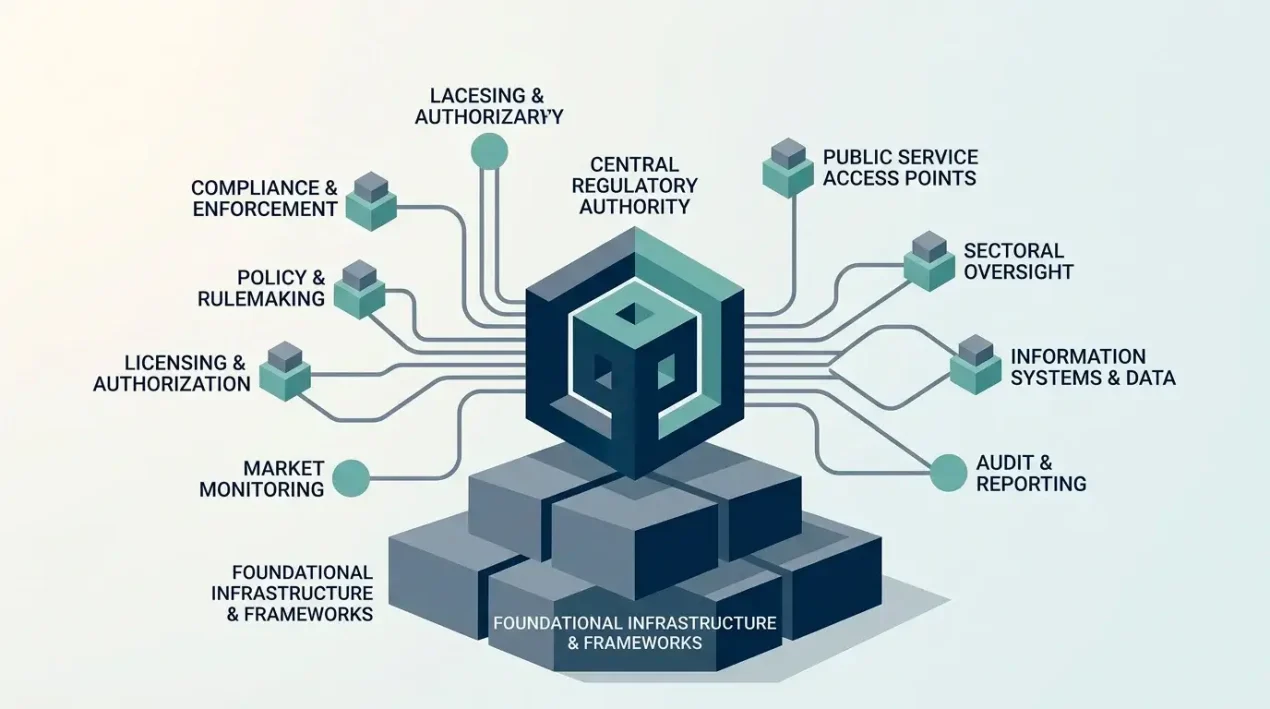
If you want to understand what a casino not on GamStop really is, you have to start one layer down, with the rules that GamStop sits inside. UK gambling regulation is not a single law or a single body but a stack of pieces that fit together, and once you can see how they connect, the whole “non-GamStop” question stops being mysterious. This page is the spine of the site: it explains who makes the rules, who enforces them, where GamStop fits, and which way the regulatory wind has been blowing over the past two years.
The full picture is in our guide to casinos not on GamStop.
The Gambling Act 2005: the foundation everything rests on
The statutory backbone of gambling regulation in Great Britain is the Gambling Act 2005. It is the law that replaced a patchwork of older statutes and created a single modern framework covering both land-based and remote gambling. More importantly for our purposes, it is the Act that established the regulator and handed it the job of licensing operators, writing the detailed rules they must follow, and stepping in when those rules are broken. When you read commentary about “the regulator” or “licence conditions”, almost all of it traces back to this one piece of legislation.
The Act also set out the three statutory licensing objectives that the regulator is bound to pursue in everything it does. Those objectives are preventing gambling from being a source of crime or disorder, ensuring that gambling is conducted in a fair and open way, and protecting children and other vulnerable people from being harmed or exploited by gambling. Every rule the regulator writes, every condition it attaches to a licence, and every enforcement decision it makes has to be justified against at least one of those three objectives. They are worth keeping in mind, because the entire case for schemes like GamStop, for stake limits, and for affordability checks flows directly out of that third objective: protecting vulnerable people.

The UK Gambling Commission: who actually polices the market
The body created by the Gambling Act 2005 is the Gambling Commission, usually shortened to the UK Gambling Commission or UKGC. It is an independent public body that regulates gambling across England, Wales and Scotland. Its day-to-day work covers licensing operators and key personnel, maintaining a public register of who holds a licence, monitoring compliance, and applying penalties that range from fines to suspending or revoking a licence outright. The Commission publishes detailed guidance and decisions on its own site, which is one of the few genuinely authoritative sources in a market otherwise crowded with affiliate marketing.

What matters most to a UK player is that an operator licensed by the Commission is bound by the Licence Conditions and Codes of Practice, usually called the LCCP. This is the rulebook that turns the broad objectives of the Act into concrete obligations: how operators must handle customer money, what responsible-gambling tools they must offer, how they must verify identity, how they must advertise, and much more. The LCCP is also where the requirement to integrate with GamStop lives, which is the connection we will come to shortly. The crucial point is that none of these protections attach to an operator that does not hold a Commission licence. An offshore site can advertise that it is “licensed”, but if that licence was issued in Curacao or Anjouan rather than by the UKGC, the British rulebook simply does not apply to it.
The point-of-consumption rule and why location does not save an operator
For years there was a loophole in how the rules applied to remote gambling. An operator could base its servers and its company in a low-tax jurisdiction abroad, advertise heavily to British customers, and argue that it was not really operating “in” the United Kingdom at all. That changed with the Gambling (Licensing and Advertising) Act 2014, which introduced what is known as the point-of-consumption rule. Under this regime, any operator that provides remote gambling facilities to consumers in Great Britain must hold a UKGC licence, regardless of where in the world the company or its equipment is based. The relevant question is no longer where the operator sits but where the customer is.
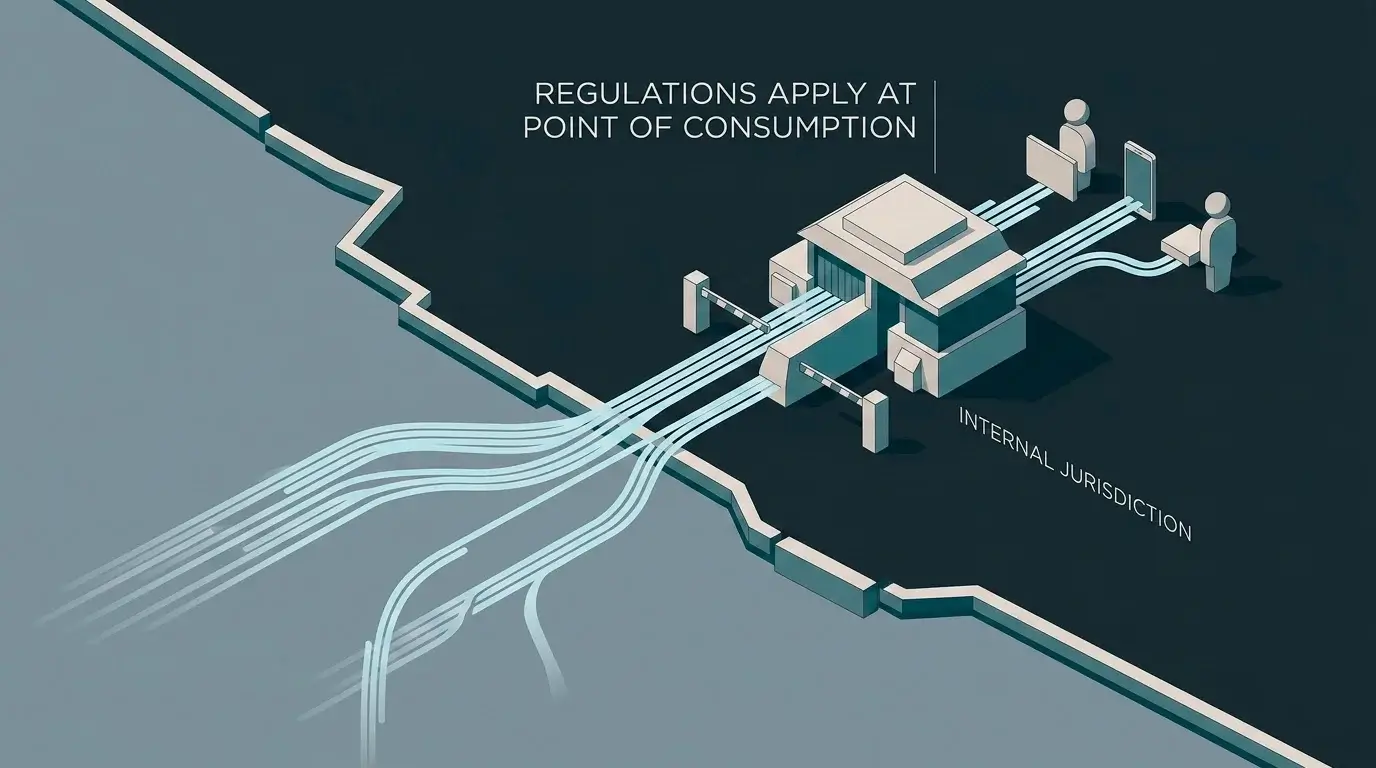
This is the single most important legal fact for understanding the non-GamStop market. It is why an offshore operator that deliberately targets British players without a UKGC licence is acting unlawfully under UK law, even though the individual player who finds and uses that site is not committing any criminal offence. The territorial reach of the underlying offence comes from sections 33 and 36 of the Gambling Act 2005, and the point-of-consumption layer added in 2014 closed the gap that let foreign operators sidestep the British rulebook. If you want the player-side legal picture in full, the non-GamStop vs UKGC casinos page sets the two models side by side, and the dedicated explainer on what not on GamStop means walks through the mechanics in plain terms.
Where GamStop fits into the framework
GamStop is the national online self-exclusion scheme for Great Britain. It is run by a not-for-profit body, The National Online Self-Exclusion Scheme Limited, usually abbreviated to NOSES, and it soft-launched in April 2018. The idea is simple and powerful: instead of having to contact every gambling site one by one to exclude yourself, you register once with GamStop and your details are then distributed across every participating operator, each of which is obliged to block any account that matches. You can choose to be excluded for six months, one year or five years, and at the end of 2024 a fourth option was added, a five-year exclusion with automatic renewal designed for people who want a more durable commitment.

The reason GamStop works at all is that participation is not optional for licensed operators. Integration with GamStop became a mandatory licence condition for all online operators from 31 March 2020, written into the LCCP under the social-responsibility code provision that governs remote multi-operator self-exclusion. The seriousness of that requirement was demonstrated almost immediately: within weeks of the deadline, the Commission took action against operators that had failed to integrate, suspending licences to make the point that this was not a box-ticking exercise. By the end of 2025, more than 562,000 people had registered with the scheme since launch, according to GamStop’s own reporting, which gives a sense of the scale of demand for a single, market-wide block.
Now the connection to the non-GamStop question becomes obvious. Because the obligation to check the GamStop database is a UKGC licence condition, it binds only UKGC licensees. An operator licensed solely offshore is not part of the network, never receives a registrant’s data, and performs no cross-check, so a person who has self-excluded through GamStop can still register on that offshore site. That is not a clever trick the offshore operator has invented; it is a structural consequence of how the rule is drafted. The mechanism is explained in much more detail, including exactly which personal data GamStop distributes, on the what casino not on GamStop really means page.
The direction of travel: reform since 2023
UK gambling regulation has been moving in one clear direction over the past few years, and it helps to understand that direction because it explains a lot of the recent interest in offshore sites. The pivotal document was the 2023 White Paper, “High Stakes: Gambling Reform for the Digital Age”, published in April 2023, which set out the most significant overhaul of the framework since the original Act and contained dozens of proposed measures. Several of those measures have now landed, and each one tightens the regulated market in a way that some players experience as friction.
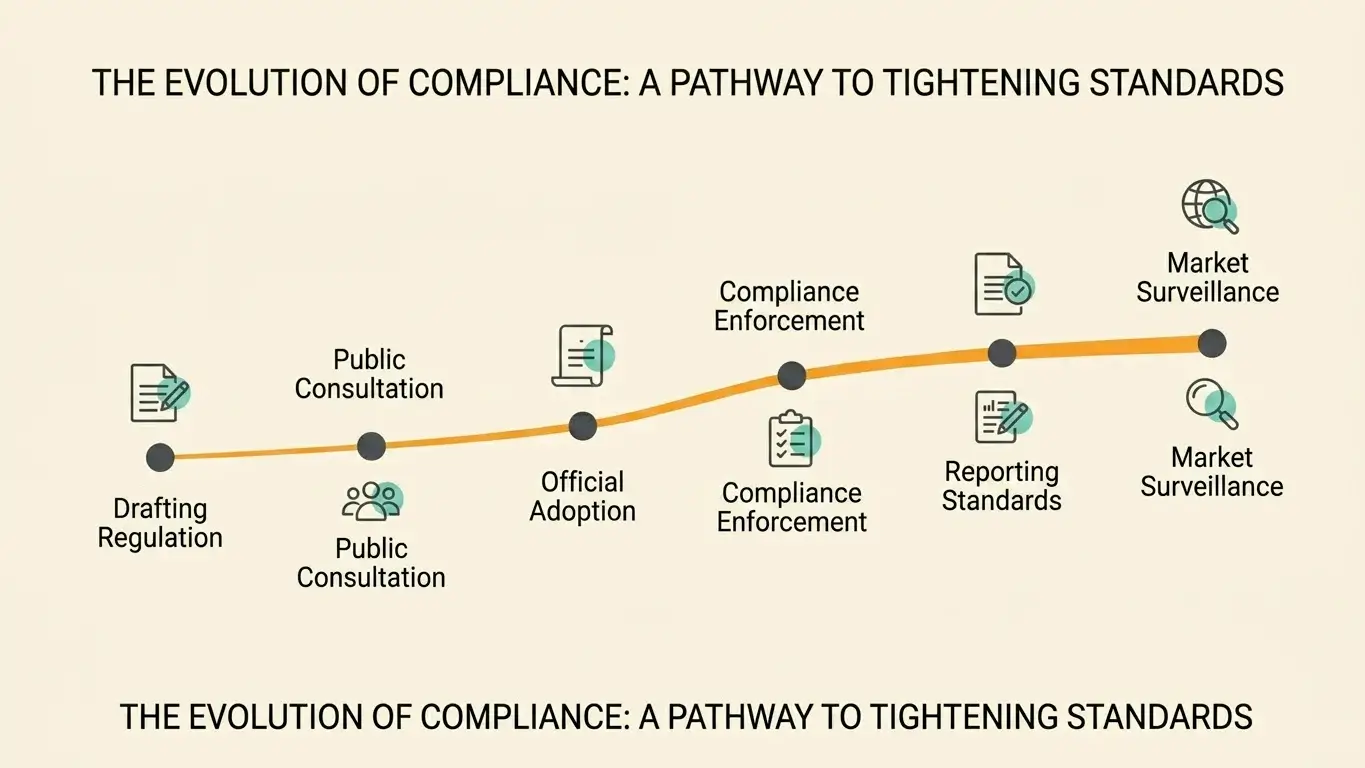
The most visible change is the statutory stake limit on online slots. A Statutory Instrument confirmed a maximum of five pounds per spin for adults aged twenty-five and over, which came into force on 9 April 2025, followed by a tighter two-pound cap for adults aged eighteen to twenty-four from 21 May 2025. Alongside the stake caps, financial vulnerability checks were tightened: the net-deposit threshold that triggers a light-touch check dropped to one hundred and fifty pounds within a thirty-day period from late February 2025. A statutory levy on operators, replacing the previous voluntary funding system for research, prevention and treatment, began to apply from late 2025, with the funds raised channelled into harm-prevention work.
Recent regulatory changes at a glance
- 2023 White Paper
- “High Stakes: Gambling Reform for the Digital Age”, the framework for the current wave of reform.
- Online slots stake limits
- Five pounds per spin for adults 25 and over from 9 April 2025; two pounds for adults 18 to 24 from 21 May 2025.
- Financial vulnerability checks
- Light-touch check threshold lowered to one hundred and fifty pounds net deposits in a thirty-day period from February 2025.
- Statutory levy
- Mandatory operator contributions for research, prevention and treatment, replacing the old voluntary model.
- Remote Gaming Duty
- Rose from twenty-one per cent to forty per cent of gross gaming revenue from 1 April 2026.
The change that has arguably had the largest effect on the shape of the market is fiscal rather than regulatory. The Remote Gaming Duty, the tax operators pay on their gross gaming revenue, nearly doubled from twenty-one per cent to forty per cent with effect from 1 April 2026. That is a substantial squeeze on operator margins, and it tends to flow through to players in the form of leaner bonuses and tighter promotions. Taken together, the stake caps, the affordability checks and the duty rise have made the regulated market noticeably more restrictive, which is precisely the backdrop against which more players have started looking at what sits beyond it. None of that makes offshore sites safer; it simply explains the demand, a point the honest risk assessment page treats directly.
If you are here because you want off GamStop
It is worth being direct about one thing. A good share of the people researching non-GamStop casinos are not curious about regulation in the abstract; they have an active self-exclusion in place and want to gamble again. If that describes you, the responsible route is not an offshore workaround but the proper removal process once your chosen period has elapsed. GamStop cannot be cancelled early, and removal is not automatic, but there is a legitimate path for ending an exclusion when the time comes. We have written that process up carefully, with honest flags about where the published details vary, on the page about leaving GamStop the legitimate way. If the urge to gamble feels difficult to control, that is exactly the situation self-exclusion was built for, and the support resources below exist precisely for this moment.
What the term itself covers: casino not on GamStop explained.
This material was created by the GamStop Review Casino team.
Related posts

Offshore Casino Licences Explained: Curacao, Malta and Anjouan
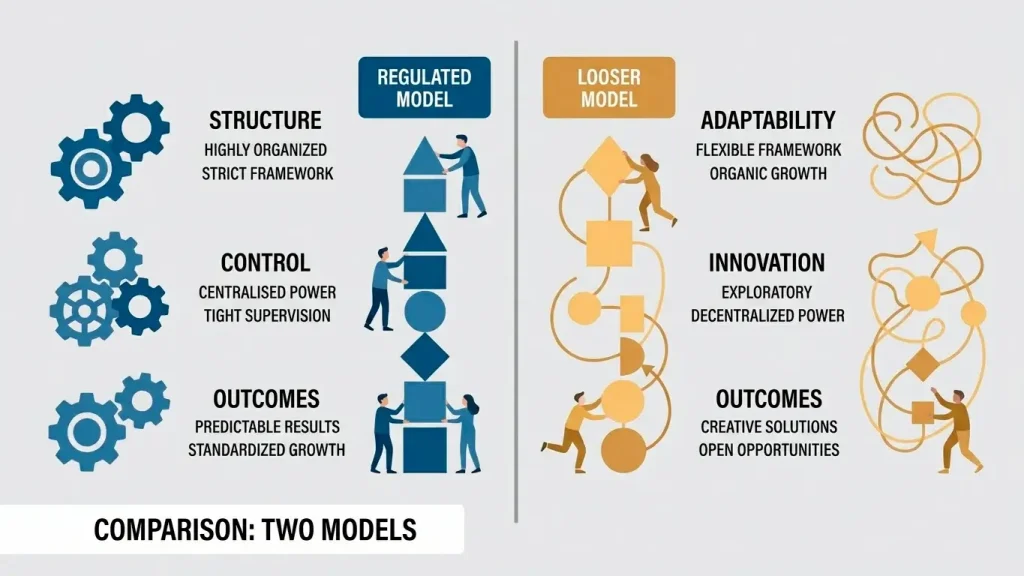
Non-GamStop vs UKGC Casinos: How They Compare for UK Players