
Casinos That Accept Bank Cheques in the UK
 Available in GB
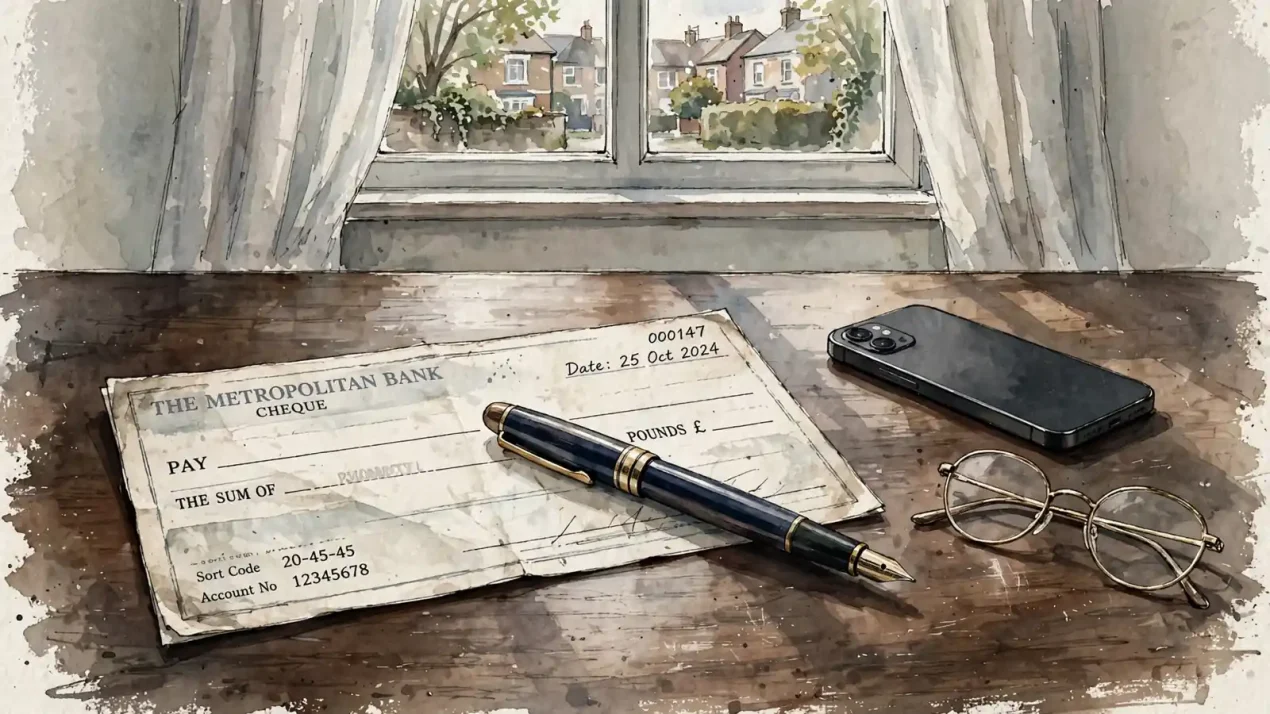
Boku links a casino deposit to a mobile number and phone account; it does not process a cheque through a bank.
Why Bank Cheques Are Not the Payment Method These Results Describe
Bank cheques belong to the older grammar of money: paper, signatures, clearing, and a delay that once seemed ordinary. A casino deposit made through a mobile phone belongs to an entirely different system. The two may appear together in a list of payment options, but they are not variations of the same instrument, and one cannot be used as evidence that the other is available.
For anyone looking for UK online casinos that accept bank cheques, this distinction matters before any operator name is considered. The payment service associated with the relevant casino information is Boku, a Pay by Phone method. It does not involve a cheque being written, scanned, posted, or paid into a bank account. The transaction is linked to a mobile number and charged through the mobile network.
That makes “casino cheque deposit” an especially misleading label. A cheque deposit normally describes money entering an account through a banking channel. Pay by Phone describes a purchase being placed on a mobile account. The destination may be a casino balance in both cases, but the financial route, the authorisation process and the institutions involved are different.
The difference is not merely technical. A bank cheque is a banking instrument; Boku is a payment service. Boku lets a player pay without entering card details or using a bank account, while the charge is handled by the mobile network. For a monthly mobile customer, it is added to the phone bill. For a prepaid customer, it is taken from available credit. Neither arrangement turns the payment into a cheque.
This is why a list described as the best UK casinos accepting bank cheques should not quietly substitute Boku entries. A casino that once displayed Boku in its cashier was offering a mobile-billing route, not accepting a paper banking instrument. Calling it a cheque option may make the description sound broader, but it changes the meaning of the payment method.
Casino Payments: UK Methods and Withdrawal Options · Casinos That Accept WebMoney in the UK: What to Check
The same caution applies to phrases such as “cheque deposits” and “casinos that accept cheques in the UK”. They can be read as referring to several things: a traditional bank cheque, a digital cheque service, or a deposit funded through a phone account. Those are not interchangeable. The Boku-related material belongs only to the last category.
There is also a time element. A small number of UK Gambling Commission-licensed casinos still accept Boku deposits, but the group has been getting smaller since 2023. That shrinking availability makes loose terminology more troublesome, not less. A reader may arrive expecting a broad catalogue of operators prepared to process bank cheques, while the relevant payment landscape concerns a limited and changing set of Pay by Phone arrangements.
A specialist casino review has described operators moving away from Boku since 2023. In that account, some services were replaced by Fonix or Siru Mobile, while other casinos removed mobile-payment options altogether. These alternatives still belong to the mobile-payment family, not to cheque banking. Changing the provider does not bridge the gap between a phone charge and a bank cheque.
The word “bank” can create another false impression. Boku may be used without a card or bank account, but that does not make it a bank-operated deposit method. A mobile network may collect the charge, and a casino may credit the gambling account, yet no cheque-clearing process is involved. The presence or absence of a bank account is therefore not the deciding feature; the method of authorisation and settlement is.
Nor does the use of the word “deposit” settle the matter. In gambling, a deposit simply means money placed into the casino account. It says nothing by itself about whether the money arrived by bank transfer, card, e-wallet, mobile service or another route. “Cheque deposit” adds a specific banking meaning, whereas “Boku deposit” identifies a particular payment mechanism. Precision is useful here because the casino cashier may show only the methods it currently supports, and a familiar-sounding label can conceal a different process.
Licensing concerns the operator’s permission to offer gambling; it does not mean that every historic or advertised payment method remains available.
The legal setting reinforces the need for accurate names. The UK Gambling Commission regulates commercial gambling in Great Britain and issues operating licences to businesses serving that market. A casino may therefore be licensed while its payment menu changes over time. Licensing concerns the operator’s permission to offer gambling; it does not mean that every historic or advertised payment method remains available, and it certainly does not convert Pay by Phone into cheque acceptance.
So the relevant subject is narrower than a directory of UK casinos that accept bank cheques. It concerns whether a licensed casino still offers Boku or another mobile-payment service, with the understanding that those services may be withdrawn or replaced. A paper cheque is a different matter entirely.
The old instrument stays old.
Recommended online casinos
- SpinFormulaBonus: 550% Up To £15,000 + 550 FS · Payout speed: 1-3 business days
- NightWinBonus: £900 + 400 free spins · Payout speed: 1-3 business days
- EvoSpinBonus: 125% up to €2500 + 125 Free Spins · Payout speed: 1-3 business days
- WinBeastBonus: €5000 + 500 FS + €650 Freebet · Payout speed: 1-3 business days
- DieselwinBonus: Welcome Pack 250% up to £4000 + 200 FS · Payout speed: 1-3 business days
- ZombillionBonus: Welcome Pack 250% up to £4000 + 200 FS · Payout speed: 1-3 business days
- ChanzeBonus: Slots Welcome Bonus #1 200% up to €500 · Payout speed: 1-3 business days
- BritsinoBonus: Welcome Package – Get your £2,200 + 2,000 FS · Payout speed: 1-3 business days
- NightLuckBonus: Welcome Pack + 805% Up To 6400€ + 280 FS · Payout speed: 1-3 business days
- AmunbetBonus: Join now and get 450% up to 2,700 GBP + 450 FS · Payout speed: 1-3 business days
The Small, Shrinking World of Direct Boku Deposits
Direct Boku deposits now occupy a narrow corner of the British online-casino market. A specialist review identifies a group of operators associated with the payment method: BoyleSports, Sun Bingo, William Hill, Sky Vegas, PlayOJO, Genting Casino, Betfred, Lottoland, bwin and 888 Casino. That list should be treated as a time-sensitive indication rather than a permanent directory. Cashier menus change, payment providers are withdrawn, and an operator may retain a brand while removing one particular funding route.
The word “direct” matters here. It describes a deposit made through the casino’s own cashier using Boku, rather than a payment chain in which Boku funds another financial service first. The distinction is easy to lose among familiar casino names, especially when older pages continue to describe a method after the operator has changed its available options. A name appearing in a review is therefore not the same thing as a Boku button appearing at the point of deposit.
Casinos That Accept Bank Transfer in the UK
The surviving field is smaller than the longer historical lists suggest. Another specialist review describes the remaining direct-Boku options as a limited, identifiable group and includes Jackpot Mobile Casino and Peachy Games among them. Those names are useful markers of the remaining niche, not an assurance that every account, jurisdictional setting or cashier screen will display Boku at any given moment. Payment availability is a feature of the current account and operator arrangement, not a permanent property of a casino’s brand.
This makes the landscape rather unlike a conventional banking directory. A bank account or card scheme tends to be discussed as an enduring service; a pay-by-phone option can disappear quietly when the commercial or compliance calculation changes. The result is a list that may look substantial when written as a string of names but is modest in practical terms. The operators associated with Boku are not proof that the method remains broadly available across UK-licensed casinos.
There is also a difference between a casino being described as accepting Boku and a particular player being able to use it. The cashier may show different methods according to the account, the operator’s current arrangement, or the mobile network involved. A review can record what was available when its information was gathered, while the live cashier reflects a later decision. Neither situation requires a dramatic announcement. The payment icon simply ceases to appear.
For that reason, the sensible reading of the longer operator group is historical and conditional: these are names reported in connection with Boku deposits, not a promise that all ten remain active options in every setting. The smaller group containing Jackpot Mobile Casino and Peachy Games better conveys the present shape of direct availability, though even that description is subject to change. A shrinking market rarely provides a neat final list. It leaves traces.
Casinos That Accept eCheque in the UK: What to Check
The contrast with bank-cheque language is important without changing the subject. The operators discussed here belong to the world of mobile-billed casino deposits. They are not evidence of casinos accepting bank cheques, cheque deposits or a paper instrument presented through a casino cashier. The relevant question for a current account is whether Boku is displayed as an available deposit method, not whether an operator’s name appears on an old list of cheque-friendly casinos.
Availability should therefore be checked at the licensed operator’s own cashier before any money is sent. UK online gambling is lawful only through operators holding the required UK Gambling Commission licence, and the licence status should be verified on the Commission’s public register. That check does not make Boku permanent; it establishes that the gambling business is operating within the British licensing framework. The payment method remains a separate, changing matter.
The small number of reported operators tells its own story. Boku has not vanished from every casino account, but neither does it form a normal payment layer across the market. Direct options remain identifiable precisely because they have become unusual. A short list, carefully qualified, is more honest than a grand catalogue assembled from pages that may have outlived the cashier settings they describe.
How a Pay-by-Phone Deposit Reaches the Casino
A Pay by Phone deposit begins in the casino cashier, not at a bank counter. The cashier is the payment area attached to the gambling account: the place where available deposit methods are displayed and a funding choice is made. When Boku appears among those options, the transaction follows a short chain linking the casino account, a mobile number and the network bill.
Boku Deposit Process
Step 1: Selection
Boku is selected in the casino cashier.
Step 2: Amount Entry
The deposit amount is entered.
Step 3: Identity
The mobile phone number is supplied.
Step 4: Confirmation
The transaction is confirmed with a code sent by SMS.
The process is less like entering bank details than authorising a charge against an existing phone service. That distinction matters because the casino does not receive money from a cheque, nor does it take the payment from a conventional bank account. The mobile network becomes the billing route.
Selecting the payment method
After opening the cashier, the account holder selects Boku as the deposit method. The cashier then asks for the intended deposit amount and the mobile phone number associated with the payment. The number is not a decorative contact detail: it identifies the mobile service to which the charge will be assigned.
The amount is entered before the phone number is confirmed. The casino’s cashier sends the payment request onward, while Boku connects that request with the mobile network. At this stage, the account holder is not handing over a card number or bank-account information. The phone number carries the practical identity of the payment.
The sequence can therefore be described plainly:
- Boku is selected in the casino cashier.
- The deposit amount is entered.
- The mobile phone number is supplied.
- The transaction is confirmed with a code sent by SMS.
This is the whole skeleton of the payment. The surrounding screens may differ between casino sites, but the essential route remains tied to the phone number and the confirmation message.
SMS confirmation
The SMS is the point at which the proposed charge becomes an authorised one. Boku sends a verification code to the supplied mobile number, and that code is entered into the relevant confirmation field. The message helps establish that the person approving the deposit has access to the mobile service named in the request.
This step also prevents a typed number from silently becoming a charge. A phone number can be entered incorrectly; an SMS delivered to the connected handset provides a separate confirmation stage. Once the code is accepted, the payment request can be processed through the mobile network.
The casino cashier is consequently involved twice, in practical terms: first when it presents Boku as a funding option and collects the transaction details, and again when it records the completed deposit in the gambling account. The mobile network sits between those moments, carrying the authorisation and the billing relationship.
Where the charge appears
Boku charges the deposit to the player’s mobile phone bill. For a contract customer, that generally means the amount is added to the monthly bill associated with the mobile service. The payment is treated as a charge connected with the phone account rather than as a separate debit from a bank account.
PAYG users have a different accounting path. The deposit is deducted from the available prepaid credit on the mobile service. If that balance cannot cover the requested payment, the charge cannot be completed. The phone is not merely being used as a convenient screen for a banking transaction; its billing status determines how the money is collected.
This creates two versions of the same Pay by Phone movement:
- a monthly-billed mobile account receives the charge on its bill;
- a PAYG mobile account loses the corresponding amount from its available credit.
In both cases, the casino deposit is connected to the mobile operator’s billing system. The casino account receives the credited deposit after the payment has passed through the authorisation route, while the player’s phone account carries the financial obligation or reduction in balance.
Why the route feels different from banking
Traditional casino deposits often ask for card or account information because the bank is the visible payment institution. Boku reverses that emphasis. The mobile number is supplied instead, and the SMS confirms control of the service before the charge is allowed to proceed.
That explains why the method can feel immediate without being a bank transfer. The payment is authorised through the phone, billed through the phone service and credited to the casino account. Three systems take part, but the handoff is designed to appear as one cashier action.
The result is a Pay by Phone deposit: a casino cashier request confirmed by SMS and settled through a monthly bill or prepaid credit. A small piece of telecommunications infrastructure has been made to behave like a cash desk.
One-way Process
Boku is specifically for deposits and cannot be used for withdrawals.
Limits Set by the Phone Network
A Boku payment has two ceilings, and they do not belong to the same institution. The casino controls the amount its cashier is prepared to accept. The mobile network controls how much can pass through the phone account over a transaction or within a day. Treating those as one limit makes a declined payment look mysterious when it is merely being stopped at a different gate.
A specialist review gives the standard UK Boku transaction ceiling as £30. That same type of source records higher allowances at some casinos or with some network operators, reaching £40 or £50. Those figures describe a changing arrangement rather than a permanent rule of every operator. A cashier may display an amount that the network will still refuse, or it may offer no more than the network permits.
The daily boundary is likewise a network matter. A casino can decide which deposit amounts appear in its cashier, but it does not set the mobile account’s daily allowance. The phone operator applies that control. This distinction matters when several deposits are attempted: a later transaction may fail even though the casino account remains open and the cashier still shows Boku as available.
Two versions of the smaller limit
Information about the network ceiling is not entirely consistent. One account, drawn from a specialist review, describes Boku as allowing roughly £10 in a single transaction and £30 across a day. Another version states a £30 daily limit without specifying a separate per-transaction cap. These are not interchangeable details, and neither should be turned into a universal promise. The applicable amount can depend on the operator, the mobile network and the terms active when the payment is made.
That disagreement also explains why a list of casino cashier limits is an incomplete guide. The cashier may be willing to receive a deposit, while the network declines it because a daily allowance has already been used. Conversely, a network may permit a transaction that the casino has capped at a lower figure. The visible payment screen is only one part of the arrangement.
Casinos That Accept E-Checks in the UK
PAYG has a second boundary
Monthly-bill customers have the phone account as the route for the charge. Prepaid, or PAYG, customers have a more literal constraint: the Boku payment is taken from the remaining phone credit. A specialist review states that a PAYG user cannot put more through Boku than the balance available on the handset account. If the balance is insufficient, the payment cannot be completed, regardless of what the casino cashier offers.
This makes the available balance a live limit rather than a figure printed in the casino’s banking page. A displayed transaction allowance does not create credit on a prepaid account. The network can approve only what the remaining PAYG balance can cover, subject also to its own transaction and daily controls.
The practical order is therefore simple: the casino’s cashier sets its acceptance conditions, while the mobile operator applies the network ceiling and, for PAYG users, the balance test. A payment can satisfy one and fail the other. The phone bill gets the final word.
What Boku Can—and Cannot—Do With Casino Funds
Boku has a sharply limited role in the movement of casino money. It can carry a deposit into an account, but it cannot carry winnings back out. In practical terms, this makes it a one-way entrance rather than a complete banking route.
That distinction matters when comparing UK casino payment options. A payment method may appear in the cashier beside cards, bank transfers and e-wallets, yet its presence there does not mean that the same method can receive a withdrawal. Boku is specifically deposit-only. Casino funds cannot be withdrawn to Boku, so a separate route must be available for any money that later leaves the gambling account.
Casinos That Accept Neosurf in the UK: Payment Guide
The arrangement is easy to overlook because the initial payment feels self-contained. A deposit is authorised through the mobile payment service, and the casino balance is credited. The account then contains a mixture of deposited money and any subsequent winnings, but Boku has no part in the second stage. It is not a holding account for casino funds and does not become a channel for reversing the original payment.
A sensible account setup therefore treats the deposit method and the withdrawal method as two different decisions. Before using Boku, the player needs to register an alternative withdrawal method, such as a debit card, an e-wallet or a bank transfer. The available choices depend on the operator, and the casino may require verification before releasing funds. The essential point is less glamorous and more useful: a Boku deposit does not complete the payment journey.
This also explains why a page about casino cheque deposits in the UK cannot treat every payment label as interchangeable. A bank cheque, a mobile-bill payment and a withdrawal route belong to different parts of the financial process. Boku is not a cheque facility, nor is it a general-purpose account for receiving casino proceeds. The name in the cashier describes what happens when money goes in—and stops there.
For someone looking for bank cheque casino sites in the UK, the same caution applies to any operator description that presents Boku as a full alternative to banking. The method may solve the deposit side without solving the withdrawal side. That is not a technical footnote; it changes how the account must be arranged before funds are committed.
One-way money.
The Quiet Retreat from Direct Boku
Boku’s retreat from British casino cashiers was gradual rather than dramatic. Since 2023, operators have been moving away from the service, replacing it with alternatives such as Fonix and Siru Mobile, or removing Pay by Phone deposits altogether. A specialist review describes this as a continuing shift, but payment menus change and the position of an individual casino requires checking at the time of registration.
Changing Operators
Operators have been moving away from Boku since 2023, often replacing it with alternatives like Fonix or Siru Mobile.
The change is easy to mistake for a ban. It was not the result of a UK Gambling Commission rule that named Boku as a prohibited payment method. The Commission regulates commercial gambling in Great Britain and requires remote operators serving that market to hold the appropriate licence, but it did not introduce a Boku-specific prohibition. The decision belonged to the casino businesses themselves.
Their stated concern was compliance risk. A payment route that once looked like a neat bridge between a mobile account and a gambling balance became less attractive as operators reviewed their controls and responsibilities. In that process, a method can disappear without Parliament, a regulator or a payment provider issuing a grand announcement. The cashier simply grows another door.
The replacements illustrate this practical, operator-by-operator character:
- MrQ and Duelz are associated with Fonix for Pay by Phone deposits.
- Mr Vegas and Videoslots are associated with Siru Mobile.
These are not interchangeable labels for one universal system. Fonix and Siru Mobile are separate services, and a casino’s support for one does not establish support for the other. A bank-cheque search may therefore lead towards an increasingly narrow part of the payment market, where even mobile-based options depend on the particular cashier rather than on a single national standard.
That fragmentation also explains why older descriptions can remain misleading. A page may still list Boku beside familiar casino names, while the live cashier has replaced it with Fonix, adopted Siru Mobile, or abandoned Pay by Phone deposits completely. A historical reference proves that a method existed; it does not prove that the route remains open now.
The retreat says something about modern gambling regulation. The UK system does not need to prohibit every individual payment brand for commercial behaviour to change. Operators, facing their own assessment of compliance exposure, can narrow the payment choice before a formal rule arrives. No dramatic ban. Just an empty button.
Casinos That Accept Ethereum in the UK: Payment Guide
Bonuses and the Small Print on Mobile Deposits
A Pay by Phone deposit does not carry one universal bonus status across British online casinos. Promotional treatment belongs to the operator, not to the payment method alone. One casino may count the deposit towards a welcome offer, while another may accept the payment but exclude it from the qualifying amount. The cashier can therefore approve a transaction without making the accompanying promotion available.
A specialist review identifies MrQ, Duelz, Mr Vegas and Videoslots as operators where Pay by Phone deposits are accepted for bonus eligibility. That is useful evidence, but not a permanent promise: payment menus and promotional rules change. The bonus page attached to the account remains the decisive document at the time of registration and deposit.
The distinction matters because a welcome offer is not simply an extra balance. A representative promotion described in the available material matches a deposit at one-to-one value, up to £100, and attaches a 35x wagering requirement. The wording matters more than the headline. Such terms determine which funds must be wagered, which games count and whether the payment route qualifies at all.
Attention A deposit method being accepted for bonuses is not a guarantee; always check the specific promotional terms.
Time limits add another layer of small print. In the reviewed terms, bonus funds expired after 30 days, while bonus spins had a 72-hour life. Those periods are conditions of that offer, not permanent rules for every casino. Promotional pages can change independently of the cashier, which is why an old description of a mobile deposit may no longer match the current welcome package.
A specialist review of Boku casino deposits found no dedicated promotions attached to the method and reported no Boku-specific deposit restrictions on the platforms it assessed. That observation should not be turned into a market-wide guarantee. “Accepted” and “bonus eligible” are separate labels, and the second one is the expensive label to misunderstand.
The sensible order is therefore unglamorous: open the bonus terms, find the section covering payment methods or qualifying deposits, and confirm whether Pay by Phone or Boku is included. The wording may also specify that only the cash portion of a deposit qualifies, or that a promotion must be claimed before the transaction. No invented shortcut improves that reading.
A bank-cheque deposit, where the phrase appears in a casino description, should not be assumed to qualify for a promotion either; payment terminology and promotional eligibility are separate matters. For mobile deposits, the rule is simpler: the cashier may accept the money while the bonus remains outside the door. Small print wins.
A Phone-Bill Deposit Is Not a Bank Cheque
The wording matters because the two payment methods belong to entirely different systems. A bank cheque is a paper instruction to transfer money from a bank account. A Pay by Phone deposit through Boku is an electronic charge linked to a mobile number. No cheque is written, posted, scanned or paid into the casino account.
Casinos That Accept MuchBetter in the UK: What to Check
With Boku, the casino’s cashier connects the payment to the mobile network. The resulting charge appears on a monthly phone bill, alongside the ordinary cost of the mobile service. For a PAYG customer, there is no later bill: the amount comes straight out of the available prepaid credit. If that balance cannot cover the payment, the transaction cannot proceed.
That distinction is easy to lose in a phrase such as “casinos accepting cheques in the UK”. The word cheque suggests a bank-funded payment, while the relevant Pay by Phone arrangement uses the mobile operator as the collection route. The casino receives confirmation of the electronic payment; it does not receive a negotiable instrument or wait for a bank to clear one.
The practical result is that a search for casinos accepting bank cheques in the UK can lead towards information about Boku while still pointing to the wrong financial object. Boku may avoid entering card or bank-account details, but it does not turn a phone bill into a cheque. The money is collected through the mobile account attached to the phone number.
This also explains why the payment may feel familiar to a mobile customer yet remain unlike a traditional banking transaction. A monthly customer settles the charge when the phone bill is paid. A PAYG customer spends existing credit immediately. In both cases, the payment follows the mobile account rather than a cheque account.
DO
- Check the casino’s own cashier for current methods
- Verify the operator’s licence on the Commission’s public register
- Register an alternative withdrawal method
DON’T
- Assume Boku works for both deposits and withdrawals
- Assume promotional eligibility based on payment methods
- Rely on historical lists of operators
The terminology is not pedantry. It determines what is being checked: a bank’s ability to honour a cheque, or a mobile operator’s ability to bill or deduct the required credit. Different machinery, different risks, different answer.
The Neteller Detour
A route involving Neteller changes the shape of the transaction. Instead of trying to place a Boku payment directly into a casino cashier, the funds can first reach Neteller and then move from that e-wallet to a casino that accepts Neteller. A specialist review describes this as an available indirect arrangement: Boku funds Neteller, while Neteller supplies the casino deposit.
That distinction matters when the original intention is to pay without a bank card or bank account. The casino does not receive Boku in this version of the process. It receives Neteller. The payment method shown at the final cashier is therefore the e-wallet, not Pay by Phone and certainly not a bank cheque.
The route has two separate acceptance points:
- Boku must be available as a way to fund Neteller.
- The chosen casino must accept Neteller deposits.
Either side can interrupt the journey. A casino may accept Neteller without offering Boku at its own cashier, while a Boku transaction may be possible for Neteller without making every Neteller casino suitable for the next step. Treating the two services as interchangeable would turn a narrow route into a promise it cannot support.
There is also a practical difference in the record of the payment. A direct casino deposit through Boku would be associated with the casino’s cashier and the mobile payment. With the indirect route, the intermediate e-wallet becomes part of the chain. That may help explain why a player searching for a casino deposit by cheque finds references to mobile payments instead: the money is travelling through payment services, not through the banking instrument named in the original request.
The arrangement remains a deposit route only in the Boku sense. Boku cannot receive casino winnings, so Neteller should not be treated as proof that Boku itself supports withdrawals. The casino’s own payment rules determine how winnings can leave the gambling account.
A detour, not a cheque.
Casinos That Accept UKash: Current UK Payment Options
Choosing a Licensed Casino and a Withdrawal Route
A payment method is only one part of choosing an online casino. In Great Britain, the more basic question is whether the operator is licensed for the market at all. The UK Gambling Commission regulates commercial gambling activity, including online casinos, and is the sole regulator for commercial gambling in Great Britain. Remote operators must hold the relevant licence when offering gambling to consumers there, even if their key equipment is located elsewhere.
That makes the licence more than a decorative badge. The Commission issues operating licences to gambling businesses and personal licences to individuals involved in operating them. A casino serving British customers should therefore be checked on the Commission’s public register before any money is deposited. A cheque-shaped phrase in a payment description cannot substitute for that check.
The practical question is also what happens after a deposit. Boku is designed for adding funds, not receiving winnings. It cannot serve as the route back out of the casino. Anyone using Pay by Phone therefore needs a separate withdrawal method accepted by the operator, such as a debit card, an e-wallet or a bank transfer. The casino may require that method to be registered and verified before a withdrawal is processed.
This is why a casino that appears to offer a familiar payment label still needs closer inspection: the deposit route, the licence and the withdrawal route are separate matters. The old language of cheques suggests a complete financial circuit. Pay by Phone offers only the entrance.
What are the deposit limits at pay by mobile casinos?
Boku deposits are usually limited to £30 per transaction, though some casinos or mobile networks may allow £40 or £50. Network-level limits are typically about £10 per transaction and £30 per day, and PAYG users also need enough phone credit.
Can a casino deny issuing a promotion if I deposit with Boku?
Bonus eligibility varies by casino. Boku deposits generally do not have specific bonuses, so check the casino’s promotion terms before depositing.
Is Boku safe to use at casinos that still accept it?
Boku lets you pay without entering card details or using a bank account; the charge is handled through your mobile network. Use it only at a casino licensed by the UK Gambling Commission, and check that Boku is still available in the cashier.
How does Boku work?
Select Boku in the casino cashier, choose an eligible deposit amount, enter your mobile number and confirm with the SMS verification code. The amount is charged to your monthly phone bill or deducted from your PAYG credit; Boku deposits cannot be used to withdraw casino funds.
Related posts

Terms of Use

Top Rated Online Casinos UK: What Ratings Mean