
Casinos That Accept eCheque in the UK: What to Check
 Available in GB
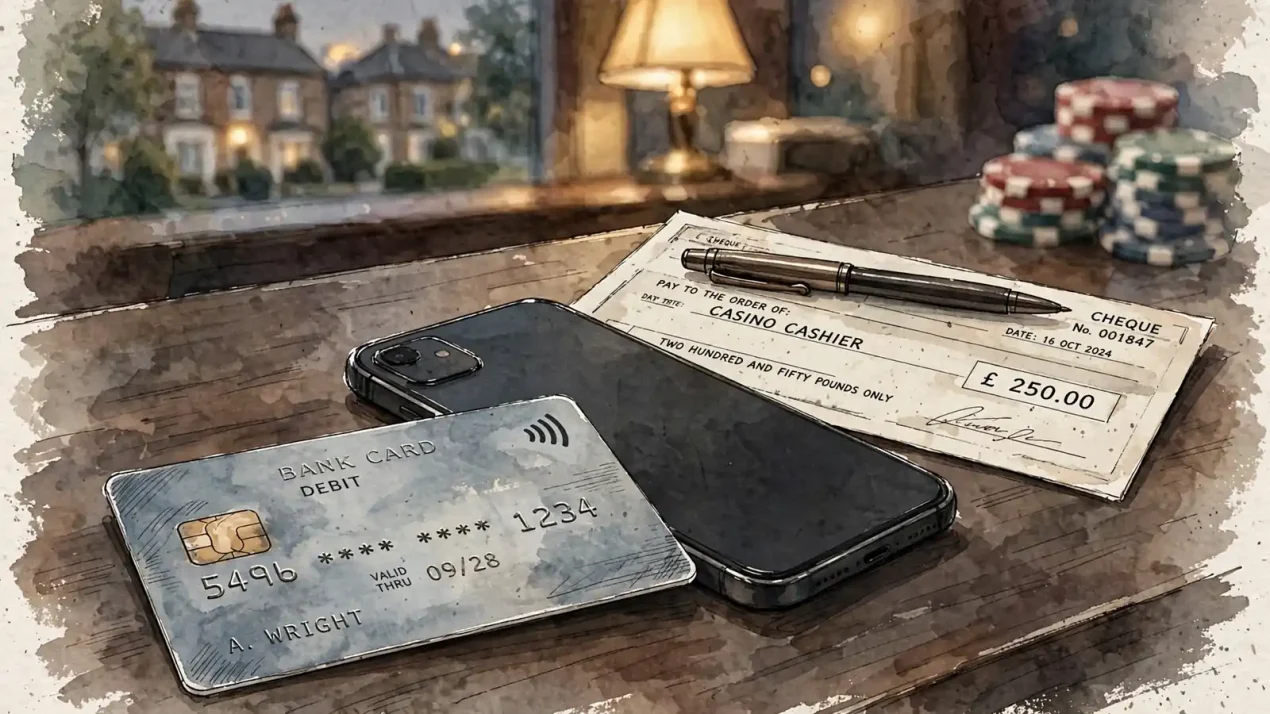
Cashier labels can vary, and a listed deposit method does not necessarily support withdrawals back to the same account.
What “eCheque” Can—and Cannot—Mean in a UK Casino Cashier
The word “eCheque” looks precise enough to send a cashier search in a particular direction. It suggests an electronic cheque, a named payment rail, and a simple question of acceptance: which casinos take it, and which do not? Yet the term itself does not identify a single, clearly defined transaction process in every gambling cashier. It may be used loosely for an electronic bank-based payment, a service with cheque-like branding, or an older payment label that no longer appears in a modern account interface.
That distinction matters. A casino’s use of bank transfer, open banking or an e-wallet does not turn any of those methods into an eCheque. Nor does the appearance of the word in a page title establish that a particular remote gambling licensee accepts eCheque deposits. Availability has to be attached to the actual method shown in the cashier, not inferred from a broad description of payment options.
The same caution applies to phrases such as “eCheque casinos in the UK” or “casinos accepting eCheque deposits”. They describe a desired category, but they do not explain what the transaction would be. A useful payment description would need to identify the provider, the route by which money leaves the bank account, whether the method is available to British customers, and which transaction functions it supports. Without those details, “eCheque” remains a label rather than a dependable instruction.
The payment landscape around the label
UK casino cashiers are not built around one universal payment vocabulary. Debit cards are a familiar part of that landscape, with Visa and Mastercard among the card brands commonly accepted. That fact says something about debit-card funding; it says nothing about eCheques. A card logo cannot be treated as a disguised cheque symbol simply because both can move money into an account.
Bank transfers and open banking form another part of the picture. A specialist affiliate review describes these routes as capable of producing instant deposits and fast withdrawals at many sites. That is a claim about those banking methods, not evidence of eCheque support. The timing and mechanics belong to the named route displayed by the casino, and a bank-based payment is not automatically an eCheque.
Casinos That Accept EntoPay in the UK: What to Check
Payment pages may also mention e-wallets and cryptocurrencies alongside Visa, Mastercard and bank transfer. This combination appears in descriptions of UK-facing casino websites, but it is a catalogue of payment categories rather than a definition of eCheque. A cryptocurrency option, an e-wallet balance and a direct bank connection involve different systems, even when they are printed in the same cashier panel. Payment menus are fond of visual equality: a row of logos can make unrelated arrangements look like cousins.
PayPal is another recognised name in the wider UK casino payment environment. It is valued in a specialist affiliate review for speed and convenience, although that same type of source notes that bonus eligibility may exclude it. Again, the point is classification. PayPal is PayPal; it should not be presented as an eCheque simply because both may be used to fund a gambling account.
Skrill and Neteller also appear at some sites, and a specialist affiliate review says promotions may exclude them. The distinction between an e-wallet and an electronic cheque is not cosmetic. The wallet provider holds or routes funds under its own account structure, while the phrase “eCheque” implies a different payment arrangement unless the cashier expressly defines it otherwise. A familiar brand does not validate an unfamiliar label.
The same principle applies to less widespread names. Jeton is reported by a specialist affiliate review as still appearing at a limited number of UK online casinos in 2026. That observation may help describe the changing variety of payment options, but Jeton is not thereby an eCheque service. Likewise, the rebranding of EcoPayz as Payz in 2022 illustrates why payment names can change while old terminology lingers in articles, comparison pages or customer conversations.
What the cashier can actually establish
A cashier can show whether a named payment method is available for a particular account and transaction. It may display a provider’s brand, request bank details, or offer a route through an external payment service. Those details are more informative than the general phrase “eCheque-friendly casino”. If the interface identifies a payment provider and explains the transaction flow, the method can be assessed on its own terms.
Payment Provider Details
If the interface identifies a payment provider and explains the transaction flow, the method can be assessed on its own terms.
If the cashier instead lists only debit cards, bank transfer, open banking, e-wallets or cryptocurrency, those options should remain in their own categories. They should not be assembled into an invented eCheque option merely to satisfy a neat heading. The British payment scene contains plenty of genuine methods without giving every one of them a new name.
There is also a legal boundary around the wider subject. Remote gambling licensees serving the British market must hold a Gambling Commission licence, and British online gambling is lawful at licensed and regulated sites. That requirement concerns the status of the remote gambling licensee, not the meaning of a payment label. A licensed casino may still offer a changing selection of banking methods, while an old article may preserve a label that no longer corresponds to a live cashier option.
So the careful use of “eCheque” is narrow. It can describe a method only when the cashier or provider identifies it as such and explains its operation. Debit cards, bank transfers, open banking, e-wallets and cryptocurrencies provide the surrounding context, but none should be renamed for convenience. Labels matter. Especially when money is involved.
Recommended online casinos
- SpinFormulaBonus: 550% Up To £15,000 + 550 FS · Payout speed: 1-3 business days
- NightWinBonus: £900 + 400 free spins · Payout speed: 1-3 business days
- EvoSpinBonus: 125% up to €2500 + 125 Free Spins · Payout speed: 1-3 business days
- WinBeastBonus: €5000 + 500 FS + €650 Freebet · Payout speed: 1-3 business days
- DieselwinBonus: Welcome Pack 250% up to £4000 + 200 FS · Payout speed: 1-3 business days
- ZombillionBonus: Welcome Pack 250% up to £4000 + 200 FS · Payout speed: 1-3 business days
- ChanzeBonus: Slots Welcome Bonus #1 200% up to €500 · Payout speed: 1-3 business days
- BritsinoBonus: Welcome Package – Get your £2,200 + 2,000 FS · Payout speed: 1-3 business days
- NightLuckBonus: Welcome Pack + 805% Up To 6400€ + 280 FS · Payout speed: 1-3 business days
- AmunbetBonus: Join now and get 450% up to 2,700 GBP + 450 FS · Payout speed: 1-3 business days
Why a Payment Method May Appear—or Disappear—at Checkout
A payment method can exist in a casino’s general information and still be absent from the cashier attached to a particular account. That difference is easy to miss. A page may describe the payment services associated with a site, while the cashier decides which of them are available for the customer, the account currency and the transaction being attempted.
Casinos That Accept Bank Cheques in the UK
This is why an apparent match between a payment label and a casino does not establish that the route can be used. The cashier is not merely a decorative list of logos. It is the working interface between the remote gambling licensee, the payment provider and the account. Its contents can be narrower than a general payment page, and sometimes narrower than an older review of the same site.
A specialist affiliate review may mention Visa and Mastercard among the payment methods associated with UK casino sites. That information does not settle whether a particular card product is eligible at the moment of deposit. Card availability and card-product eligibility need to be checked in the cashier itself. The familiar logo is not a promise; it is a signpost.
General availability is not account availability
Payment compatibility has several layers. First, a casino must support a method in its payment system. Second, that method must be enabled for the relevant market and account. Third, the customer’s particular payment instrument must fit the provider’s conditions. Finally, the cashier must offer it for the transaction in question.
A method can therefore disappear without anything mysterious having happened. The operator may no longer support it in that market. The provider may not serve the account’s region. The account may use a currency that the payment route does not handle. Or the payment instrument may fall outside the products accepted through that channel.
The same logic applies to an eCheque label. A phrase associated with an eCheque online casino in general discussion cannot demonstrate that an individual UK account can fund a casino through that route. Nor does a mention on a page establish that the method is offered for every customer, every currency or every type of transaction. Payment systems are less like a permanent menu than a railway timetable: the destination may be printed, while the train needed today is not running.
Live Availability
The cashier reflects the live relationship between the account and available payment channels, which may be narrower than general site descriptions.
The cashier supplies the more relevant answer because it reflects the live relationship between the account and the available payment channels. A general page can explain what a casino has discussed or supported at some point; the cashier shows what the account can actually select.
Why account currency changes the picture
Currency is another quiet source of incompatibility. A specialist affiliate review may state that GBP is supported by the casinos or payment services it examines. That is useful background, but the account currency still needs confirmation before the first transaction. A currency setting can affect whether a payment route is displayed and whether funds would be converted before reaching the casino balance.
The distinction matters even where the payment brand looks familiar. A payment method may appear to be suitable because it is known in the UK, yet the account may have been created with another currency or configured through a route that applies conversion. The cashier is where that practical arrangement becomes visible. It links the selected method to the account rather than to an abstract description of the casino.
Casinos That Accept Interac in the UK: Cashier Check
This is also why an old page can mislead without being deliberately wrong. Payment arrangements change, providers alter their coverage, and operators revise their cashier options. A statement that was accurate for one account or one period may not describe another account now. The respectable habit is therefore not to treat a logo, a review paragraph or a remembered list as decisive evidence.
The cashier as a compatibility check
The useful distinction is between a method being mentioned and a method being selectable. The first belongs to general information. The second belongs to the live cashier.
A practical check involves looking at:
- the payment methods displayed after signing in;
- whether the account currency is shown as GBP or another currency;
- whether the selected payment route is offered for the intended transaction;
- whether the particular card or payment product is eligible;
- whether the cashier presents any account-specific restriction or instruction.
That check does not turn every displayed method into a guaranteed route. A payment option can still be subject to the provider’s own acceptance conditions, and a displayed card brand does not mean that every card carrying the brand will work. It does, however, place the decision where it belongs: in the transaction interface connected to the actual account.
This is especially important when a page uses broad language such as “payment methods accepted”. Such wording may refer to the casino’s wider technical capability rather than to every customer’s current options. The difference is not pedantry. It determines whether a deposit can be attempted without sending the transaction into avoidable failure, review or reversal.
For anyone comparing an eCheque online casino site in the UK, the same principle applies without alteration. No ranking of “best” or “top” sites can replace an account-level check. A payment route that appears in a description may not appear after registration, and a route that appears for deposits may be presented differently for another transaction. Compatibility belongs to the cashier, not to the label attached to a casino elsewhere.
The cleanest conclusion is also the least glamorous: general payment information provides context, while the live cashier confirms the options supported for that account and transaction. The logo starts the inquiry. It does not finish it.
Choosing a Deposit Route Without Assuming It Works Both Ways
A payment method appearing in a casino cashier establishes one thing only: the route may be available for putting money into the account. It does not, by itself, establish that the same route can receive a withdrawal. Deposits and payouts are related transactions, but they are not interchangeable functions.
That distinction matters when assessing casinos described as accepting eCheques in the UK. A page title, a payment icon or a deposit instruction cannot turn an eCheque into a confirmed withdrawal channel. The practical question is not whether a method has a familiar name, but what the cashier permits it to do at that particular operator.
Casinos That Accept Ethereum in the UK: Payment Guide
A route may be designed for funding only. Paysafecard is the clear example among the established payment methods: it is a prepaid voucher for deposits and is deposit-only. Money can move from the voucher into the casino account, but the voucher is not consequently a destination for winnings. The direction is built into the product. A door, but not a return door.
Other payment services can have more than one function in the wider payments market, while a casino may support only one of them. An e-wallet, bank route or card-labelled option may be displayed for deposits without being available for payouts. The name alone says little about the operator’s arrangement, the account’s status or the rules attached to that transaction.
This is where descriptions of the best eCheque casinos in the UK can become misleading if they treat a deposit route as a complete payment solution. A casino may accept a particular instrument when money is going in and still require another route when money is coming out. That is not necessarily a contradiction. It is a difference between accepting a funding method and supporting it as a withdrawal destination.
The cashier should therefore be read in two directions. The deposit screen shows which routes can fund the gambling account. The withdrawal screen shows which routes can receive money back. If the latter does not list the same method, its presence on the deposit side should not be stretched into a promise of two-way use.
The closed-loop principle
UK anti-money laundering controls generally favour sending a payout back through the original payment source. Returning funds to that source is also a standard anti-fraud measure: it helps connect the withdrawal with the transaction that funded the account and makes it harder to use a casino account as an anonymous transfer point.
This does not mean that every deposit method must be capable of receiving winnings. It means that the operator must have a permitted way to complete the return journey. A deposit-only voucher can fund the account, while the casino may need to arrange an alternative payout route under its own procedures. That alternative may involve additional verification because the original source cannot accept the money.
Withdrawal Direction
Attention A method displayed for deposits may be a deposit-only route and not a destination for winnings.
The distinction is especially important for searches framed around eCheque deposit casinos or mobile eCheque casinos. A mobile cashier may make depositing easy to initiate, but a smaller screen does not remove the need to inspect the withdrawal function. A method displayed in a phone interface remains deposit-only if that is how the underlying payment arrangement works. Convenience changes the view, not the direction of funds.
The same caution applies to labels such as “best eCheque casinos UK 2026”. A ranking cannot establish that an eCheque route supports withdrawals, and a payment badge cannot settle the question either. Suitability depends on the function authorised by the casino, not on how prominently the method is presented.
Before a first deposit, the useful distinction is simple:
- Deposit route: a method the casino permits for adding funds.
- Withdrawal route: a method the casino permits for receiving an approved payout.
- Deposit-only route: a method that performs the first function but not the second.
- Original-source route: the payment source to which the operator may direct funds under its anti-fraud and anti-money-laundering controls.
These categories prevent a common mistake: treating the cashier as a single-purpose menu. It is closer to a set of gates, each with its own direction. A method can pass through one gate and stop at the next.
When the original source cannot accept a payout, the operator may offer another route or request further checks before releasing funds. That extra scrutiny follows from the changed destination, not from any special status attached to the word eCheque. The more the payout departs from the original funding path, the more important it becomes to establish what the casino permits and what ownership evidence it requires.
The sensible description of an eCheque route is therefore narrow. It may be a way to deposit if the casino’s cashier offers it. Its withdrawal role must be confirmed separately. Paysafecard demonstrates why: a recognised payment product can be perfectly functional for deposits while remaining unavailable for withdrawals. Availability is not a two-way guarantee.
Deposits, Withdrawals and the Slow Return Journey
A payment journey has two distinct movements: money entering the gambling account and money leaving it. The first can be almost invisible in its speed, while the second may pass through several stages before it reaches its destination. Treating them as opposite versions of the same transaction is the source of much avoidable surprise.
Casinos That Accept Tether in the UK: Payment Routes
A card deposit illustrates the difference neatly. The balance may update instantly, yet the payout can take several business days. That contrast does not mean the original deposit failed, nor that the withdrawal has been mishandled. The two transactions are subject to different checks and are processed through different parts of the payment system.
The deposit is generally about authorising funds and recording them in the account. A withdrawal begins with a request that the casino must review before the payment provider becomes involved. The operator may need to confirm the account status, inspect the transaction history and complete any outstanding verification. Only after that internal stage can the payout proceed along its chosen route.
This is why the word “instant” has a narrow meaning. It may describe the appearance of a deposited balance, not the whole relationship between a casino and a payment account. A quick entry does not create a promise of an equally quick return. Banking systems, e-wallets and card networks each have their own handling stages, and the casino’s approval remains part of the journey.
First withdrawals can take longer while verification is completed. That is not a special feature of a particular payment label; it is a consequence of the account being examined more closely at the point when funds are being released. A remote gambling licensee has reasons to establish that the account is genuine and that the withdrawal request belongs to its holder. The administrative pause may therefore appear at the least satisfying moment: after the play has ended and the money is expected to move.
Withdrawal Timing
First withdrawals can take longer while verification is completed, which is a consequence of the account being examined more closely at the point when funds are being released.
A specialist review has described withdrawal timing as including the casino’s internal approval, with first withdrawals potentially taking longer during verification. That account is useful as an indication of the process, not as a timetable applying to every UK casino. The decisive variables remain the operator’s own procedures and the state of the individual account.
The same distinction matters when considering an eCheque deposit casino in the UK. A label attached to a payment route says little about how quickly a withdrawal will travel. Even where a deposit is recorded promptly, the return journey may wait for approval, verification and the payment system’s own processing. The attractive part is often the arrival; the less glamorous part is the queue on the way back.
Withdrawal speed is therefore not determined by the cashier’s deposit screen alone. It depends on whether the casino has approved the request and whether the account is fully verified. A payment route that appears efficient at the funding stage may still be followed by a slower payout process. Conversely, a method marketed as convenient cannot remove checks that apply before funds leave the operator.
Timing should consequently be read as a chain rather than a single promise: deposit authorisation, account activity, withdrawal request, internal review, verification where required and payment delivery. Each link can have a different pace. The shortest part of the chain does not set the pace of the whole transaction.
Casinos That Accept MuchBetter in the UK: What to Check
A casino may display a brisk deposit experience while retaining a deliberately more careful withdrawal process. Money entering an account is easy to celebrate; money leaving one must be accounted for. That asymmetry is built into the machinery, not hidden in the spelling of an eCheque. The return journey is slower.
Payment Limits Before the First Deposit
A casino cashier is not meant to begin with an invitation to spend. For new customers at UK-licensed remote gambling sites, the first deposit must be preceded by a prompt to set a financial limit. Account-level controls must also remain accessible afterwards, so the limit is not a ceremonial tick box hidden at registration.
This changes the meaning of “available funds”. The amount permitted by a payment route is only one boundary. A personal financial limit creates another, set at account level before money enters the gambling account. The cashier therefore sits between two systems: the operator’s payment settings and the customer’s affordability control. Neither should be confused with the other.
The distinction matters for anyone comparing payment routes, including services described in specialist reviews as suitable for eCheque-style casino payments. A payment label, where displayed, does not override the financial limit selected for the account. Nor does a large technical maximum turn that route into an instruction to use it. The rule is deliberately less glamorous than a promotional banner: decide the boundary first, then fund within it.
Do
- Set a personal financial limit before your first deposit.
- Check the specific minimum and maximum limits in the cashier.
- Verify that your account currency matches your payment method.
Don’t
- Assume a deposit method works for withdrawals.
- Rely on a brand logo as a promise of transaction speed.
- Treat general payment descriptions as confirmed account availability.
Deposit minimums create the lower edge of a transaction. A specialist review has described starting points in the £10–£20 range, with the exact figure depending on the payment method. That is not a universal tariff. A route may require a different opening amount, and the figure shown in a particular cashier is the one that governs that transaction. The smallest permitted payment is therefore a property of the selected method and operator, not a permanent feature of every UK casino.
The upper edge is less tidy. Maximum deposits can be set per transaction, per day or per month, and the applicable ceiling can change with the payment method and account status. A newly opened account may not sit in the same category as an established, fully assessed account; a bank route may not carry the same boundary as a voucher or wallet. A specialist review can describe the pattern, but only the account’s own cashier can show the live limit attached to it.
That makes a sensible comparison more administrative than theatrical. The relevant checks are:
- the financial limit requested before the first deposit;
- the minimum accepted by the chosen payment method;
- whether the maximum applies to one transaction, a day or a month;
- whether the account’s status changes the permitted ceiling.
An apparent “best” eCheque casino in the UK cannot be identified by a payment name alone. Its practical boundary would include the amount the account permits, the minimum the cashier accepts and the limit selected before depositing. Money prefers paperwork.
Keeping Fees and Currency Conversion in View
The amount entered into a casino cashier is only one part of the cost of a payment. Charges can be introduced by several parties: the casino, the payment provider, the card issuer or bank, and the network carrying the transaction. Currency conversion adds another layer, particularly when the gambling account and the payment account use different currencies.
A cashier may display a payment option without making every cost equally prominent. One charge might appear as a separate line, while another is reflected in the amount finally debited. Provider terms can therefore matter as much as the casino’s own payment page. The useful comparison is not the label attached to a method, but the total cost of the specific transaction.
A specialist review identifies several possible components: a casino fee, a provider fee, an issuer or bank charge, an exchange-rate spread and a network fee. They do not all apply to every route, and their presence or size can depend on the transaction itself. A method described as free at casino level may still carry a cost elsewhere in the chain. “No casino fee” is not the same as “no cost”.
The quiet cost of conversion
An exchange-rate spread is the difference between the reference rate and the rate applied to the payment. It can be less visible than a flat charge because no separate deduction necessarily appears. The cost is built into the conversion.
Hidden Costs
An exchange-rate spread can be less visible than a flat charge because the cost is built directly into the conversion.
That makes the displayed fee an unreliable guide on its own. A payment route with a visible charge can cost less overall than one showing no charge but applying a less favourable exchange rate. A specialist review makes precisely this point: the conversion spread can exceed the obvious flat fee. Currency has a talent for hiding in plain sight.
The account currency should be confirmed before the first transaction. GBP is supported on the casino pages discussed in this market, but the currency attached to a particular account still determines whether conversion may enter the calculation. A mismatch between the account, provider and bank can turn an apparently simple deposit into a multi-stage exchange.
Comparing the real total
There is no single lowest-fee payment method for every casino, account or amount. A meaningful comparison includes:
- any charge imposed by the casino;
- the payment provider’s fee;
- fees from the issuing bank or card provider;
- the exchange-rate spread;
- network costs connected with processing the transaction.
The relevant figure is the total cost of the actual amount in the chosen currency, not a general reputation for cheapness. The same payment label may produce different results when the provider, account currency or bank changes. Even a route associated with casinos that accept eCheques in the UK would need this calculation made at transaction level; its name alone says nothing about the final price.
The Name on the Account Matters
A payment route is not merely a pipe through which money travels. It also carries an ownership signal. When the name and core account details at a UK casino correspond with those attached to the payment account, a transaction is less likely to be held up by a basic question: who actually controls the funds?
That principle applies whether the route is a debit card, an e-wallet, a bank account or a proposed eCheque service. The label changes; the identity issue does not. A casino account registered to one person while the payment instrument belongs to someone else creates an avoidable discrepancy. It may be innocent—a shared household arrangement, an old account name or a spelling difference—but payment checks cannot reliably judge intention from appearances.
The cleaner arrangement is one named account used consistently for deposits and withdrawals. Matching ownership details give the transaction a coherent shape and reduce the chance that routine fraud-prevention checks become a source of delay or further questions. This is not a promise that every transaction will pass without review. Casinos may still request information or examine activity, particularly where an account is new or its payment pattern changes.
Casinos That Accept Boku in the UK: Deposits and Limits
Small details matter here. The account holder’s name should be entered accurately, and outdated payment details should not be treated as interchangeable with current ones. A route described as suitable for an eCheque casino payment in the UK still needs to belong to the same customer as the gambling account before it can sensibly be considered.
The practical lesson is less glamorous than the payment branding. Ownership first. Labels second.
Why Withdrawals Often Go Back to the Original Source
A casino withdrawal is not treated as an entirely separate event from the deposit that preceded it. The route by which money entered the account can form part of the operator’s records, making the return journey a matter of control rather than mere convenience. UK anti-money-laundering rules usually require gambling payouts to go back to the original payment source.
That arrangement helps establish where funds came from and where they are going. It also makes it harder to use a casino account as a temporary passage between unrelated payment accounts. The principle is familiar beyond gambling: money tends to be sent back along the path by which it arrived, particularly where identity and ownership must remain visible.
Anti-fraud controls reinforce the same logic. A withdrawal to the account used for the deposit gives the remote gambling licensee a consistent record linking the customer, the payment instrument and the transaction. It does not turn a cashier into a detective novel, but it does reduce the number of unexplained connections in the file.
This is why a different destination may not be treated as a simple preference. An alternative payment source can require additional verification, especially when its ownership or relationship with the casino account is not immediately clear. The operator may need further evidence before releasing funds through that route.
Compatibility Check
- Check the payment methods displayed after signing in
- Confirm if the account currency is GBP
- Ensure the selected route is offered for the intended transaction
- Verify if the particular card or product is eligible
- Check for any account-specific restrictions in the cashier
The rule also matters when considering casinos that accept eCheque deposits in the UK. A deposit label alone says little about the eventual payout path. What matters is whether the payment source can be recognised, linked to the account holder and used within the operator’s closed-loop controls. A method that appears suitable for funding may therefore lead to a different withdrawal procedure, or to checks before an alternative route is approved.
Security is rarely theatrical. It is mostly paperwork with consequences.
Fast Payouts Depend on More Than the Payment Label
A payment badge in a cashier is not a stopwatch. The time taken for a withdrawal depends first on the remote gambling licensee’s own approval process. Before money leaves the account, the request may need to pass internal checks, and the casino may need to confirm that the account is fully verified. A familiar payment name cannot remove those steps.
This is why the first withdrawal can move differently from later ones. If KYC is incomplete, the operator may need further information before approving the request. The payment route might be capable of quick delivery, yet the funds remain pending while the account review is completed. Speed, in other words, begins before the transaction reaches the payment provider.
The route itself still matters. A specialist review identifies PayPal, open banking services and debit cards connected to fast payout systems as payment types generally associated with quicker withdrawals. That is a source-specific observation, not a permanent ranking of every UK casino cashier. Availability and performance can change between operators, accounts and transactions.
An eCheque label, where it appears, would therefore say little about the complete journey. The relevant questions concern whether the casino has approved the withdrawal, whether verification is finished and how that particular route handles the final transfer. A deposit method recognised at the front door may have an entirely different character on the way out.
The sensible comparison is not between payment names alone. It is between the operator’s stated processing procedure, the account’s verification status and the delivery characteristics shown for the selected route. “Fast” is a chain of events, not a property printed on a logo.
Casinos That Accept USDC in the UK: What to Check
Labels are not clocks.
The UK Rules That Set the Payment Boundaries
Payment discussions in Britain begin with a prohibition, not a shopping list. Credit cards cannot be used to fund gambling deposits at UK-licensed casinos. The regulator introduced that ban on 14 April 2020, and it has not been relaxed. It covers credit-card payments made directly and credit-card funding routed through a money service business.
The rule also reaches digital wallets where credit-card money can be used for gambling. A wallet is not a legal disguise for a prohibited funding route. If its balance has been supplied by a credit card for that purpose, the payment cannot be accepted by a remote gambling licensee.
That boundary matters when considering an eCheque casino for UK players. The name of a payment method does not settle its regulatory position, and an eCheque label is not evidence that a particular casino accepts it. The relevant question is whether the payment route presented at the cashier complies with the operator’s obligations and the restrictions attached to the funds behind it.
Age verification is another condition that comes before the first deposit. A remote gambling licensee must verify that a customer is old enough to gamble before allowing funds to be deposited into the account. In Britain, legal online gambling is reserved for people aged 18 and over at operators holding the required Gambling Commission licence.
This makes the payment screen part of a wider control system rather than a simple collection of logos. The method, the source of its funds and the customer’s age all sit within the boundary. A familiar brand cannot override it; an unfamiliar one cannot evade it by changing its label.
For anyone examining casinos that accept eCheques in the UK, these rules provide the fixed perimeter. Availability still belongs to the individual cashier, but no cashier may turn a prohibited credit-card route into an acceptable deposit. The paperwork remains less glamorous than the payment button.
Why must withdrawals return to the deposit method?
Returning funds to the original payment source is a common anti-fraud and anti-money-laundering control. Using another route may require extra verification.
Why can a fast payout casino still delay my withdrawal?
A quick payment method does not skip the casino’s internal approval process. First withdrawals may take longer while verification is completed, and an unverified account can also slow payment.
Which method has the lowest fees?
There is no universally lowest-fee method. Compare the casino’s charges, provider or bank fees, currency conversion spread, and any network costs for the amount you plan to transfer.
Which payment methods are accepted in Great Britain?
UK casinos commonly accept Visa and Mastercard debit cards; some also offer PayPal, open banking, bank transfers, e-wallets, and cryptocurrencies. The methods available to you are the ones shown in the casino cashier.
Related posts

Terms of Use

Top Rated Online Casinos UK: What Ratings Mean
