
Casinos That Accept Bank Transfers in the UK
 Available in GB
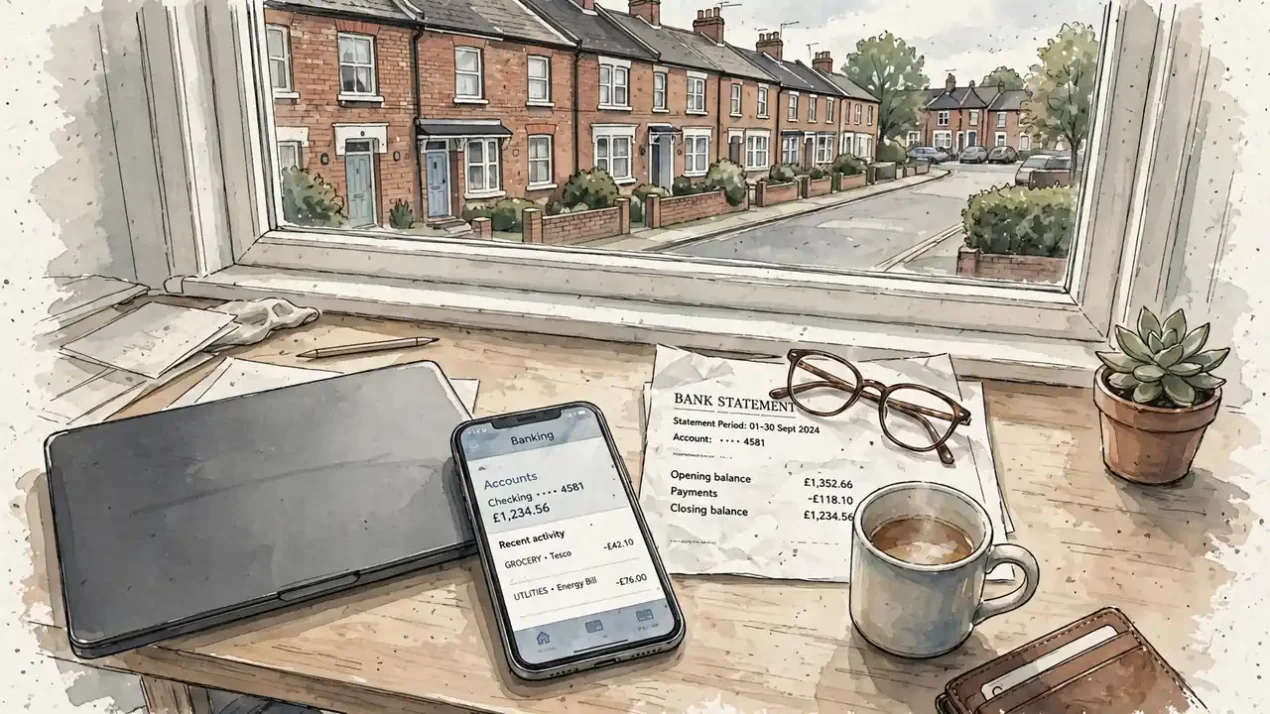
Bank transfer options can differ in how they are authorised, what they cost and how winnings are returned.
What a bank transfer changes at the cashier
A bank transfer changes the character of a casino cashier. Instead of entering card details or opening a separate wallet, the payment begins with a movement between a player’s bank account and the casino account. That sounds almost old-fashioned beside instant card buttons and branded digital wallets, but it remains a recognisable route for people who prefer their gambling funds to pass through the ordinary banking system.
The wording matters. A direct bank transfer is not the same thing as every payment service connected to a bank. Open banking can allow a payment to be authorised through online banking, while a traditional bank wire may require the casino to display account details and reference information for a manual transfer. Both involve a bank account, but the cashier experience is different. One may resemble a quick authorisation screen; the other is closer to arranging a transfer in a banking app.
That distinction explains why “casinos that accept wire transfer UK 2026” is not quite a single category. A site may support a bank transfer through an integrated open-banking service, a conventional transfer, or both. The label shown in the cashier can be “bank transfer”, “wire transfer” or a provider’s own name. The practical question is not which phrase appears in a search result, but what route is offered after the account has been opened and the cashier has been reached.
A bank account route beside cards and wallets
UK casino cashiers commonly place bank transfers alongside debit-card payments, e-wallets and other electronic methods. Visa and Mastercard debit cards are established names in this landscape. PayPal is associated with speed and convenience, although a specialist review may note that its use can be excluded from a promotion. Skrill and Neteller also appear at some sites, with a specialist review likewise warning that promotional treatment may differ.
Casinos That Accept E-Wallets in the UK
Paysafecard belongs to another class: it is a prepaid voucher and is deposit-only. That makes it fundamentally different from a bank route when the full movement of funds matters. A bank transfer is tied to an account in the banking system, whereas a voucher is purchased in advance and presented as a code or balance. Treating every icon in a cashier as interchangeable creates a tidy picture, but not an accurate one.
Apple Pay may also be available for deposits at some UKGC-licensed casinos. It is a mobile payment layer rather than a conventional transfer from a casino cashier to a bank account. Bitcoin and other cryptocurrencies appear among the payment methods mentioned by some casino information pages, but their presence does not turn a bank-transfer option into a universal banking service. Payment rails have personalities, and cashiers often hide them behind very similar buttons.
Open banking sits between the traditional bank wire and the more familiar wallet. A specialist review has described open banking and bank transfers as capable of producing instant deposits and fast withdrawals at many sites. That is a report about the sites examined, not a permanent property of every casino carrying a bank-transfer label. The route, the provider and the account all matter. Banking has never been famous for accepting a generalisation without paperwork.
Casinos That Accept Wirecard in the UK: Payment Guide
What remains visible to the casino
A bank-transfer cashier usually makes the relationship between the gambling account and the external payment account more apparent. The account holder’s name, banking details and transfer reference can form part of the transaction record. That does not make a bank transfer automatically simpler, but it gives the operator a clear ownership trail to examine when a payment is reviewed.
The cleanest arrangement is one named account used consistently for both deposit and withdrawal. When the casino account information and the payment route belong to the same customer, basic ownership details are less likely to create avoidable friction. This is not a claim that every transaction will pass without checks. It is a description of why consistency matters: a payment that arrives from an apparently unrelated account invites questions that a matching route may avoid.
Currency is another part of the cashier rather than a decorative setting. Casino pages may present GBP as supported, yet the account currency still needs to be confirmed before the first transaction. A bank transfer made in a different currency can introduce conversion into a payment that otherwise looked straightforward. The amount displayed in a banking app and the amount recorded in the casino account do not have to tell the same story when their currencies differ.
A bank transfer is a payment relationship with its own evidence trail, involving the method displayed, the account attached, the currency used, and how the casino identifies the payment.
For that reason, the bank-transfer option should be understood as a complete route: the method displayed, the account attached to it, the currency used and the way the casino identifies the payment. It is neither merely a slower version of a card nor a wallet with a bank logo. It is a payment relationship with its own evidence trail.
The cashier, in other words, is not just a door. It is a ledger.
Recommended online casinos
- SpinFormulaBonus: 550% Up To £15,000 + 550 FS · Payout speed: 1-3 business days
- NightWinBonus: £900 + 400 free spins · Payout speed: 1-3 business days
- EvoSpinBonus: 125% up to €2500 + 125 Free Spins · Payout speed: 1-3 business days
- WinBeastBonus: €5000 + 500 FS + €650 Freebet · Payout speed: 1-3 business days
- DieselwinBonus: Welcome Pack 250% up to £4000 + 200 FS · Payout speed: 1-3 business days
- ZombillionBonus: Welcome Pack 250% up to £4000 + 200 FS · Payout speed: 1-3 business days
- ChanzeBonus: Slots Welcome Bonus #1 200% up to €500 · Payout speed: 1-3 business days
- BritsinoBonus: Welcome Package – Get your £2,200 + 2,000 FS · Payout speed: 1-3 business days
- NightLuckBonus: Welcome Pack + 805% Up To 6400€ + 280 FS · Payout speed: 1-3 business days
- AmunbetBonus: Join now and get 450% up to 2,700 GBP + 450 FS · Payout speed: 1-3 business days
The deposit route, and its limits
A bank-transfer deposit begins in the casino cashier, but the important decision is not simply whether a bank account appears on the screen. The route determines how the deposit is initiated, which amount the cashier will accept, and what controls may stand between a newly opened account and its first payment. A bank wire transfer online casino arrangement is therefore less like handing over cash and more like passing through two sets of gates: the casino’s cashier and the customer’s bank.
The first practical figure is the minimum deposit. A specialist review places the lower starting point for casino deposits at between £10 and £20, depending on the selected payment method. That is a guide to the scale of the entry amount, not a permanent tariff for every bank transfer casino. The amount displayed in the cashier is the operative one, since payment methods can be configured separately and may not share the same threshold.
Casinos That Accept Tether in the UK: Payment Routes
A bank transfer can consequently be available while still being unsuitable for a particular intended amount. The payment page may show a minimum that differs from the one attached to a debit card, an e-wallet or another route. The distinction matters because the label “bank transfer” says little about the cashier’s settings. One site may treat the route as a conventional account-to-account payment; another may present a bank-payment service within the same general category. The deposit screen, rather than the broad payment banner, determines what can actually be sent.
The lower edge of the deposit
For someone comparing online casino sites that accept bank transfer, the minimum is only the first boundary. A low starting amount may make an account accessible, but it does not establish that every future deposit will be accepted at the same level. Limits can be attached to the payment method itself, to the account, or to both.
The cashier may distinguish among:
- the minimum accepted for one deposit;
- the maximum permitted in a single transaction;
- a maximum accumulated across a day;
- a maximum accumulated across a month.
Those are different controls, even when they appear under one heading. A customer who reaches a daily or monthly ceiling has not necessarily encountered a problem with the bank-transfer route. The restriction may belong to the account’s current status or to the casino’s wider deposit policy.
The available maximum can vary with the selected payment method and the account status. A bank wire transfer online casino may therefore show one set of boundaries before an account has completed its checks and another after its status changes. The precise figures are not a dependable feature of the words “bank transfer”; they belong to the individual cashier and its treatment of that account.
This is where the apparently old-fashioned bank route acquires a modern administrative character. The money may leave a current account in familiar fashion, yet the casino still records the transaction against a digital profile with its own thresholds. The bank sees a transfer. The cashier sees a deposit request attached to an account, a method and a limit structure. Both descriptions are true, and neither replaces the other.
Deposit Controls
The cashier may distinguish between different types of limits:
- The minimum accepted for one deposit
- The maximum permitted in a single transaction
- A maximum accumulated across a day
- A maximum accumulated across a month
Limits before the first payment
UKGC rules give the deposit process a further step before money is added. Remote gambling operators must prompt a new customer to set a financial limit before the first deposit. The account must also provide accessible controls for setting or changing limits at account level.
That requirement changes the order of events. A new account is not simply a blank balance waiting for a bank wire. Before the first deposit, the account should present a financial-limit prompt. This is separate from the cashier’s transaction limits: one concerns the customer’s chosen financial control, while the other concerns what the casino or payment route will accept.
The distinction is worth keeping clear:
- a financial limit is an account-level control set through the responsible-gambling interface;
- a deposit minimum is the smallest amount accepted through the selected route;
- a transaction, daily or monthly maximum is a payment or account boundary imposed by the cashier.
They can all affect the same deposit without being interchangeable. A payment may fall within the bank-transfer minimum yet exceed a customer’s chosen financial limit. Conversely, a customer’s limit may permit an amount that the selected payment method or account status does not accept.
For a UKGC licensed bank transfer casino, these controls are part of the deposit architecture rather than decorative wording around it. They make the first payment a point at which the account’s financial settings and the cashier’s operational settings meet. The arrangement has a certain bureaucratic elegance: before the balance exists, the rules surrounding it already do.
Reading the cashier accurately
The useful comparison is not between casinos described in general terms as accepting bank wire transfers. It is between the deposit screens available to the relevant account. The cashier should show the bank-transfer route, the minimum applicable to it and any maximum or cumulative restriction attached to the account. The financial-limit controls should be reachable from the account area rather than buried in an unrelated page.
That information also explains why a bank transfer online casino cannot be assessed by its payment-method list alone. A list establishes a route in principle. The deposit screen establishes the route’s present boundaries. The difference is modest in appearance and decisive in practice.
The bank transfer is only the beginning. Limits do the rest.
When a bank transfer is actually available
A casino may display a long list of payment methods without making every option available to every account. Payment information on a general page is therefore a signpost, not a cashier decision. The practical answer appears only after logging in and opening the deposit or withdrawal area, where the operator can match the available route to the account, jurisdiction and selected currency.
Acceptance of a payment method must be established at the point of the live cashier, as general payment pages are signposts rather than final decisions.
This matters with bank transfers because the label can cover different arrangements. One cashier may show a conventional bank-transfer instruction with account details to enter manually. Another may present an open-banking connection through a participating bank. A third may show neither, even though a general payment page mentions bank transfer. The phrase sounds singular; the machinery behind it is not.
The same distinction applies when looking for an online casino that accepts wire transfer payments. Acceptance needs to be established at the point where the transaction would actually begin. A logo, a help-page paragraph or a payment-method list does not confirm that the route is active for a particular customer. Cashier availability does.
Why the cashier is the useful test
The cashier is where several conditions meet:
- the customer’s account status;
- the casino’s current payment configuration;
- the available deposit or withdrawal direction;
- the account currency;
- the payment product recognised by the operator.
That last point is easy to overlook. A casino may name Visa and Mastercard among its methods while the precise card product or current UK eligibility still requires confirmation in the cashier. A payment brand is not a guarantee that every card carrying its mark will work. Payment systems have always preferred fine print to ceremony.
Bank transfer access should be checked in the same practical way. If the cashier shows the method for deposits, that establishes deposit availability, not necessarily withdrawal availability. A casino wire transfer withdrawal may follow a different set of controls or may be offered only after another route has been used. The two directions should not be treated as interchangeable merely because they share a name.
This is also why screenshots, review summaries and old payment tables have limited value. They can describe an arrangement that has since changed, or one that applied to a different account configuration. A specialist review may report that a route was available at the time of inspection, but the live cashier remains the more relevant confirmation for a transaction taking place now.
Casinos That Accept Interac in the UK: Cashier Check
Currency is part of availability
A payment route can be visible while the account currency creates a separate question. GBP is identified as a supported currency in the relevant casino information, but the currency selected for the individual account still needs checking before the first transaction. Otherwise, a bank transfer may involve conversion even though the account is intended for a UK customer.
The currency field belongs beside the payment-method field, not in some distant corner of the decision. A route that accepts the transfer but converts the funds is materially different from one that handles the account in pounds. Confirmation at the cashier can show whether GBP is selected and whether the transfer instructions correspond with that setting.
For this reason, availability is best understood as a combination rather than a badge: the bank-transfer option must be visible for the intended transaction, the direction must be clear, and the account currency must be compatible. General payment pages can introduce the possibility. The cashier decides whether that possibility has become an option.
The transfer’s costs are more than a visible fee
The price of a casino wire transfer deposit is not always the figure displayed beside the payment button. A cashier may show no casino charge while the payment still passes through institutions that apply their own pricing. The total can involve a fee from the casino, a charge from the payment provider, an issuer or bank fee, an exchange-rate spread, and a network cost.
Potential Costs
The total cost of a transfer can involve several layers:
- A fee from the casino
- A charge from the payment provider
- An issuer or bank fee
- An exchange-rate spread
- A network cost
That list matters because the parties do not necessarily present their charges in the same place. The casino may describe its own fee in the cashier, while the bank’s tariff sits elsewhere. A provider may include its cost in the transaction, and a network charge may be absorbed or passed on without being labelled as a casino payment fee. The apparently simple wire transfer casino deposit therefore has several possible points of friction.
A fee and a spread are different things
A flat fee is easy to notice. It appears as a stated charge attached to the transaction or listed in the payment terms. An exchange-rate spread is quieter: it is built into the rate used when money moves between currencies rather than shown as a separate deduction.
That difference can make a spread more expensive than a visible flat charge. The amount lost is not necessarily described as a “fee”, yet it still reduces the value credited to the gambling account. This is particularly relevant when the bank account and casino account use different currencies. A casino wire transfer deposit in pounds is not economically identical to a transfer converted before it reaches the cashier.
A specialist review may describe a payment method as low-cost while concentrating on the absence of a casino surcharge. That is not the same as establishing the final cost for every account, bank or currency. The exchange rate and external banking arrangements remain part of the calculation. Labels are not arithmetic.
Comparing the real cost
There is no single payment method that is the cheapest in every case. A meaningful comparison has to use the actual amount being transferred and consider the separate layers together:
- any charge imposed by the casino;
- the payment provider’s fee;
- a fee from the issuing bank or receiving bank;
- the exchange-rate spread where conversion is involved;
- network costs attached to the transfer.
The comparison should also distinguish the amount sent from the amount credited. If the figures differ, the reason may be a stated charge, a conversion, or a cost taken elsewhere in the route. A wire transfer casino site that advertises “free deposits” may be referring only to its own cashier charge, not to every institution involved.
For a UK account, a casino showing a pound balance removes one possible conversion point, but the account currency still needs to be understood before the first transaction. If the casino, bank and payment route do not use the same currency, the rate applied becomes part of the payment decision. That is where a supposedly small convenience can acquire a less decorative price.
The sensible measure is therefore the final credited value, not the most prominent fee label. A bank transfer casino deposit can look free and still carry a cost through the rate or the route. The cashier tells only part of the story.
Matching the account to the payment
A bank-transfer deposit is easiest to reconcile when the casino account and the bank account point to the same person. The name and other basic account details should therefore correspond with the payment information supplied during the transfer. This is not a decorative preference in the cashier; it gives the operator a coherent ownership trail for a casino that accepts wire transfer deposits.
Do
- Use a named account that matches your casino profile
- Ensure the bank account and casino account belong to the same person
Don’t
- Use an account held by a relative, partner, or friend
- Expect an automatic match if details do not align
A casino that accepts bank wire transfer payments still has to establish where the money came from and who controls the gambling account. When those details align, a routine ownership check has fewer loose ends to examine. A mismatch, by contrast, can turn an otherwise ordinary deposit into a request for clarification or supporting evidence. The transfer may be genuine, yet the visible facts no longer tell one simple story.
That matters particularly where a deposit is made from an account held by somebody else. A relative, partner or friend may have authorised the payment, but authorisation alone does not make the funding route belong to the casino account holder. The operator may need to establish the relationship and the legitimacy of the funds before treating the transaction as complete. Bank wires leave a useful paper trail; they also leave little room for ambiguity.
The cleanest arrangement is a named casino account funded through a bank route held by that same named customer. It keeps the identity information, the payment source and the transaction record in one line. This is the practical standard to look for when comparing an online casino that accepts wire transfer deposits, rather than assuming that the presence of a bank-transfer button settles every ownership question.
Why the route matters beyond the deposit
The connection continues after money has entered the casino balance. UK anti-money-laundering controls generally point winnings back towards the payment source used for the deposit. Returning funds to that original source is also a familiar anti-fraud measure. In plain terms, the route into the account helps shape the route out.
Casinos That Accept EntoPay in the UK: What to Check
That does not mean every later payment is automatic. An alternative destination may be considered, but it can bring extra checks because the operator must establish why the funds are being sent elsewhere and who is entitled to receive them. A changed name, a different bank account or an unrelated payment route can therefore create more work than the original deposit. Banking systems are fond of consistency, and compliance departments even more so.
For a casino that accepts wire transfer, the relevant question is not simply whether the cashier displays “bank transfer”. The account holder’s details and the funding route should make sense together, both at the point of deposit and when the balance is eventually paid out. That alignment does not remove every possible check, but it avoids creating an unnecessary ownership puzzle before the transaction has even begun.
Receiving winnings by bank transfer
A bank-transfer withdrawal is the point at which a casino balance becomes money moving through the banking system. The route may look like the reverse of a deposit, but it is not always an automatic reversal. The casino first has to approve the withdrawal, apply its payment controls and confirm that the destination is acceptable.
For UK casino winnings by wire transfer, the central principle is the return-to-source approach. Anti-money-laundering controls generally require funds to go back through the payment source used for the deposit. This is why a cashier may not allow winnings to be sent to an unrelated bank account, even when the account holder says that both accounts belong to the same person. The rule is less about preference than traceability: the money should leave by a route that can be connected to the original funding activity.
Attention Anti-money-laundering controls generally require funds to be returned to the original payment source used for the deposit.
That makes a consistent payment trail valuable. A bank account in the same name as the casino account gives the operator a straightforward ownership record. If the withdrawal method differs from the deposit route, the casino may ask for further evidence or direct part of the transaction back to the original source before releasing any remaining balance. Closed-loop rules are not especially poetic, but financial systems have rarely been accused of writing poetry.
What happens after the request
The withdrawal request does not itself mean that the transfer has been sent. The casino’s internal team must review it first. That review can include the account history, the payment source and the player’s KYC status. A first withdrawal may therefore take longer while verification is completed, rather than because the bank-transfer network has already delayed the money.
Once approved, the payment still has to pass from the casino to the banking system and then reach the account. The timing therefore has at least two distinct parts: the operator’s processing stage and the bank’s delivery stage. Treating them as one event makes a pending withdrawal seem mysterious when it is simply waiting for an earlier decision.
A fully verified account removes one possible obstacle, although it does not turn every wire transfer casino in the UK into an instant-payout service. Withdrawal speed remains tied to the casino’s internal approval process and to whether the account is ready for payment. A displayed “processed” status may describe the operator’s action, not the moment the funds appear in the bank account.
The cashier’s withdrawal instructions matter here. They show whether bank transfer is available for payouts, whether the route is restricted by the original deposit method and which account details must be supplied. The cleanest arrangement is a casino account, payment source and receiving bank account that all point to the same customer. Fewer contradictions mean fewer reasons for the payment to pause.
Casinos That Accept WebMoney in the UK: What to Check
Why a withdrawal can take longer than expected
A casino wire transfer withdrawal has three separate stages, and the clock does not begin in the same place for all of them. A withdrawal request may first wait for the casino’s internal approval. Only after that decision is made does the bank-transfer delivery stage properly begin. Treating the whole process as one movement of money makes an ordinary pause look mysterious.
Approval comes before the bank
The casino reviews the withdrawal request before instructing the payment. This internal step can include checks on the account, the transaction history and the requested route. A casino may therefore show a pending withdrawal even though no bank has yet received an instruction.
This is why a wire transfer casino withdrawal cannot be judged solely by the delivery habits of the receiving bank. The operator’s own approval process remains part of the timetable. A payment provider may be ready to move funds, yet the request can remain with the casino while its controls are completed.
A specialist review describes internal approval and verification as elements of withdrawal processing, rather than treating the displayed processing period as bank delivery alone. The distinction is small on the cashier screen and considerable in practice.
First withdrawals can carry extra checks
The first withdrawal often has a different character from later requests because the account may not yet be fully verified. KYC checks can require the casino to confirm information before releasing funds. Until that work is complete, the withdrawal may not progress to the bank-transfer stage.
Withdrawal speed is tied to both the casino’s internal approval process and the bank’s delivery stage.
Withdrawal speed is therefore linked to account status as well as to the payment method. A fully verified account removes one possible source of delay; it does not turn the operator’s approval into an automatic action. If additional information is requested, the time spent responding and reviewing it becomes part of the overall wait.
The arithmetic is administrative, not glamorous.
Delivery has its own calendar
Once approved and sent, a bank transfer still follows banking conditions. Cut-off times can move an instruction into the next processing window. Weekends can interrupt the ordinary movement of funds, while currency conversion can add another dependency where the casino account and bank account do not use the same currency.
A withdrawal can therefore be approved without appearing immediately in the receiving account. The relevant sequence is casino review, completed verification where required, transfer instruction and bank delivery. Each stage belongs to a different institution, and none can simply be folded into the others.
That is the practical reason a casino withdrawal by bank transfer may take longer than the word “approved” suggests.
The payment route is not always the fastest route
Speed is not a single property of a casino payment. It belongs to several stages: the casino’s decision to release funds, the payment system’s handling of them, and the receiving bank’s timetable. A wire transfer payment at a casino may therefore look quick at one point and ordinary at another.
Bank transfers have a particular dependence on timing. Delivery can be influenced by the bank’s cut-off time, weekends and any currency conversion. A transfer initiated at an inconvenient point in that chain may wait for the next processing window, even where the casino has already approved it. The method is less a straight road than a road with opening hours.
Casinos That Accept Giropay in the UK: What to Check
Open banking changes part of that picture. A specialist review describes open banking and bank transfers as capable of providing instant deposits and fast withdrawals at many sites, but that is an observation about the services covered there, not a permanent property of every cashier. The route still depends on the casino, the banking connection and the currency used.
Other methods can be quicker at the withdrawal stage. A specialist review places PayPal, open banking services and debit cards connected to fast payout systems among the quickest routes. That comparison concerns the movement of an approved withdrawal; it does not erase the casino’s own checks before approval. A debit-card deposit may appear immediately while the corresponding payout takes several business days. Money has a talent for arriving before it is allowed to leave.
The practical distinction is between an instant account entry and a completed withdrawal. A bank transfer may show as available for a deposit without making the reverse journey equally immediate. Conversely, an efficient open-banking link can reduce waiting at one stage while another delay remains at the casino.
Currency is another dividing line. Where conversion is involved, the transfer is no longer governed only by the casino and the bank. The exchange process becomes part of delivery, adding a dependency that a payment kept in the account’s supported currency may avoid.
For that reason, a casino’s payment page should be read as a description of a route, not a promise of speed. The relevant comparison is whether the method supports the required direction, how approval fits into the process, and which external timing factors can interrupt it. Fast is conditional.
Final Summary
- Bank transfer availability is confirmed in the live cashier, not just on general info pages.
- Consistency between the casino account name and the bank account name avoids ownership puzzles.
- Total costs can include exchange-rate spreads and bank fees, not just visible casino charges.
- UKGC rules ensure traceability and prohibit the use of credit for gambling.
Bank transfers under UKGC oversight
A bank-transfer casino serving Great Britain sits within a payment system shaped by the UK Gambling Commission, not merely by the banking industry. Remote gambling operators selling into Great Britain must hold the relevant UKGC licence, wherever the business itself is based. That licence places payment handling inside a wider framework of age checks, customer protection and anti-money-laundering controls.
For a bank wire transfer, the important point is traceability. Money moving from a personal bank account into a gambling account leaves a clearer ownership trail than cash passed between unrelated people. That does not make every transfer automatically acceptable: the account details, payment route and customer record still need to correspond. Payment-source checks are part of the machinery rather than an optional courtesy from the cashier.
The same principle appears when winnings leave the casino. UK anti-money-laundering rules generally lead operators to return funds to the payment source used for the deposit. In practical terms, a bank-transfer deposit may therefore create a natural route back to the same bank account. An alternative destination can require further checks, because a change in destination changes the question of who controls the money. Bureaucracy has a long memory.
The UK framework also draws a firm line around borrowing. The regulator prohibited credit-card gambling on 14 April 2020, and that prohibition remains in force. A UKGC-licensed casino cannot accept a credit card as the funding route for gambling. The restriction also covers credit-card money routed through a money service business, so moving the same borrowed funds through an intermediary does not turn them into an acceptable deposit.
This matters when comparing bank transfers with wallets and other payment services. A wallet is not automatically suitable merely because it appears in a cashier: operators cannot accept wallet payments where the wallet permits credit-card funds to be used for gambling. The payment method must therefore be considered together with the way it is funded.
A UKGC casino offering bank transfer is consequently operating within two connected safeguards: the source of the money must be identifiable, and credit-card gambling must remain excluded. The payment button is the visible part. The controls behind it are the real arrangement.
A sound basis for comparing transfer casinos
A workable bank-transfer casino is defined less by a decorative payment logo than by what appears in its live cashier. General payment pages can mention Visa, Mastercard and bank transfer, yet the available route may depend on the customer’s account, location or card product. A specialist review may describe these methods, but it cannot replace the cashier’s own confirmation.
The first useful check is therefore practical: bank transfer should be visible as an active deposit method after registration and age verification, with the relevant instructions shown clearly. The same account should also identify how withdrawals are handled. A method that exists only for deposits is not a complete payment route; it leaves the transaction unfinished at precisely the point where clarity matters most.
Currency deserves equal attention. A casino account set to GBP keeps the payment path easier to understand for a UK customer, while an account using another currency can introduce conversion into the transaction. The account currency should be established before the first payment, not inferred from a British-facing website or a familiar pound symbol.
Account ownership is the final test. The cleanest arrangement is one named bank account used consistently for depositing and withdrawing, with account details matching the casino profile. That alignment does not remove every verification step, but it avoids a basic contradiction between the gambling account and the payment route.
A sensible comparison can therefore be reduced to three questions:
- Is bank transfer actually enabled in the cashier?
- Is the account currency clear before money is sent?
- Can the same customer’s named account be used consistently in both directions?
If the answer to all three is yes, the option has a coherent foundation. If a payment logo is the only evidence, the foundation is rather thinner.
What is the fastest withdrawal method for UK casinos?
PayPal, open banking services and debit cards linked to fast payout systems are generally among the quickest options. Actual payout time also depends on the casino’s approval process and whether your account is verified.
Why must withdrawals return to the deposit method?
Returning funds to the original payment source is a common anti-fraud and anti-money-laundering control. Using the same account and payment route for deposits and withdrawals can also reduce avoidable ownership checks.
Do UK casino withdrawals require verification?
Verification may be completed before a withdrawal is approved, and first withdrawals can take longer while checks are carried out. A fully verified account can help avoid delays.
Why can a fast payout casino still delay my withdrawal?
A casino’s internal approval process and incomplete account verification can delay a payout, even when the payment method is normally fast. Bank-transfer delivery can also be affected by cut-off times, weekends and currency conversion.
Are fast casino withdrawals guaranteed?
No. Withdrawal speed depends on the casino’s approval process, account verification and, for bank transfers, factors such as cut-off times and weekends.
Related posts

Terms of Use

Top Rated Online Casinos UK: What Ratings Mean
