
Offshore Casino Licences Explained: Curacao, Malta and Anjouan
 Available in GB
When a casino is “not on GamStop”, it is because it is licensed somewhere other than Britain, and not all of those somewheres are equal. The phrase “Curacao licensed” gets thrown around as if it were a single fixed thing, but the jurisdictions behind non-GamStop sites range from genuinely strict regimes to cheap, light-touch registrations to no licence at all. This page breaks the main options down by relative strength, with the verifiable detail that affiliate listicles tend to leave out, and ends by being honest about what none of these licences gives a British player.
The full picture is in our guide to casinos not on GamStop.
Why these casinos are licensed abroad in the first place
An operator that wants to take British customers legally must hold a licence from the UK Gambling Commission under the point-of-consumption rule introduced by the Gambling (Licensing and Advertising) Act 2014. Sites that do not want to meet the cost and obligations of a UKGC licence instead obtain a licence from a foreign regulator and operate from there. That offshore licence is what places them outside the GamStop network, since the obligation to integrate with the scheme is a UKGC licence condition and nothing more. If the regulatory background to that is unfamiliar, the UK regulation context page sets it out from the ground up.
The practical consequence is that the licence on an offshore site is the single most useful signal you have about how it is likely to treat you, because it tells you whose rules the operator actually answers to. A strong licensing regime means an external authority with real teeth is supposed to be supervising fair play, holding client funds to a standard, and providing some route for complaints. A weak or absent one means you are largely relying on the operator’s own goodwill. So it is worth understanding the hierarchy rather than treating every offshore licence as interchangeable.

Curacao: the dominant jurisdiction, mid-way through a major reform
Curacao is the jurisdiction you will see most often behind non-GamStop casinos, and it has just been through the biggest change in its modern history. For decades it ran on a system of four private master licence holders who sold sub-licences to operators, which meant minimal central oversight and weak consumer protection. That model has now been dismantled. The Curacao Parliament approved the National Ordinance on Games of Chance, known by its Dutch abbreviation LOK, on 17 December 2024 by a margin of thirteen votes to six, and the law came into force on 24 December 2024, replacing the old NOOGH framework that had been in place since the 1990s.
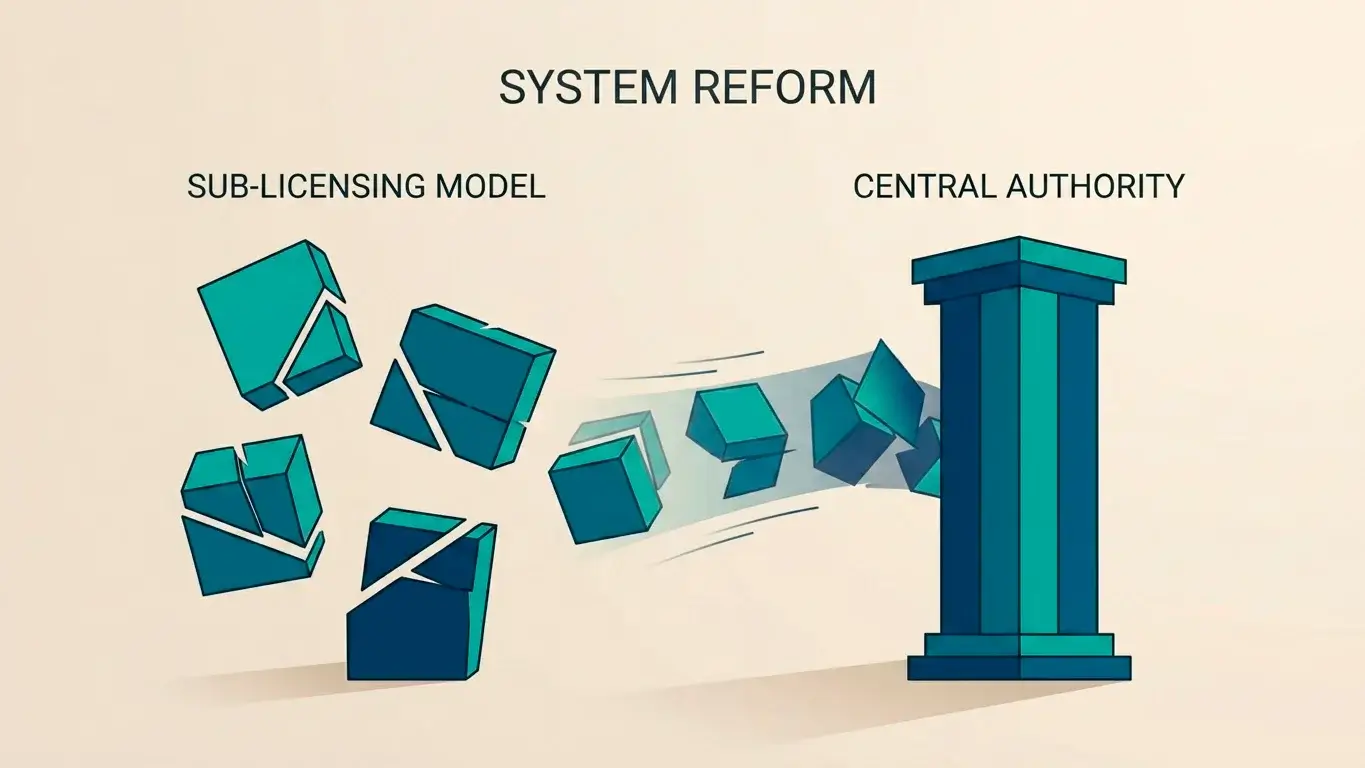
Under the LOK, a single body, the Curacao Gaming Authority, is now the sole direct issuer of licences, and the master-licence-and-sub-licence chain is gone. The transition has been run through a system of digital authorisation seals tied to a public register: a green seal confirms an active operator licence, while an orange seal marked a company still transitioning from the old regime. That orange seal expired permanently on 15 October 2025, after which platforms without a green seal lose their operating rights. The reform also brings in mandatory dispute-resolution mechanisms and tighter anti-money-laundering rules, with further requirements for a local presence phased in over the following years. It was, notably, a condition attached to financial support the Netherlands provided to Curacao during the pandemic.
What this means in practice is that “Curacao licensed” is no longer a single thing. A site holding a fresh, properly issued CGA licence under the new regime is meaningfully better supervised than one trading on a legacy seal that has since lapsed. It is worth checking what a given site can actually evidence, because the reform deliberately squeezed out the thinly-capitalised and anonymous operators that the old system tolerated. Even so, a reformed Curacao licence is not equivalent to a UKGC one, and the gap matters for safety, which is why this page links through to the safety implications in detail.
Malta and Gibraltar: the stricter end of the offshore spectrum
At the more protective end sit Malta and Gibraltar. The Malta Gaming Authority, usually shortened to MGA, is generally regarded as the most rigorous of the licences you will commonly encounter on non-GamStop sites. Malta is an EU member state, its regime imposes substantive obligations on operators around player protection and fund handling, and an MGA licence is harder and more expensive to obtain than a Curacao or Anjouan one. Gibraltar is similarly demanding and has historically licensed a number of large, established operators. Neither is a substitute for UK protection, but a site holding one of these licences is, all else being equal, operating under a more serious external authority than one relying on a cheaper registration.

The trade-off, from an operator’s point of view, is exactly why some non-GamStop sites do not hold these licences: the stricter the regime, the more it costs to comply and the more it constrains the loose bonuses and light verification that draw players to the offshore market in the first place. A useful rule of thumb is that the licence a site chooses tells you something about the corners it is and is not willing to cut. The way these protections stack up against the British system is the whole subject of the non-GamStop vs UKGC protections comparison.
Anjouan and the cheaper, weaker options
At the lighter end is Anjouan, part of the Union of the Comoros, whose gaming licence has become popular with smaller operators precisely because it is cheaper and has a lower threshold to obtain than Curacao or Malta. An Anjouan licence is better than nothing, in that some authority nominally exists, but it carries far less supervisory weight than the stricter regimes. From mid-2025 the jurisdiction introduced a recognition-certificate arrangement aimed at tightening standards around game fairness, transparency and anti-money-laundering, with a transition period for existing partners, though it remains toward the lower end of the credibility scale.
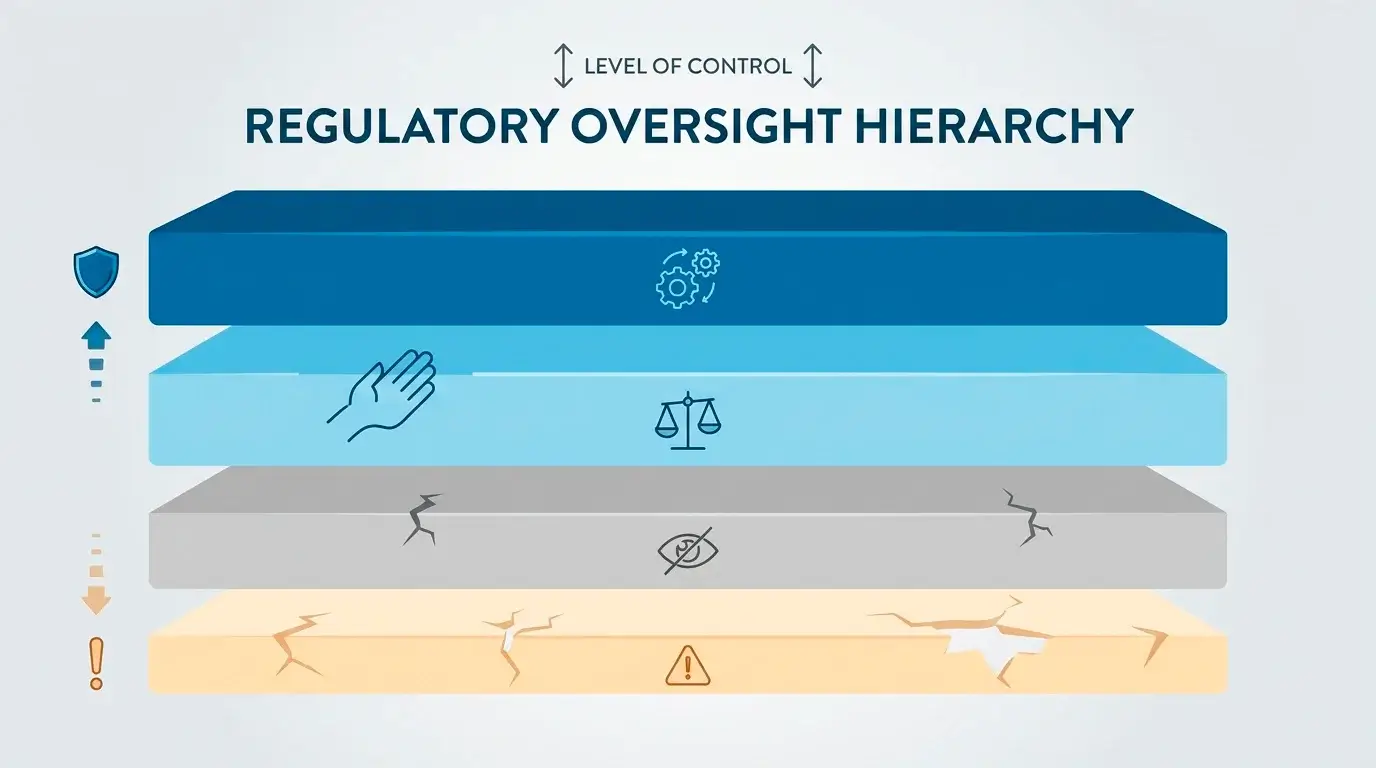
Below Anjouan are a scattering of even lighter options that turn up occasionally, including Costa Rica, Panama, Nevis and Tobique, all of which are generally regarded as weaker or cheaper still. And then there is the genuinely dangerous category: sites operating with no clear, verifiable licence at all. These represent the highest risk because there is no external authority of any kind supervising fair play, holding funds or hearing complaints. If a site cannot or will not clearly evidence a real licence from a named regulator, that absence is itself the most important fact about it.
- Stricter
- Malta Gaming Authority and Gibraltar, the most demanding of the common offshore regimes.
- Mid-tier, reforming
- Curacao under the 2024 LOK, now centrally licensed by the Curacao Gaming Authority.
- Lighter
- Anjouan, and weaker still Costa Rica, Panama, Nevis and Tobique.
- Highest risk
- Sites with no clear, verifiable licence from any named regulator.
What none of these licences gives a UK player
It is essential to be blunt about the ceiling here. Even the strongest offshore licence is not the same as a UKGC one, and the difference is not cosmetic. An offshore licence gives no access to UK alternative dispute resolution, so if a payout dispute goes wrong you cannot escalate it to a British ADR body or to the UK Gambling Commission. It carries no UKGC-level guarantee that your deposits are kept segregated and protected to British standards. And it places you under the supervision of a foreign authority whose reach, resources and willingness to act on behalf of an overseas player vary enormously between jurisdictions.
What a weaker licence costs the player: the risk assessment.
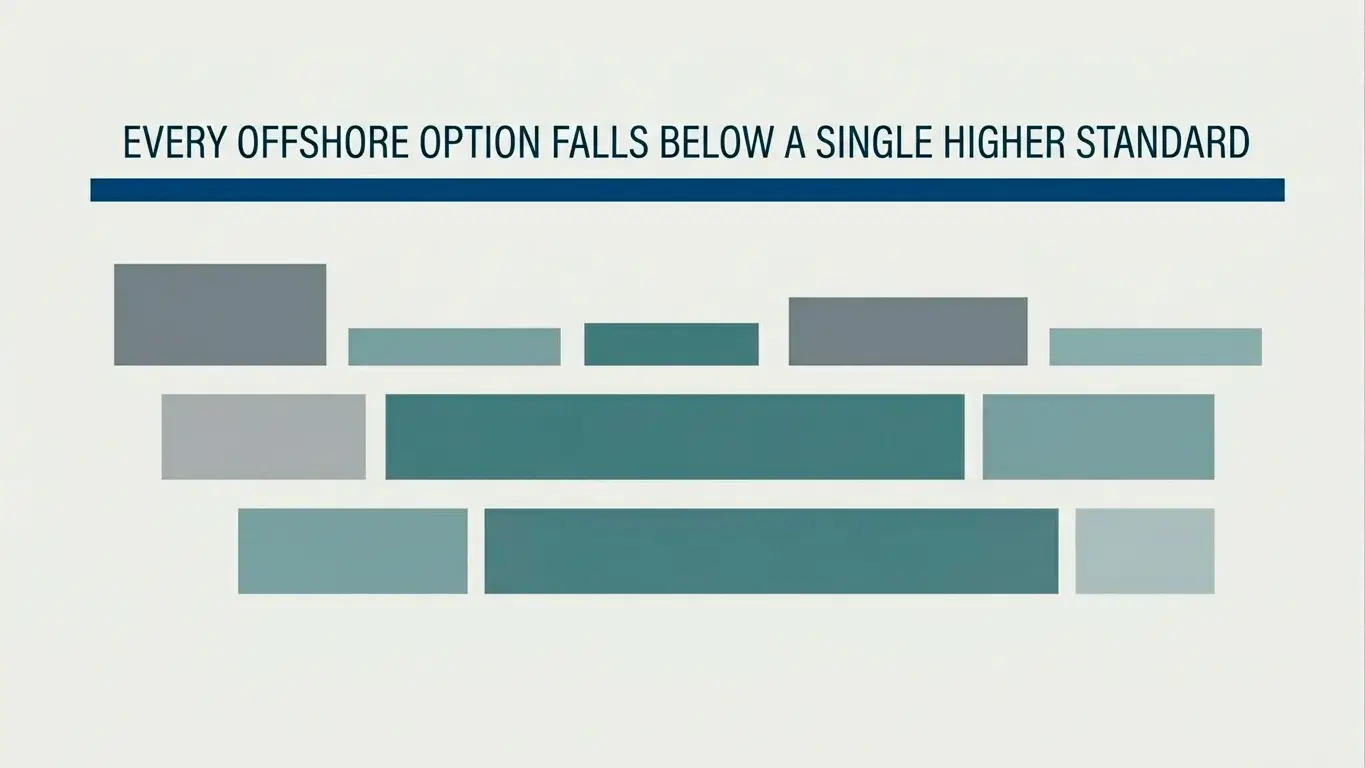
So while it is fair to rank offshore licences from stronger to weaker, the ranking sits entirely below the British baseline. The Commission backs its licence conditions with active enforcement against unlicensed operators targeting UK customers, the legal basis for which runs back through sections 33 and 36 of the Gambling Act 2005. A Malta licence is better than an Anjouan one, and an Anjouan one is better than none, but none of them restores the protections a UK player gives up by leaving the regulated market. For the full guide and the operator comparison itself, start from the main guide and operator comparison.
This material was created by the GamStop Review Casino team.
Related posts

Non-GamStop vs UKGC Casinos: How They Compare for UK Players

What “Casino Not on GamStop” Really Means