
Casinos That Accept iDEAL in the UK: What to Check
 Available in GB
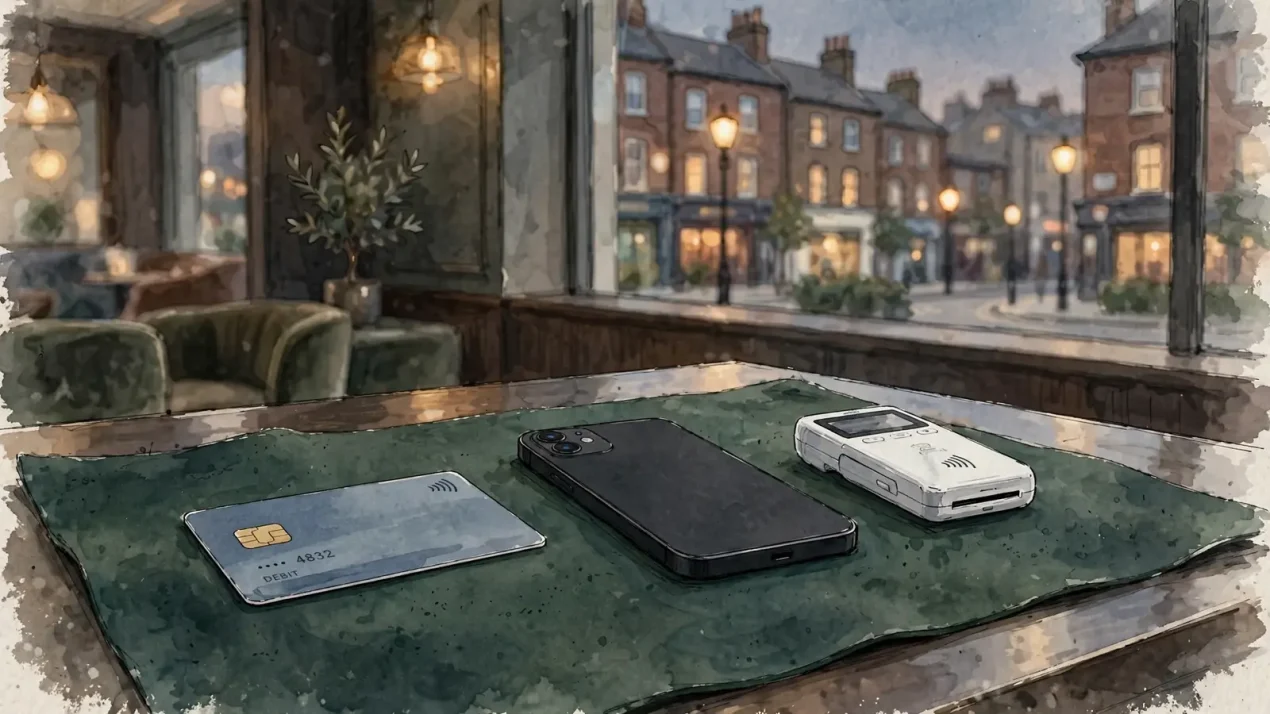
Payment options can vary by country, account profile and currency, so a casino listing alone does not confirm iDEAL is available at checkout.
Is iDEAL Still a Route into UK Online Casinos?
iDEAL has a clear reputation in European payments, but reputation is not the same thing as a live cashier option. A casino may appear in a title, comparison page or promotional description connected with iDEAL while the payment method is absent when an account is opened from Britain. The useful question is therefore narrower: does iDEAL appear in the cashier for the relevant UK customer, in the account currency and at the point when a deposit is actually being made?
That distinction matters in 2026 because payment menus are not permanent catalogues. They can vary by country, operator, account profile, currency and payment provider. A method can be technically supported by a platform yet withheld from a particular customer. It can also disappear after a payment partner changes its coverage. The phrase “casinos that accept iDEAL UK 2026” sounds like it requests a stable directory. In practice, it describes a live status that needs checking.
Why a name on a page proves very little
An article claiming to cover all iDEAL casinos in the UK may be describing a historical arrangement, a non-British version of a site or an operator’s wider international cashier. None of those details establishes that a British customer can select iDEAL today. Even a payment logo can be less decisive than it looks: logos are often retained in general payment sections while the actual cashier applies narrower rules.
The same caution applies to pages that label themselves the best iDEAL casinos, new iDEAL casinos or iDEAL casino sites with bonuses and games. Those labels say what the page is discussing, not what a current UK account can use. A bonus headline is particularly weak evidence. Promotional eligibility and payment availability are separate decisions, and an operator may show a payment route without attaching an offer to it.
A more reliable check follows the route taken by an ordinary transaction:
- confirm that the site is serving customers in Great Britain under the relevant Gambling Commission licence;
- open the cashier after account registration and age checks;
- select the deposit section and inspect the methods displayed for that account;
- check the account currency and any country restrictions before entering payment details;
- read the payment terms for any conditions attached to the method.
This is less glamorous than a list headed “best”, but it has the virtue of describing an actual screen rather than a marketing fossil.
Android does not create a separate iDEAL channel
The wording around Android casinos can suggest that a mobile operating system determines the payment route. It does not. An Android phone may display a casino website through a mobile browser, but the available cashier options remain tied to the operator, customer location, account and payment configuration. A different screen size does not turn an unavailable method into an available one.
The practical distinction is between playing on Android and funding an account. The device may affect how the cashier is presented; it does not establish that iDEAL is supported. A mobile page can show fewer options until a menu is opened, or it can redirect to an external banking interface. Neither behaviour should be treated as evidence before the payment journey reaches its confirmation stage.
What can be established about the British market
There is a firmer baseline for card payments. UK casinos commonly accept debit cards, including Visa and Mastercard. That does not make every card product eligible, and the current British availability of a particular card route still belongs to the cashier rather than to an old comparison table. Credit-card payments for gambling are not permitted at UK-licensed casinos, so a debit-card reference should not be casually expanded into a general claim about cards.
Open banking and bank transfers are also described by a specialist review as capable of providing instant deposits and fast withdrawals at many sites. That description should be treated as time-sensitive rather than as a guarantee for every operator or account. Payment infrastructure changes, and the word “many” cannot tell a particular customer what will appear in a particular cashier.
Do
- Confirm the site is serving customers in Great Britain under a relevant licence
- Open the cashier after registration and age checks
- Inspect the specific methods displayed for your account and currency
- Read the payment terms for any specific conditions
Don’t
- Rely on a payment logo seen on a general page as proof of availability
- Assume a name in an article title guarantees current access
- Treat a promotional bonus headline as evidence of payment availability
- Expect international cashier options to work for a British account
The same principle governs iDEAL. There is no sound basis for turning its name into a universal UK availability claim, or for presenting a definitive list of every British casino that accepts it. The method may be visible at some operators and absent at others; the relevant fact is the option presented to the account at the time of funding.
How to read an iDEAL claim
A useful description should identify what has actually been checked: the market version of the site, the cashier rather than only the homepage, and the customer’s country and currency. It should avoid quietly mixing British operators with international brands. “Available in Europe” is not the same statement as “available to customers in Great Britain”.
The safest interpretation of “are iDEAL casinos still available in the UK?” is therefore conditional. iDEAL may be available where the operator’s current cashier offers it to the relevant British account, but its presence cannot be inferred from a page title, a list of games, a bonus reference or a mobile label. Payment names are clues. The cashier is the evidence.
When iDEAL Is Unavailable: Other Ways to Pay
When iDEAL is not shown in a UK casino cashier, the practical comparison is not between one brand and another. It is between payment routes: a bank card, a bank transfer, an e-wallet, a mobile wallet or a prepaid voucher. Each route has its own relationship with the casino account, and the cashier remains the place where current availability is established.
Casinos That Accept E-Wallets in the UK
Debit cards
Debit cards are among the most familiar alternatives for casino deposits. UK casinos commonly display Visa and Mastercard debit options, although the exact card product and its current eligibility still need checking in the cashier. A method appearing on a general payment page is not the same thing as being available for every customer or every transaction.
Credit-card payments for gambling are not permitted by UK-licensed casinos. That distinction matters because a wallet or payment service must not be treated as a way around the rule: remote gambling operators cannot accept wallet payments where the wallet permits credit-card funds to be used for gambling. The source of the money matters, not merely the button pressed at the final stage.
A debit-card route is therefore relatively straightforward in principle: the card belongs to the customer, the account details match, and the casino accepts that card network. Problems tend to arise when ownership information or card eligibility does not align. Payment screens are less interested in optimism than in matching names.
Bank transfer and open banking
Bank transfer is a separate route from card funding. Some casino cashiers also offer open banking, allowing a payment to be authorised through a bank account rather than entered as a card transaction. A specialist review has described open banking and bank transfers as capable of supporting instant deposits and fast withdrawals at many sites, but that is a time-sensitive assessment rather than a permanent feature of every casino.
The useful distinction is between the payment rail and the casino’s own processing. A bank-based deposit may move directly from the account, while the operator still applies its account checks and transaction controls. Availability can also depend on the bank, the currency held in the account and the options presented after login.
For a British account, a bank-based method can be attractive because it avoids introducing an e-wallet between the casino and the customer’s bank.
For a British account, a bank-based method can be attractive because it avoids introducing an e-wallet between the casino and the customer’s bank. It is not automatically the quickest or cheapest route in every case, however. A payment method should be judged by the complete transaction path rather than by the deposit screen alone.
E-wallets
PayPal is a recognised alternative where it appears in the cashier. Its appeal lies in separating the casino from the underlying bank or card details, while retaining a familiar account-based payment process. A specialist review has associated PayPal with speed and convenience, but the same type of review has warned that its use may affect eligibility for a promotion. Promotional terms therefore need reading before a deposit is made, rather than after an offer has become unexpectedly unavailable.
Skrill and Neteller are also offered by some sites. An affiliate review has described both as frequently omitted from promotional eligibility, so the payment method and the promotional terms should be considered as two separate decisions. The fact that Skrill is still described in a specialist review as one of the more common deposit choices at UK-friendly casino sites in 2026 does not make it universal. A cashier decides what exists for a particular account.
E-wallets can be useful where a customer prefers not to enter card details repeatedly. They also introduce another account whose ownership and funding history may matter. The casino account, the wallet account and the underlying funding source should not quietly belong to different people. Financial technology has not abolished identity; it has merely added more places for it to be checked.
Debit cards
Commonly used via Visa and Mastercard, though exact eligibility must be checked in the cashier.
Bank transfer
Includes open banking options that may allow for instant deposits and fast withdrawals.
E-wallets
Services like PayPal, Skrill, or Neteller that separate casino access from direct bank details.
Prepaid vouchers
Methods like Paysafecard which are intended for deposits only.
Apple Pay and prepaid vouchers
Some UKGC-licensed casinos accept Apple Pay for deposits. This can suit customers who keep an eligible debit card in Apple’s wallet and want the payment to be authorised through the device rather than by typing card details into the casino form. It remains a deposit option only where the cashier displays it and the linked card is accepted.
Paysafecard belongs to a different category. It is a prepaid voucher intended for deposits and is deposit-only, rather than a complete route for moving casino funds back to a bank account. That makes it useful for controlling the amount introduced into an account, but unsuitable where the preferred arrangement requires the same method to handle both sides of the transaction.
The comparison is therefore fairly plain:
- Debit card: a familiar bank-linked route, subject to card and account eligibility.
- Bank transfer or open banking: a direct bank-based option whose speed depends on the service and operator.
- PayPal: an account-based alternative whose promotional treatment requires checking.
- Skrill or Neteller: e-wallet options available at some sites, with promotion conditions needing attention.
- Apple Pay: accepted by some UKGC-licensed casinos for deposits.
- Paysafecard: a prepaid, deposit-only method.
The cashier is the final authority on which of these routes can actually be used. A payment logo elsewhere on a casino site may describe the wider service rather than the account currently open in front of the customer. Availability is specific, and money is an unforgiving place to discover that distinction.
Deposits, Withdrawals and the Original-Source Rule
A deposit and a withdrawal are related transactions, but they are not mirror images. Money entering a casino account may be credited almost immediately, while money leaving it must pass through checks concerning ownership, fraud prevention and anti-money laundering controls. The cheerful speed of the first movement therefore says little about the second.
A card deposit can appear instantly even when the corresponding payout takes several business days. That contrast is not necessarily a payment-system failure. The deposit is an authorisation to take funds; the withdrawal is an instruction to release them after the remote gambling licensee has examined the account and the transaction.
Why the first withdrawal can take longer
Withdrawal processing includes the casino’s own approval stage. The payment provider is only one part of the journey. Before a payout is released, the operator may need to confirm account details, establish who owns the payment instrument and complete KYC checks. A first withdrawal can therefore take longer while verification is completed.
A specialist review identifies internal approval and account verification as factors that can extend processing, but those timings are not a fixed feature of every casino or every payment route. The useful distinction is between two stages:
- casino processing, when the operator reviews and approves the withdrawal;
- payment delivery, when the approved funds travel through the selected provider or banking system.
Only the second stage begins once the first has ended. A payment method known for rapid deposits cannot remove the operator’s approval step.
The original payment source
UK anti-money laundering rules commonly require gambling payouts to return to the payment source used for the deposit. This is often called a closed-loop arrangement. It is less a matter of convenience than of tracing money through an account: the casino must be able to connect the deposit, the account holder and the destination of the funds.
Returning money to its original source is also an anti-fraud control. A casino may therefore send funds back to the same card or payment account rather than allowing an unrelated destination to be selected at withdrawal. Where that route cannot receive the payout, an alternative may be available, but additional verification can then be required.
This explains why a payment method shown in a cashier should not automatically be treated as a universal cash-out route. Its presence may describe deposits only, or its withdrawal handling may depend on the operator’s rules and the customer’s account history. The transaction path matters more than the payment logo.
Keeping the transaction trail coherent
The cleanest arrangement is often one account, one customer and one payment route used consistently. Information attached to the gambling account should match the ownership details associated with the deposit method. Mismatched names, third-party payment instruments or unexplained changes can create avoidable questions before a payout is approved.
That does not make every delay suspicious. A withdrawal can pause because verification is incomplete, because the original source cannot receive funds, or because the operator must review the transaction under its financial-control procedures. The practical consequence is simple: the apparent arrival of a deposit marks the beginning of the account’s transaction record, not the guaranteed arrival of a withdrawal.
Fast in. Slower out.
Transaction Flow
Fast in, slower out.
Mobile Slots and the Payment Screen
A phone changes the shape of the casino, not the rules governing it. A slot can be opened on a mobile browser, while the deposit is handled in a separate cashier screen. Those are two different questions: whether the game interface works on a small display, and whether the chosen payment service is presented for that account and transaction.
That distinction matters when iDEAL is part of the intended route. A page may display mobile-friendly slots without offering iDEAL at the cashier. Conversely, a payment option may appear in the cashier while the available games remain subject to the operator’s own mobile presentation. The words “mobile slots” therefore describe the playing environment, not a guarantee about how the account can be funded.
The payment screen is the practical checkpoint. It shows which methods are enabled for the particular account, currency and transaction. A specialist review may list Visa and Mastercard among the payment methods associated with the sites it examines, but current UK availability and the eligibility of a specific card product still need checking in the cashier. That is a less glamorous source of truth than a banner, but banners do not process deposits.
The same principle applies to phones using a browser and to casino applications. A mobile device does not turn a deposit-only route into a withdrawal route, nor does it make a method available merely because the site itself loads correctly. Compatibility belongs to the payment service and the operator’s cashier; screen size is incidental.
Casinos That Accept Instadebit in the UK: What to Check · Casinos That Accept POLI in the UK: Payment Guide · Casinos That Accept Revolut in the UK: Payment Guide
“Free slots” introduces another possible confusion. A free-play mode, where offered, is a gaming presentation rather than evidence that a payment method is accepted. It says nothing by itself about real-money deposits or the availability of iDEAL. Real-money play begins only within an account and transaction framework that satisfies the operator’s requirements.
British slot play also carries rules that remain in force on a mobile screen. Online slot autoplay is banned, so a player cannot leave spins running automatically. Each online slot spin must last at least 2.5 seconds. The stake ceiling depends on age: the maximum per game cycle is £5 for customers aged 25 and over, and £2 for those aged 18 to 24. The £5 limit for all adults took effect on 9 April 2025.
These restrictions are part of the design of remote gambling in Britain, not optional settings hidden among mobile controls. A narrow screen may make the cashier feel like a small administrative drawer attached to the game, yet the drawer contains the important distinction: playing slots on a phone and paying for them are separate functions. The device joins them visually. Regulation keeps them apart.
Real-Money Slots, Limits and Verification
Real-money slot play begins before the first spin, at the point where an account is opened and funded. A payment icon in a cashier is not the whole story. The operator must establish who is using the account, whether that person is old enough to gamble, and what financial controls apply to the account. The glamour, if any, arrives later.
Before Depositing
- Register with accurate personal details
- Complete required age and identity verification
- Set a financial limit
- Confirm the specific transaction conditions in the cashier
For remote gambling in Great Britain, age verification must take place before an operator permits a customer to deposit funds. That makes identity and age checks part of the payment process rather than an administrative afterthought. Details supplied during registration may therefore be checked against documents or other verification information before the account can proceed normally.
Limits before the first deposit
UK Gambling Commission rules require remote gambling operators to prompt a new customer to set a financial limit before the first deposit. The account must also offer accessible controls for managing those limits afterwards. This places a boundary around real-money play before money enters the balance, not merely after spending has begun.
The controls may relate to the account’s permitted financial activity, while the precise presentation depends on the operator’s system. A cashier offering several payment routes does not remove the need to consider the account limit attached to them. A payment method can be available in principle while a transaction is refused because the account setting, payment route or status does not allow it.
That distinction matters for searches about paying for slots with iDEAL or another named service. Payment availability and permission to deposit are separate questions. The cashier may display a method, yet the transaction can still depend on account verification, currency, limits or the provider’s current conditions.
Account status and deposit ceilings
Maximum deposit amounts can differ by payment method and may also change with the account’s status. The relevant ceiling might apply to a single transaction, a day or a month. It is therefore unwise to treat a payment page or an old review as a permanent description of what an account can fund.
Casinos That Accept Citadel in the UK: What to Check · Casinos That Accept USDC in the UK: What to Check
A specialist review may describe a minimum deposit beginning at £10–£20, depending on the selected method. That is a reported condition, not a fixed rule for every UK casino or every account. The amount shown in the cashier is the operative detail, especially where verification has not been completed or where the account’s financial controls have changed.
For real-money slots, the sensible sequence is plain: register with accurate details, complete the required age and identity checks, set the financial limit, and confirm the transaction conditions before depositing. A neat payment route cannot compensate for an account whose information does not match its holder. Banks and casinos are both rather fond of asking who, exactly, is moving the money.
Why a Deposit Method May Not Be a Withdrawal Method
A payment button can open the cashier for deposits without offering the same route for withdrawals. That distinction matters when comparing casinos that accept iDEAL in the UK: seeing iDEAL among the funding options does not establish that winnings can return through iDEAL, nor that the route will be available for every account.
Deposits and payouts are separate processes. A casino may accept an electronic banking payment to place funds into the gambling account while directing a later withdrawal elsewhere. The available destination can depend on the account details held by the remote gambling licensee, the payment provider’s function, and whether the method is designed for outgoing transfers as well as incoming ones. “Instant banking” describes how money enters an account; it is not a promise about how money leaves it.
Attention A payment method shown in a cashier should not automatically be treated as a universal cash-out route.
The same caution applies to debit cards. A card deposit may appear immediately, yet the matching withdrawal route may be unavailable, restricted, or handled through a different banking process. Fast funding therefore says little about the eventual payout journey. A casino cashier is less a single door than a small customs office: entry and exit have different paperwork.
Why matching details matter
Basic ownership checks can create unnecessary friction when the account holder, casino profile and payment route do not clearly belong together. Using account information and a payment route belonging to the same customer reduces that risk. A mismatched name, an unfamiliar account, or a payment instrument associated with another person can lead to questions before a transaction is completed.
The cleanest arrangement is often one named payment account used consistently for both deposit and withdrawal, where the cashier permits that route for both purposes. This does not turn every deposit method into a payout method, but it keeps the ownership trail easier to understand.
That principle is relevant to searches for direct withdrawals, fast withdrawals or slots funded through iDEAL. The slot itself does not determine payout compatibility. The payment screen, account status and the casino’s transaction rules do. A method connected with a real-money deposit remains only a deposit method unless the cashier explicitly presents it as an available withdrawal option.
Promotional language should be kept separate from this question as well. A no-deposit offer or another bonus condition does not change whether a payment route supports withdrawals. Payment eligibility and payout compatibility are different parts of the account’s terms, and confusing them is an expensive form of optimism.
Casinos That Accept Interac in the UK: Cashier Check · Casinos That Accept Giropay in the UK: What to Check
Bonuses and Payment Eligibility
A payment method can affect whether a promotion is available. The cashier may accept a deposit while the accompanying offer applies only to selected funding routes, or excludes a particular provider altogether. That distinction matters because the deposit and the bonus are separate parts of the transaction: acceptance of one does not establish eligibility for the other.
This is especially relevant when looking for an iDEAL casino welcome bonus in the UK. The presence of iDEAL in a payment menu would not, by itself, show that a welcome offer applies to an iDEAL-funded account. Promotional terms decide that point. They may identify qualifying methods, exclude e-wallets, or attach further conditions to the first deposit. The attractive button comes first; the small print keeps the accounts.
PayPal illustrates why a familiar payment brand should not be treated as a guarantee of promotional access. A specialist affiliate review reports that PayPal can be excluded from bonus eligibility, even though the method is valued for speed and convenience. That is a report about promotional treatment, not a permanent rule across every UK casino. The relevant terms can change, so the cashier and offer conditions remain the controlling references.
The same qualification applies to Skrill and Neteller. A specialist affiliate review states that these wallets are available at some sites and are often left out of promotions. That does not mean a Skrill or Neteller deposit is unusable for real-money play; it means the payment route and the promotional route may lead to different outcomes. A wallet can fund an account while leaving a welcome offer unavailable.
Understanding Bonuses
Promotional eligibility and payment availability are separate decisions. An operator may show a payment route without attaching an offer to it. Always check if your chosen method is excluded from the specific welcome bonus or slots offer you intend to use.
The wording of an offer deserves attention before a deposit is made. “Welcome bonus”, “slots bonus” and “no-deposit offer” are not interchangeable descriptions. Each can carry its own payment exclusions and activation requirements. A bonus code, where one is requested, may also need to be entered in the correct place before the qualifying transaction. Nothing about the payment logo settles those details.
For sites advertising slots that accept iDEAL deposits, the sensible comparison is therefore not only whether the cashier displays the method. It is whether the specific promotion names that method as eligible, whether a code is required, and whether the terms treat the deposit as qualifying. The offer is a contract with decoration around it.
Minimum Deposits and the Cost of Paying
The amount needed to fund a casino account is shaped by the payment route, not just by the casino’s headline terms. Minimum deposits commonly fall within the £10–£20 range, although the applicable figure can change with the selected method. A cashier may therefore show a different threshold for a card, an e-wallet, a bank route or a prepaid voucher.
That matters when looking for a small iDEAL deposit. A low requested amount does not establish that iDEAL is available, nor does the phrase “instant deposit” settle the final cost. The relevant payment option, minimum, currency and any charges appear at the point where the account’s cashier is used. Payment screens are less romantic than search results, but considerably more useful.
The cost of a deposit can come from several places:
- a charge imposed by the casino;
- a fee from the payment provider;
- an issuer or bank charge;
- a currency-conversion margin;
- a network fee attached to the transaction.
A visible flat fee is only one part of that calculation. A currency conversion spread can cost more than a separately displayed charge, particularly when the account and the payment instrument use different currencies. An account set to pounds sterling avoids one obvious source of confusion, but the account currency still needs confirming before the first transaction. A payment branded as convenient can become less so when the exchange rate quietly does the accounting.
The same point applies to mobile payments. A phone may make the cashier easy to reach, but it does not erase provider charges, bank policies or currency conversion. Convenience concerns the device; cost concerns the transaction.
Deposit limits also have an upper side. Maximum amounts can differ by payment method and may depend on the account’s status, with separate controls applying per transaction, day or month. The minimum deposit is therefore only one boundary. The displayed cashier determines both the amount accepted and the terms attached to that route at that moment.
Is iDEAL available in the UK?
Its presence is conditional; it is available only where the operator’s current cashier offers it to the relevant British account.
Can I use credit cards for gambling?
No, credit-card payments for gambling are not permitted at UK-licensed casinos.
Why does my withdrawal take longer than my deposit?
Withdrawal processing includes internal approval stages and KYC verification by the operator before funds are released.
For a prospective £5 deposit, the arithmetic is simple only if the method permits it and no additional charge changes the amount required. The method’s own availability, the casino’s threshold and the account currency must align. Otherwise, the apparent bargain is merely a small number wearing a larger price tag.
Comparing Payment Routes Without a Universal Winner
Calling one payment route the cheapest is tempting, especially when a cashier displays a neat fee or no fee at all. Yet the visible charge is only one part of the transaction. A specialist review makes the more careful point that costs must be compared for the actual payment, because the result depends on the casino, the payment provider, the account currency and the route through which funds travel.
The relevant costs can sit in several places:
- a charge applied by the casino;
- a fee from the payment provider;
- an issuer or bank fee;
- the difference between the market exchange rate and the rate actually used;
- a network charge where the payment route involves one.
That list is less glamorous than a promise of the “best” alternative to iDEAL, but it is more useful. A route without a separate fee may still be expensive if it converts the money at an unfavourable rate. The conversion spread can outweigh a flat charge that is easy to spot. A payment in GBP through an account held in another currency therefore needs a different calculation from a GBP transaction made without conversion.
The comparison also changes with the amount being moved. A fixed charge takes up a different share of a small transaction than of a larger one; a percentage-based cost behaves differently again. The cashier’s final confirmation, the provider’s tariff and the bank’s terms matter more than a general label such as “free”.
Cards, bank transfers, e-wallets and prepaid routes should therefore be assessed as separate arrangements rather than as interchangeable brands. A card may have one set of issuer conditions, an e-wallet another, while a bank transfer can introduce currency handling by the sending or receiving bank. Even where Visa and Mastercard appear among the listed options, current availability and product eligibility belong to the cashier at the time of payment.
The sensible comparison is not “which method wins?” but “what will this transaction cost from balance to balance?” That includes the amount debited, the amount credited, the currency used and every intermediary charge. A universal winner does not survive that arithmetic.
iDEAL and Sites Outside GamStop: What the Payment Facts Can—and Cannot—Show
An iDEAL option in a cashier says something narrow: the site has made that payment route available for deposits at that moment. It does not identify the operator’s licence, its relationship with GamStop, or the safeguards attached to the account. A payment button is not a regulatory passport.
Casino Payments: UK Methods and Withdrawal Options
That distinction matters because searches for casinos outside GamStop often combine two separate interests: finding an iDEAL deposit route and finding a site not participating in the British self-exclusion scheme. Those are different checks. The presence of iDEAL cannot establish that a casino is outside GamStop, just as the absence of the method cannot establish that it is part of the scheme.
For customers in Great Britain, the legal position is tied to the operator, not to the branding of its cashier. A remote gambling business selling into the British market must hold the relevant Gambling Commission licence. Sites operating beyond that system do not have a UKGC licence, even if their payment pages display familiar brands or accept customers from Britain. The payment method changes none of this.
There is also a practical difference in account protection. UKGC-licensed remote operators must ask a new customer to set a financial limit before the first deposit and keep account-level limit controls accessible. That is a specific regulatory requirement, not a feature that can be inferred from an iDEAL logo. A site’s cashier may be polished while its safeguards remain another matter entirely.
The same separation applies to safer-gambling status. Payment availability cannot show whether self-exclusion tools, complaints routes or other protections are present. Nor does a non-GamStop label prove that an operator is unlawful for a player; the legal duties described above fall on businesses offering gambling to the British market.
The sensible reading is therefore modest: iDEAL, where displayed and available at the point of payment, describes one funding route. It does not certify licensing, GamStop participation or account protection. A logo is still only a logo.
Why must withdrawals return to the deposit method?
Returning money to the original payment source is a common anti-fraud and anti-money-laundering control. Using the same named account for deposits and withdrawals can also reduce avoidable transaction checks.
What is the fastest withdrawal method for UK casinos?
PayPal, open banking services and debit cards linked to fast payout systems are generally among the quickest options. The casino’s approval process and whether your account is verified also affect how soon funds arrive.
Why can a fast payout casino still delay my withdrawal?
A casino must approve a withdrawal before the payment provider processes it, and first withdrawals may take longer while verification is completed. An unverified account can also slow the payout.
What are the deposit limits at HunnyPlay Casino?
UKGC-licensed casinos must prompt new customers to set a financial limit before their first deposit and provide accessible account-level limit controls. Maximum limits per transaction, day or month vary by payment method and account status.
What is the current minimum deposit?
Minimum deposits usually start at £10–£20, depending on the payment method.
Are fast casino withdrawals guaranteed?
No. Withdrawal speed depends on the casino’s approval process and whether your account is fully verified.
Recommended online casinos
- SpinFormulaBonus: 550% Up To £15,000 + 550 FS · Payout speed: 1-3 business days
- NightWinBonus: £900 + 400 free spins · Payout speed: 1-3 business days
- EvoSpinBonus: 125% up to €2500 + 125 Free Spins · Payout speed: 1-3 business days
- WinBeastBonus: €5000 + 500 FS + €650 Freebet · Payout speed: 1-3 business days
- DieselwinBonus: Welcome Pack 250% up to £4000 + 200 FS · Payout speed: 1-3 business days
- ZombillionBonus: Welcome Pack 250% up to £4000 + 200 FS · Payout speed: 1-3 business days
- ChanzeBonus: Slots Welcome Bonus #1 200% up to €500 · Payout speed: 1-3 business days
- BritsinoBonus: Welcome Package – Get your £2,200 + 2,000 FS · Payout speed: 1-3 business days
- NightLuckBonus: Welcome Pack + 805% Up To 6400€ + 280 FS · Payout speed: 1-3 business days
- AmunbetBonus: Join now and get 450% up to 2,700 GBP + 450 FS · Payout speed: 1-3 business days
Related posts

Terms of Use

Top Rated Online Casinos UK: What Ratings Mean