
Casinos That Accept Debit Cards in the UK
 Available in GB
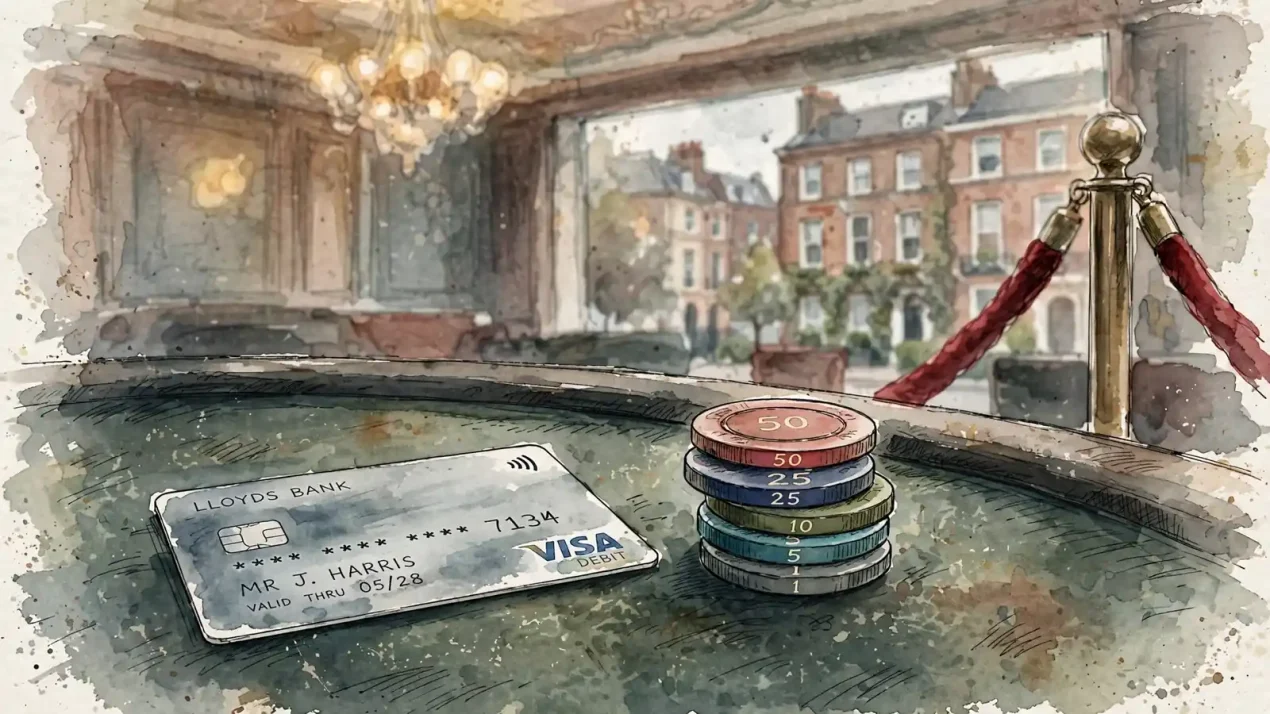
Debit card availability, cashier routes and withdrawal rules all affect how a casino payment works.
How Debit Cards Fit the UK Online Casino Cashier
For many people in Britain, the debit card is the most recognisable object in an online casino cashier. It belongs to an existing bank account, does not require a separate wallet registration, and sits close to the ordinary rituals of household money: wages arriving, bills leaving, a balance checked almost absent-mindedly. That familiarity explains why debit cards remain a common way to fund a casino account.
The phrase “casinos that accept debit card UK 2026” sounds like a hunt for a special category of gambling business. In practice, it describes a payment question. A casino may be available to British customers while offering several cashier routes, with the card option appearing alongside bank services, electronic wallets or prepaid products. The important distinction is not whether a site has a grand reputation as a “top debit card casino”, but whether its cashier currently presents a suitable card route for the account in question.
Visa and Mastercard in the cashier
Visa and Mastercard are the two card brands most closely associated with debit-card payments at UK casinos. Their logos may appear in a cashier’s payment panel, often among a collection of other methods. That visibility is useful, but it is not a permanent promise that every card carrying the logo will work in every situation. A payment method is part of the operator’s live cashier, not a decorative badge placed on a page and left there forever.
Casinos That Accept Upaycard in the UK
This is why descriptions such as “debit card online casinos” or “online casinos that accept debit card deposits” should be understood with a little precision. They point to casinos where a debit-card funding route is offered, not to a single uniform product. The available route can be presented differently from one operator to another, and a card brand alone does not describe the whole transaction.
A debit card also differs from a credit card in a way that matters particularly in Britain. Remote gambling operators cannot take credit-card payments for gambling, including credit-card funding channelled through a money service business. The prohibition took effect on 14 April 2020 and remains in force. A debit-card cashier therefore belongs to the permitted funding landscape, while a credit card does not become acceptable merely because it is processed through another payment layer. Money has a long memory, even when technology tries to give it a new costume.
Casinos That Accept Diners Club in the UK · Casinos That Accept USDC in the UK: What to Check
What “card payment” does and does not mean
A cashier is a set of routes rather than a single door. A debit card is one route into the account; it is not the same thing as a bank transfer, an electronic wallet, a prepaid voucher or another payment service. Each method has its own relationship with the casino, the financial institution and the account holder.
That distinction matters because a page listing many logos can create the impression that all methods behave alike. They do not. A debit card is linked directly to a bank account or current account arrangement. An electronic wallet is an intermediary account. A prepaid voucher represents funds loaded into the voucher system. A bank transfer moves money through banking infrastructure rather than through a card authorisation. The cashier may place these options beside one another, but the underlying routes remain different.
The mechanics of a deposit belong to the transaction itself; the question of whether a particular card product or currency is compatible belongs to a separate check. A withdrawal is another matter again, because the speed and route of money leaving an account need not mirror the way it entered.
A familiar route, not a universal label
“Debit card casinos UK” is a convenient description, but it can conceal several separate judgments. One concerns the casino’s current cashier. Another concerns the card’s issuing arrangements. A third concerns the payment route made available to that particular account. These are not interchangeable facts.
The same caution applies to labels such as “best debit card casinos” and “top casinos that accept debit card deposits”. A card logo does not, by itself, establish that one operator offers better terms, a broader service or a more suitable account. Nor does the presence of Visa or Mastercard turn every cashier into the same cashier. The useful question is simpler and less glamorous: is the debit-card option displayed and available under the conditions attached to that account?
Visa and Mastercard are the two card brands most closely associated with debit-card payments at UK casinos.
For British customers, the debit card remains an ordinary bridge between a bank account and a casino balance. Visa and Mastercard are commonly encountered on that bridge, while other payment methods follow different routes and rules. Keeping those categories separate prevents a payment logo from doing more intellectual work than it deserves. Familiar, yes. Universal, no.
Recommended online casinos
- SpinFormulaBonus: 550% Up To £15,000 + 550 FS · Payout speed: 1-3 business days
- NightWinBonus: £900 + 400 free spins · Payout speed: 1-3 business days
- EvoSpinBonus: 125% up to €2500 + 125 Free Spins · Payout speed: 1-3 business days
- WinBeastBonus: €5000 + 500 FS + €650 Freebet · Payout speed: 1-3 business days
- DieselwinBonus: Welcome Pack 250% up to £4000 + 200 FS · Payout speed: 1-3 business days
- ZombillionBonus: Welcome Pack 250% up to £4000 + 200 FS · Payout speed: 1-3 business days
- ChanzeBonus: Slots Welcome Bonus #1 200% up to €500 · Payout speed: 1-3 business days
- BritsinoBonus: Welcome Package – Get your £2,200 + 2,000 FS · Payout speed: 1-3 business days
- NightLuckBonus: Welcome Pack + 805% Up To 6400€ + 280 FS · Payout speed: 1-3 business days
- AmunbetBonus: Join now and get 450% up to 2,700 GBP + 450 FS · Payout speed: 1-3 business days
Making a Debit Card Deposit
A debit-card deposit is the cashier’s entry point: money moves from the card account into the casino balance, allowing real-money play once the operator has completed the required age checks. The process is familiar, but the amount that can be entered is not governed by one universal UK figure. Each remote gambling licensee sets its own cashier conditions, while the card network and the customer’s account status can also affect the transaction.
For a British account, the practical sequence is generally straightforward:
- Open the casino cashier.
- Select the available debit-card option.
- Enter the deposit amount.
- Add the requested card details.
- Confirm the payment through the relevant bank-security step, if required.
- Wait for the balance to update.
The simplicity is deceptive only in the administrative sense. A payment can be technically familiar and still be limited by the cashier’s rules.
The minimum deposit
A specialist review of UK casino payment methods places the usual starting point for a card deposit at £10–£20, with the precise figure depending on the selected payment method. That range is a useful orientation rather than a promise attached to every online casino with debit card support. The amount shown in the cashier is the operative one.
The minimum may be displayed before card details are entered, or only after the payment method has been selected. This matters because a casino may present several funding routes under one general “deposit” heading, while assigning each route its own threshold. A debit card can therefore have a different minimum from an e-wallet, bank transfer or voucher.
A small deposit is not automatically available merely because the card carries a familiar payment-brand logo. The cashier determines whether that card route is enabled for the account, and the amount field normally prevents a transaction below the stated minimum. Attempting to work around the threshold by submitting repeated smaller payments defeats the purpose of the control and may create unnecessary payment records.
Transaction limits are layered
The minimum is only the lower edge of the deposit range. Maximums can apply at several levels:
- to one card transaction;
- to the total deposited during a day;
- to the total deposited during a month;
- to the individual account, according to its status.
A specialist review describes these maximum deposit limits as variable according to both payment method and account status. That distinction is important for anyone comparing debit-card casino options. A cashier may accept a card in principle but impose a different ceiling from another route, or adjust the available amount after an account review.
The limit displayed at the moment of payment is therefore more meaningful than a general statement on a casino’s payment page. A broad list of accepted methods cannot show the exact ceiling applying to a particular customer. Nor can a previous successful deposit establish that the same amount will remain available later: daily and monthly controls may have changed the remaining allowance.
The cashier may show more than one restriction at once. A card transaction can fall within the single-payment maximum while still exceeding the account’s remaining daily allowance. Conversely, an amount permitted for one payment may contribute to a monthly total that later prevents further deposits. Money, in this respect, has a memory.
The limit prompt before the first deposit
UK Gambling Commission rules place a control before the first deposit. Remote gambling operators must prompt a new customer to set a financial limit before funds can be deposited, and they must provide accessible account-level controls for changing or reviewing those limits.
This is not the same thing as a card issuer’s spending control or the casino’s payment-method maximum. Several boundaries can coexist:
- the financial limit selected in the account;
- the casino’s maximum for a particular deposit;
- any daily or monthly account restriction;
- the limit attached to the chosen payment route.
The effective amount is shaped by whichever applicable control is lower. A debit-card deposit can therefore be refused even when the card itself has available funds, because the casino account has reached its own financial boundary.
The prompt also changes the character of the cashier. It is not merely a doorway through which money enters; it is part of the operator’s safer-gambling system. The account-level controls should remain accessible rather than disappearing after registration. This allows the customer’s chosen financial boundary to be checked before another deposit is attempted, instead of being discovered only after a declined payment.
What the payment screen actually settles
For a debit-card deposit, the decisive details are the minimum shown for that method, the amount permitted in the transaction field, and any remaining daily or monthly allowance attached to the account. These are more reliable than a generic description of a “top debit card online casino” or a list claiming that every site offers identical terms.
Attention Remote gambling operators cannot take credit-card payments for gambling in Britain.
A casino that accepts debit cards may support deposits through Visa or Mastercard, but the deposit conditions still belong to the particular cashier. The card route, the account’s status and the selected financial controls meet at that screen. The result is a payment that either fits the stated boundaries or does not.
This is why the deposit stage should be treated as a defined transaction rather than a vague promise of card acceptance. The useful question is not simply whether an online casino takes a debit card. It is whether the selected card method permits the intended amount within the account’s current limits.
Checking Card and Account Compatibility
A debit card can carry the right familiar logo and still fail at the cashier. Payment compatibility is not decided by branding alone. It depends on whether the remote gambling licensee currently supports that card product, whether the account is set up in a suitable currency, and whether the details entered at payment agree with the casino account.
DO
- Check if your card is a debit product
- Verify if the casino supports your card brand
- Match your account currency with your payment currency
DON’T
- Use a credit card for gambling
- Assume all logos guarantee acceptance
- Ignore currency conversion costs
Visa and Mastercard are the principal names associated with debit-card payments at UK casino sites. That recognition is useful, but it is not a promise that every card bearing either logo will be accepted. Card schemes contain different products, issuers apply their own controls, and a cashier can change its available methods. A specialist review may describe Visa and Mastercard as available, while the live cashier presents a narrower choice. The cashier is the practical test.
This makes the search for a best debit card casino site rather less glamorous than the phrase suggests. The relevant question is not which logo appears in a promotional paragraph, but whether the particular card can be selected for the particular account. A UK debit card casino is therefore defined by a working payment route, not merely by a list of brand names.
What to check in the cashier
Before attempting a card payment, the compatibility check is small but consequential:
- whether Visa or Mastercard appears among the currently available methods;
- whether the card is a debit product rather than a credit card;
- whether the card issuer permits the transaction;
- whether the casino account currency matches the intended payment currency;
- whether the account details and card details are consistent enough for the payment to be recognised.
The distinction between debit and credit matters in Britain. UK-licensed casinos cannot accept credit-card payments for gambling, and credit-card funding routed through a money service business is also prohibited. A card that looks convenient at the point of purchase is not an acceptable substitute for an eligible debit card. The cashier is not a loophole machine.
Card-product eligibility can also change without the cardholder changing anything. A method may be displayed in one account and absent from another, or remain named in general payment information while not being offered at the point of transaction. That is why descriptions of the best debit card online casinos have to be read as indications rather than permanent inventories. Current availability belongs to the account-level cashier.
Currency is part of compatibility
The currency setting is easy to treat as administration, although it affects the economics of the payment. A British card and a British address do not, by themselves, establish that the gambling account is denominated in pounds.
Casinos That Accept Tether in the UK: Payment Routes
If the account uses another currency, the payment may involve conversion. The exchange rate may be set by the card issuer, the payment provider or another part of the payment chain. The visible debit amount can therefore differ from the amount expected when the currency arrangement is not understood in advance. A currency match does not remove every possible charge, but it avoids introducing a conversion merely because the account was opened with an unsuitable setting.
This is particularly relevant when comparing online casinos that accept debit cards in the UK. A site may appear compatible because the card is listed and the payment screen loads, yet the account currency can still make the transaction less straightforward. The clean comparison is between a supported card product and an account configured in the currency intended for play.
A quiet check before payment
Compatibility is confirmed through the live sequence: sign in, open the cashier, inspect the available card method, and verify the account currency before entering payment details. If the expected card brand is absent, that absence is meaningful. If the currency differs from the intended one, the account settings deserve attention before funds are moved.
That modest pause separates a functioning debit-card casino from a merely attractive description of one. Logos are public relations. The cashier is evidence.
Compatibility checks
Before attempting a card payment, verify the following:
- Whether Visa or Mastercard appears among the currently available methods.
- Whether the card is a debit product rather than a credit card.
- Whether the card issuer permits the transaction.
- Whether the casino account currency matches the intended payment currency.
- Whether the account and card details are consistent.
What Happens When a Card Deposit Becomes a Withdrawal
A debit-card deposit can appear in a casino balance almost immediately, yet that does not mean a withdrawal will travel back at the same pace. The two transactions move in opposite directions and pass through different controls. Funding mainly confirms that money has reached the gambling account. A payout must establish where the money is going, whether the account is ready for it, and whether the proposed route fits anti-fraud requirements.
For a casino withdrawal to a debit card, the cashier may first direct funds back towards the card used for the deposit. This reflects the original-source principle applied under UK anti-money laundering controls: returning money to its funding route helps show that the transaction is not being used to move funds through unrelated accounts. A different destination may be possible in some cases, but it can bring additional verification rather than a shortcut.
Why the first payout can take longer
The first withdrawal often has more administrative weight than a later one. The casino may need to complete KYC, check account information and confirm that the payment instrument is connected with the account holder. Internal approval is therefore part of the withdrawal time, not an invisible step that happens after the advertised processing period.
Casinos That Accept Wirecard in the UK: Payment Guide
A specialist review source describes this approval and verification stage as a reason that first withdrawals may take longer. That is a useful description of the process, but it is not a fixed timetable for every remote gambling licensee. The cashier’s own withdrawal information remains the relevant statement for the account in question.
This is why “fast withdrawal” can be a misleadingly narrow label. It may describe the payment technology after approval, while leaving the casino’s review stage outside the headline. A card can be quick at the deposit stage and still produce a payout that takes several business days. Different gates, different clocks.
What affects a debit-card payout
A withdrawal request can be held while the casino checks the account or confirms the payment route. If the account is already fully verified and the original debit card is accepted for returns, fewer questions may arise. If the casino needs another route, the alternative may require further evidence before money is released.
The practical route is therefore:
- The withdrawal request is submitted in the cashier.
- The casino reviews the request and the account.
- Verification is completed where required.
- Approved funds are sent through the available card route or another authorised destination.
- The receiving bank and payment network complete their part.
The final stage is outside the casino’s direct control, but the casino’s internal approval comes first. A debit-card casino withdrawal UK players see in the cashier is consequently not just a card transaction reversed. It is a reviewed payout with a specified route.
For anyone comparing casino withdrawals to debit card, the important distinction is between instant funding and completed delivery. A debit card may be accepted for deposits without being the fastest withdrawal channel, and the presence of a card logo does not remove account checks. The cleanest expectation is modest: the payout follows the cashier’s stated method, after approval and any required verification, rather than matching the speed of the original deposit.
When the Cashier Offers More Than a Card
A debit card is only one part of the cashier at a British online casino. Alongside Visa and Mastercard, some remote gambling licensees present bank transfers, open banking services, e-wallets and prepaid vouchers. The useful distinction is not the length of the menu. It is what each route can do after the money has arrived.
Debit Card
Direct link to your bank account for quick deposits.
E-wallets
Intermediary accounts like PayPal, Skrill, or Neteller.
Prepaid Vouchers
Deposit-only methods like Paysafecard.
Bank Transfers
Moving money through banking infrastructure or open banking.
A payment method may be suitable for a casino debit card deposit yet unsuitable for receiving a payout. Another may handle both directions but carry conditions that a card does not. The cashier is therefore less a catalogue than a map of permitted movement.
Deposit-only routes
Paysafecard belongs to the clearest category. It is a prepaid voucher for deposits only. Money can be added to the gambling account through the voucher, but it is not a route for withdrawing winnings. That makes it a funding instrument, not a complete payment arrangement.
The difference matters because a deposit-only method leaves the later payout to another process. A casino may need to offer a bank transfer, card return, or another approved route, with its own checks and availability. Calling every visible cashier icon a payment option hides this small but consequential distinction.
E-wallets and promotion conditions
PayPal occupies a different position. It is a payment service associated with speed and convenience, according to a specialist review, but the same type of source notes that it may be left out of bonus eligibility. The payment can therefore be attractive while the promotional treatment is less generous. Cashier convenience and offer eligibility are separate questions.
Casinos That Accept Bitcoin in the UK: Payment Evidence
Skrill and Neteller are also available at some sites. A specialist review describes these e-wallets as often excluded from promotions, so their presence should not be read as evidence that every advertised offer applies to them. The exclusion is a condition attached to the payment route, not a judgement about whether the wallet can be used at all.
That distinction is particularly relevant when comparing debit card casino sites in the UK. A card may appear beside an e-wallet in the same cashier, yet the two methods can sit under different rules. One may support the intended transaction path; the other may be deposit-only, promotion-sensitive, or subject to separate verification.
Bank-based alternatives
Open banking and bank transfers form another category. A specialist review reports that these routes can provide instant deposits and fast withdrawals at many sites. That is a report about the availability and performance described in that material, not a permanent promise for every cashier. Cut-off times, account checks and the operator’s own payment arrangements still determine what happens in an individual case.
This is why a search for a casino debit card deposit should not end with the card logo. The relevant comparison is functional:
- whether the method accepts deposits;
- whether it can receive withdrawals;
- whether promotional terms restrict it;
- whether the cashier currently offers it to the account.
A broad menu may look generous, but it can contain several kinds of doorway: one-way, two-way, and two-way with conditions. The sensible comparison is not between brand names alone, but between the route offered and the job it is expected to perform. Payment menus are small bureaucracies.
One Payment Route, Fewer Ownership Questions
A debit card casino site is not concerned only with whether a payment can technically pass. It also has to establish that the account, the funds and the person requesting a transaction belong together. That is why consistency matters when choosing a casino with a debit card in the UK.
The clearest arrangement is a named gambling account funded through a payment route held in the same customer’s name. Account details and card details then tell the same story. When those basic ownership details match, there is less room for an ordinary payment to create an avoidable question.
It is best to use a gambling account that is held in the same name as the debit card used for transactions.
This is not a claim that every payment will be approved without review. Remote gambling licensees still have security and KYC duties, and a transaction may need checking even when the names appear consistent. But a mismatch introduces a problem before any more complicated issue has appeared. The cashier may need to establish who controls the card or account, why another person’s payment route was used, or whether the requested transaction is connected to the gambling account holder.
A casino deposit with a debit card is therefore cleaner when the card belongs to the person registered with the casino. The same principle applies when money later moves in the opposite direction. A single named account and a consistent payment route create a straightforward record of ownership, rather than a trail assembled from several people’s details.
Why consistency helps
Payment information can differ from the registration information for innocent reasons. A household may share financial arrangements, or a card may be used by someone other than the person who opened the gambling account. Yet the cashier cannot safely treat every explanation as self-proving. Basic controls exist precisely because payment ownership is not meant to be assumed.
For a debit card casino site UK players are considering, the practical point is simple:
- the gambling account should carry accurate customer details;
- the debit card should belong to that same customer;
- the payment route should be used consistently where possible;
- changes in ownership should not be disguised as routine funding.
The cleanest route is often one named account used for both deposit and withdrawal. This does not make a debit card casino list, or a list of supposedly best casinos with debit cards, decisive on its own. The useful distinction is whether the chosen cashier route fits the account holder and can support the intended transaction without creating an ownership puzzle.
Security is rarely theatrical. More often, it is paperwork with a payment button attached.
Why Payouts Often Return to the Original Source
A debit-card deposit creates more than a balance on a casino account. It also establishes a traceable route for money moving into the gambling service. When a payout is requested, the same route may therefore be used in reverse. This is why a casino that accepts debit card deposits in the UK may direct an approved withdrawal back to the card or payment source associated with the deposit, rather than treating every available cashier option as interchangeable.
The principle has a practical purpose. Returning funds to the original source helps a remote gambling licensee check that the money is going back to the customer who supplied it. It also limits the use of a gambling account as a convenient pass-through between unrelated payment accounts. The cashier may look like a simple menu; behind it sits a rather less romantic concern with ownership and traceability.
Withdrawal principle
UK anti-money laundering controls often require returning funds to the original source used for the deposit.
This is part of the wider anti-money-laundering and anti-fraud framework. UK anti-money-laundering controls commonly support sending winnings or returned funds through the source used for the relevant deposit. The rule is not a promise that every casino that accepts debit card UK customers will handle every card in exactly the same way. Payment providers, card products and the operator’s own procedures can affect the route shown at withdrawal.
An alternative payment method may be available, but it can bring additional checks. A casino might request evidence connecting the account holder with the proposed destination, especially where the alternative was not used to fund the account. That can mean more documentation or a pause while the ownership details are reviewed. The point is not that an alternative is impossible; it is that it is less straightforward than returning money through the established channel.
For anyone comparing the best casino that accepts debit card deposits UK customers can use, the withdrawal policy matters as much as the deposit badge. A familiar card logo says that a payment may be accepted at the cashier. It does not, by itself, settle where a payout will go or what checks an alternative route will trigger. The cleanest arrangement remains a consistent, traceable path between the account and its payment source.
Bonuses and the Payment Method Fine Print
A debit card casino bonus is not simply a reward attached to every payment shown in the cashier. Promotional terms can separate eligible funding methods from those that are available for ordinary deposits. The distinction matters when comparing a welcome offer at a UK casino: the attractive headline may apply only when the deposit is made through a method named in the promotion’s conditions.
Casinos That Accept iDEAL in the UK: What to Check
Debit cards are often presented as a straightforward route for claiming a casino welcome bonus, but the wording still governs the result. The offer may specify the qualifying deposit method, the point at which the bonus is credited, and any payment types excluded from the promotion. The cashier and the bonus page therefore perform different jobs. One shows how an account can be funded; the other decides whether that funding counts for the offer.
The treatment of e-wallets is particularly important. A specialist review has reported that PayPal can be excluded from bonus eligibility despite its popularity for speed and convenience. That is a statement about the promotion terms described by that source, not a permanent rule for every operator. The current offer remains the authority.
Skrill and Neteller illustrate the same small but consequential divide. A specialist review has described both as available at some sites while also noting that they are often left outside promotions. An e-wallet may therefore be displayed as a deposit option without qualifying a payment for a welcome reward. The cashier says “accepted”; the bonus conditions may quietly add “not for this offer”. Fine print earns its reputation.
The same check applies when an offer is described as suitable for casino games played through a debit-card deposit. The payment method, the casino account and the promotion must line up in the stated terms. A search for the best debit card casino UK option is consequently less useful than reading the exact eligibility wording attached to the named bonus.
Warning Promotional offers may exclude certain payment methods like e-wallets.
Promotional language also changes. A welcome offer available at one point may be amended, withdrawn or replaced, while the payment menu remains familiar. The sensible comparison is therefore not between a promising banner and a card brand, but between the current bonus conditions and the method actually selected.
Deposit Offers Do Not Make a Card Fee-Free
A deposit bonus attached to a debit-card casino offer describes promotional value, not the cost of moving money. A percentage, free spins or another incentive may appear beside the cashier button, while the payment itself remains subject to charges set by several different parties. Marketing and arithmetic occupy separate rooms.
For casino deposits with a debit card, possible costs include:
- a fee charged by the casino;
- a payment-provider fee;
- a fee from the card issuer or bank;
- a currency-conversion spread;
- a network fee connected with processing the transaction.
The cashier may show one of these clearly and leave another to the bank’s terms. A visible flat charge is therefore only part of the comparison. A debit card casino deposit bonus can make the offer look generous while the underlying transaction still costs money.
Currency deserves particular attention. Where the casino account and the debit card operate in different currencies, the exchange rate used for the transaction can include a spread. That spread is not always displayed as a separate line, and it can cost more than a plainly stated fixed fee. The apparently free route may be the less economical one.
A fair comparison of a debit card casino in the UK therefore concerns the whole transaction, not merely the promotional banner. The relevant question is whether the bonus outweighs the casino charge, provider cost, bank or issuer fee, network cost and any exchange-rate difference for the amount being deposited. There is no single payment method that is guaranteed to have the lowest total cost in every case.
The same distinction applies to claims about a “no deposit bonus”. The absence of a required deposit does not turn other casino payments into fee-free transactions, nor does it remove the conditions attached to the promotion. Promotional wording cannot rewrite the price of payment processing. Free is a delicate word.
Visa Payments: Check the Route, Not Just the Logo
Visa is a familiar sight in the British cashier, but familiarity is not the same as availability. A specialist review may list Visa and Mastercard among the payment methods found across UK-facing casino sites; the decisive information still appears in the individual cashier. That is where current acceptance and the eligibility of the particular card product are confirmed.
Casinos That Accept Instadebit in the UK: What to Check
This matters because “Visa” describes a payment network, not every condition attached to a card. A debit card may be issued for a specific account type, operate in a particular currency, or be subject to restrictions set by the issuer or the casino’s payment processor. The logo answers only the broadest question. The cashier handles the awkward ones.
A safe debit card casino in the UK is therefore not identified by the Visa mark alone. The relevant checks include whether the remote gambling licensee currently accepts Visa deposits, whether the card is genuinely a debit product, and whether the account can process the transaction in the required currency. Credit-card payments for gambling are not permitted at UK-licensed casinos, including credit-card funding routed through a money service business.
Cost deserves the same scepticism. There is no universal cheapest route. The calculation may include a casino charge, a payment-provider fee, an issuer or bank fee, exchange-rate spread, and network cost. A visible flat charge can be less important than the exchange-rate margin applied to the transaction. The meaningful comparison is therefore based on the actual amount and the full route it takes, not on a badge or a headline claim.
Visa can be a sensible option when the cashier confirms it and the card fits the stated conditions. It is not a guarantee. A known logo is merely the beginning of the check.
Why must withdrawals return to the deposit method?
Returning funds to the original payment source is a common anti-fraud and anti-money-laundering control. An alternative route may require additional verification.
What is the fastest withdrawal method for UK casinos?
PayPal, open banking services and debit cards linked to fast payout systems are generally among the quickest options. The casino’s approval process and your verification status also affect how soon funds arrive.
Are fast casino withdrawals guaranteed?
No. Withdrawal speed depends on the casino’s approval process and whether your account is fully verified; first withdrawals can take longer while checks are completed.
What are the deposit limits at HunnyPlay Casino?
UK casino deposit minimums commonly start at £10–£20, but the limit depends on the payment method and account status. Deposit limits can also apply per transaction, day or month.
Which payment methods are accepted in Great Britain?
UK casinos commonly offer Visa and Mastercard debit cards, bank transfers, e-wallets and, at some sites, Apple Pay. The options available to you are shown in the casino cashier.
Can I use a credit card at 333 Casino in Great Britain?
No. Remote gambling operators in Great Britain cannot accept credit-card payments for gambling, including payments routed through a money service business.
Related posts

Terms of Use

Top Rated Online Casinos UK: What Ratings Mean