
Casinos That Accept Diners Club in the UK
 Available in GB
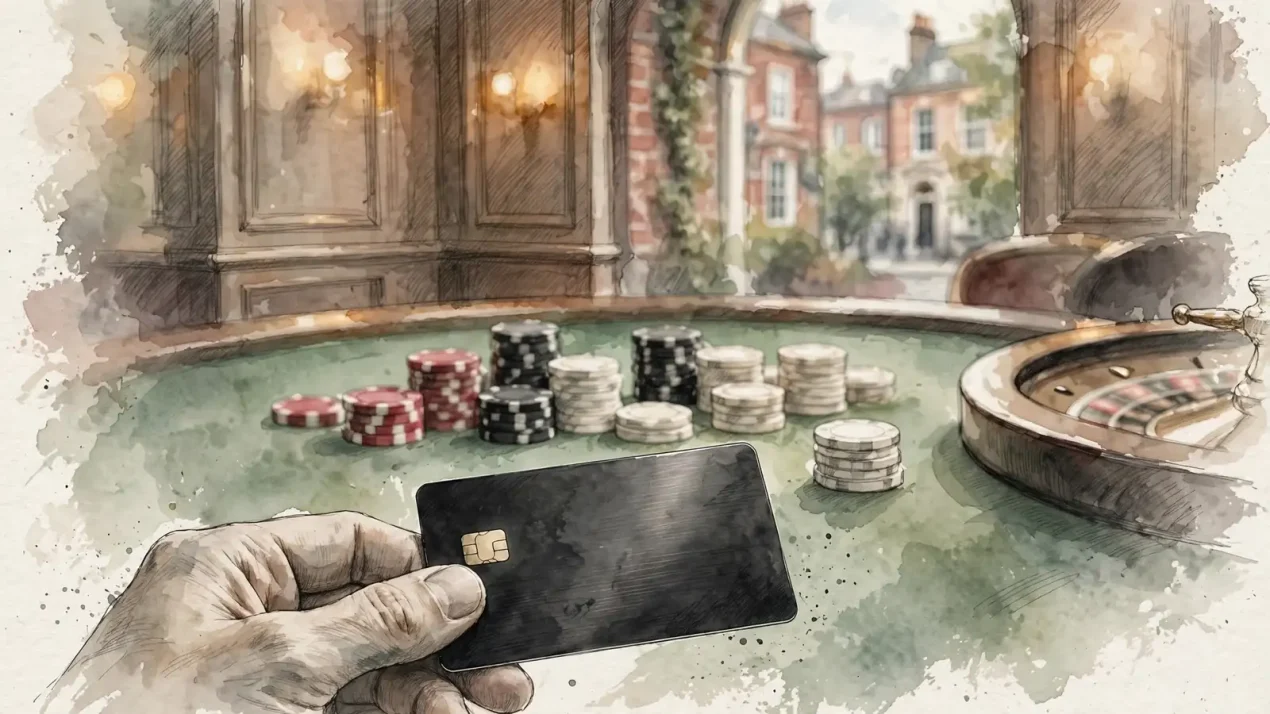
Card acceptance depends on the casino, payment processor, card network and issuer, so general card logos do not confirm Diners Club support.
Why Diners Club Is a Difficult Fit for UK Online Casinos
Diners Club belongs to a payment category that sounds more straightforward than it is. A card may work in shops, restaurants or for travel bookings and still fail at an online casino cashier. The important distinction is not whether a casino accepts “cards” in the abstract, but whether its payment system accepts that particular card product for a gambling transaction.
In Britain, debit cards remain a familiar route into casino accounts. Visa and Mastercard are commonly displayed among the available card brands. That broad description, however, cannot be stretched to cover every network, issuer or card variant. A cashier showing Visa or Mastercard is not confirming that Diners Club will pass through it. Payment logos are signposts, not diplomatic treaties.
Card acceptance is not one universal switch
A casino’s cashier sits between several systems: the remote gambling licensee, its payment processor, the card network, the issuing bank and the account’s compliance checks. A transaction can therefore fail even when the word “card” appears prominently on the deposit page.
Casinos That Accept eCheque in the UK: What to Check
The card brand is only one part of the question. The product type matters as well. A debit card linked to an accepted network is not automatically equivalent to a corporate card, charge card or another product carrying a different scheme. The account’s country, currency and identity details can also affect whether a payment is presented as available.
This is why lists of payment logos need careful reading. A specialist review may report Visa and Mastercard among the methods displayed by the sites it examined, while also noting that the current cashier is the place where UK availability and card-product eligibility must be checked. That is a narrower and more useful statement than treating every card with a familiar appearance as interchangeable.
Diners Club sits awkwardly inside that gap between recognition and confirmation. Its name can appear in a payment discussion without establishing that a British casino cashier accepts it for a gambling deposit. Nor does the presence of a Diners Club card prove that the underlying transaction will be treated like an ordinary debit-card payment.
Casinos That Accept Revolut in the UK: Payment Guide
Why the UK setting matters
Payment questions cannot be separated from the rules governing British remote gambling. Remote gambling licensees serving the British market operate within a system in which payment controls are part of the wider regulatory structure. The Gambling Act 2005 governs gambling in England, Wales and Scotland, while remote gambling operators selling into the British market must hold the relevant Gambling Commission licence.
That framework makes the distinction between a general card payment and a permitted gambling payment especially important. UK-licensed casinos cannot accept credit cards for gambling. The restriction also covers credit-card funding routed through a money service business, and it reaches wallet payments where the wallet permits credit-card funds to be used for gambling.
Diners Club cannot therefore be assessed by brand familiarity alone. The decisive issue is how the card is classified and funded, how the payment processor handles it, and whether the licensed casino’s cashier permits that transaction type. A card associated with a charge or credit arrangement may encounter a different treatment from a standard debit card, even where both are described casually as “cards”.
Casinos That Accept Neosurf in the UK: Payment Guide
The rule has been in force since 14 April 2020 and has not been relaxed. That date is not a footnote in the payment story; it explains why older discussions of casino card deposits can now mislead. An archived page, an overseas cashier or a forum comment may describe a route that does not belong to the present British market.
What a Diners Club claim would need to establish
A meaningful acceptance claim would need to connect several details at once:
- the casino must serve British customers under the appropriate UK Gambling Commission licence;
- Diners Club must be shown as an available method in the live cashier, not merely mentioned in a general payment article;
- the specific card product must be eligible for the transaction;
- the payment must comply with the British ban on credit-card payments for gambling;
- the account and payment details must pass the operator’s ordinary checks.
Without that chain, “Diners Club casino” remains a loose label. It may describe a historical payment option, an offshore site, a non-gambling merchant, or a card that worked for one customer under circumstances that cannot be repeated. None of those possibilities turns into a dependable British deposit route.
The same caution applies to claims about casinos paying winnings back to Diners Club. Acceptance for a deposit would not, by itself, establish that the same card can receive a withdrawal. Deposit and payout functions are separate decisions, shaped by the cashier, payment provider and anti-fraud controls. That payment journey deserves its own examination rather than being smuggled into a card-acceptance claim.
A similar problem affects lists promising the “best” Diners Club casinos. Ranking requires identifiable operators and a current, comparable feature. A casino name beside a Diners Club logo would still need the live cashier and the product conditions checked. Without that, the list would give certainty where the payment system offers only a question mark.
Do
- Check the live casino cashier for available methods
- Verify the specific card product eligibility
- Ensure the method complies with UK regulations
Don’t
- Assume a logo implies acceptance of all card variants
- Treat any card as a guaranteed gambling payment
- Use old information from archived pages
The practical meaning is plain: Visa or Mastercard acceptance demonstrates that a casino handles certain card payments, not that it accepts Diners Club. Diners Club may be recognised by a bank or merchant elsewhere while remaining unsuitable for a particular British casino cashier. The logo is not the transaction.
What Can Replace a Diners Club Deposit
When a Diners Club deposit is not available, the practical alternatives are the payment methods displayed in the casino cashier. UK-facing remote gambling licensees commonly present a mixture of bank cards, bank-based payments, prepaid vouchers and electronic wallets, but the menu belongs to each site rather than to the market as a whole. A method listed in a general payment guide may be absent when an account is opened, restricted by currency, or offered only for deposits.
Debit cards
Visa and Mastercard debit cards are among the familiar substitutes. They are not credit-card payments for gambling, which UK-licensed casinos cannot accept. The distinction matters: a card brand alone does not establish that every card product, issuer or account will work. The cashier decides what is available, and the card must belong to the same customer whose gambling account is being used.
A specialist review can describe Visa and Mastercard as common options, but that description is not a standing promise about every casino or every card. Current acceptance and the precise product eligibility still need to be checked in the payment screen. The same caution applies to a debit card connected to a mobile wallet: the wallet and the underlying funding route must comply with the UK restriction on credit-card payments for gambling.
Casinos That Accept Dogecoin in the UK: What to Check
The minimum deposit is often set within a range of £10 to £20, depending on the selected method, although the figure shown at the cashier is the one that governs the transaction. Maximum deposits can also differ by method, account status and the period over which the operator measures them. Payment systems, like small bureaucracies, prefer their own paperwork.
Bank transfer and open banking
Bank transfer and open banking provide a different route from card processing. A specialist review describes these services as capable of producing instant deposits and fast withdrawals at many sites. That is a description of reported availability, not a universal timetable. The bank, the payment service and the casino can each affect how a transaction moves.
Open banking may send the payment through a bank account selected during the transaction, while a conventional transfer may require the casino’s banking details and a reference. The cashier’s instructions matter more than a general label. A transfer option may be available for deposits without being offered in the same form for withdrawals, so both sides of the payment journey need checking before it is treated as a complete replacement.
Bank transfers can also be affected by cut-off times, weekends and currency conversion. Those details are especially relevant where the gambling account and bank account do not use the same currency. An account currency shown as GBP still deserves confirmation before the first transaction, since conversion can enter through the bank or payment provider even when the deposit screen appears straightforward.
Debit Cards
Visa and Mastercard debit cards are common substitutes, provided they are not credit-card products.
Bank Transfers
Includes open banking and conventional transfers, though speed and availability vary by provider.
E-wallets
Services like Skrill, Neteller, PayPal, and Trustly offer alternative electronic routing.
Prepaid vouchers
Paysafecard is a prepaid voucher designed for deposits only. It can replace the funding side of a Diners Club transaction, but it is not a general route for receiving casino withdrawals. That deposit-only character changes the arithmetic of the account: money may enter through the voucher while any later payout has to follow the casino’s approved withdrawal process.
The voucher also separates the payment from a bank card, but it does not remove the operator’s ordinary checks. Age verification is required before a customer can deposit, and remote gambling licensees must prompt new customers to set a financial limit before that first deposit. Payment convenience has never abolished administration; it has merely given administration another coloured interface.
E-wallets
Skrill and Neteller are available at some sites. A specialist review also places Skrill among the more common deposit methods at UK-friendly casino sites in 2026, but the wording describes a changing market rather than a guarantee of availability. Both services may be left out of particular promotions, so a wallet’s presence in the cashier does not automatically mean that a bonus or free-spin condition applies to a wallet-funded deposit.
Casinos That Accept Zimpler in the UK: What to Check
PayPal is another possible route at some casinos. A specialist review notes that its speed and convenience may coexist with exclusion from bonus eligibility. That is a specific warning about promotional treatment, not a reason to assume that every site accepts PayPal or that every PayPal transaction will follow the same rules.
Apple Pay is accepted for deposits by some UKGC-licensed casinos. Trustly is also among the payment names encountered in UK casino payment menus, while Jeton remains listed by a specialist review at a small number of UK online casinos in 2026. Availability is therefore best understood as a cashier question: the logo, the account, the currency and the customer’s verification status all have to align.
Comparing the substitute
The cleanest comparison is not a hunt for a mythical universal “best” Diners Club alternative. It is a check of five practical points:
- whether the method is displayed for the particular account;
- whether it supports the required side of the payment journey;
- whether its use affects promotional eligibility;
- whether the account currency creates conversion;
- whether the casino or provider applies a fee.
Payment costs can come from several directions: the casino, the payment provider, the issuing bank, the exchange-rate spread or the network. A visible flat charge is therefore not the whole price; a conversion spread can outweigh it. No single method is guaranteed to be the cheapest for every amount and account.
Bitcoin and other cryptocurrencies also appear in some analysed casino payment menus, alongside Visa, Mastercard, bank transfer and e-wallets. Their presence in a menu does not make them interchangeable with a debit card or bank transfer, and it does not establish that a particular UK-licensed casino offers them to every customer. The sensible substitute is the method whose deposit conditions, withdrawal treatment, currency and ownership details are all clear before funds move.
Diners Club, Slots and Real-Money Play
A card brand and a slot game belong to different parts of the casino. One concerns the movement of money into an account; the other concerns what happens after the account has been funded. The two are often joined in casual descriptions of “Diners Club slots”, but the phrase can suggest more than it proves. A slot does not become a Diners Club product because a payment logo appears beside a cashier, and a casino that offers slots does not thereby accept every card product.
Finding a casino offering online slots and finding a lawful way to fund the account are two separate interests.
That distinction matters in Britain, where the payment route is subject to a rule that leaves no room for a nostalgic return to old credit-card habits. The regulator prohibited credit-card gambling on 14 April 2020, and that position has not been relaxed. UK-licensed casinos therefore cannot accept credit cards for gambling. Remote gambling licensees must also refuse credit-card funding routed through a money service business, while wallet payments are restricted where the wallet permits credit-card funds to be used for gambling.
Diners Club is consequently not a neutral label in this setting. Its acceptance cannot be inferred from the fact that a casino offers a familiar card network, nor from a general statement that card deposits are supported. The product type, the funding arrangement and the cashier’s current controls all matter. A payment method named in a broad list is not the same thing as a permitted route for a particular UK gambling transaction.
The slot question is separate
Once an account has a permitted funding method, the games are governed by the casino’s catalogue and by British rules for online slots. The payment instrument does not select a special class of reels, bonus rounds or machines. A casino may describe its games by theme, format or mechanics, but none of those descriptions establishes that Diners Club can be used to fund play.
The language of “Diners Club slots” is therefore best understood as shorthand for two separate interests:
- finding a casino offering online slots;
- finding a lawful and available way to fund the account.
The first does not answer the second. Nor does the existence of a mobile casino app alter the principle. An app is an interface for the account and its games, not an exemption from payment restrictions. If the cashier rejects a particular card product in the browser, presenting the same account through a phone does not turn the transaction into a different kind of gambling payment.
The same separation applies to reviews. A review can discuss a casino’s slot selection, mobile presentation, account controls or withdrawal procedure without establishing that Diners Club works at its cashier. Payment information also ages badly: a method can disappear, become deposit-only or be limited by the issuing bank, the operator or the customer’s account status. The quiet little payment icon is rarely a legal argument.
Real-money slots in Britain
Real-money slot play in Britain takes place within the UK Gambling Commission framework. Remote gambling licensees serving Great Britain must hold the relevant operating licence, and legal online gambling is available only through licensed and regulated sites. The Gambling Act 2005 provides the wider statutory framework for England, Wales and Scotland; Northern Ireland is outside that Act’s territorial scope.
Age is part of the transaction, not decorative paperwork. Operators must verify a customer’s age before allowing funds to be deposited into a gambling account. New customers must also be prompted to set a financial limit before the first deposit, with account-level controls available thereafter. These requirements place a pause before play begins, which is precisely what a financial safeguard is supposed to do.
The rules become more visible once the reels start turning. Online slot autoplay is banned in Britain, so spins cannot be left to run without active participation. Each online slot spin must last at least 2.5 seconds. Stake limits also depend on age: the maximum stake per game cycle is £5 for customers aged 25 and over, and £2 for customers aged 18 to 24. The £5 limit for adults came into force on 9 April 2025.
UK Slot Rules
- Online slot autoplay is prohibited in Britain.
- Each spin must last at least 2.5 seconds.
- Maximum stakes depend on age: £5 for those 25+ and £2 for those 18-24.
These restrictions shape the pace and texture of play. A rapid sequence of automatic spins, familiar from some overseas interfaces, is not part of the British arrangement. Nor is the older assumption that every adult customer can stake on identical terms. The market has made the game slower, more bounded and more administratively visible. Casino entertainment, with a compliance department sitting just offstage.
What a payment claim can and cannot establish
A payment claim should identify the actual route rather than borrowing confidence from the game catalogue. Visa and Mastercard may appear in casino payment information, but their presence does not authorise credit-card gambling, and it does not confirm that every card issued under a brand will work. Diners Club should be treated with the same precision: a reference to cards is not confirmation of Diners Club acceptance.
The distinction is especially important where a product combines credit, charge or corporate-card features. The relevant question is not simply whether the card carries a recognisable logo. It is whether the casino can lawfully accept that particular funding source for gambling, whether the issuer permits the transaction and whether the cashier presents it for the account in question. A route that fails any one of those tests is not a practical deposit method.
Real-money play should therefore be described through the casino account, its licensed status, its age and financial-limit controls, and the slot rules that apply in Britain. Payment language belongs beside that description, not hidden inside it. Diners Club may be the starting point of the search, but it cannot be treated as a passport to the reels.
The games remain separate.
Deposits, Withdrawals and the Return-to-Source Rule
A casino cashier has two different jobs, although its labels can make them look like one. The deposit page records how money enters the gambling account; the withdrawal page determines how an approved balance can leave it. A payment icon appearing beside “deposit” is therefore not evidence that the same route can receive winnings.
Casinos That Accept Interac in the UK: Cashier Check
This distinction matters particularly when a card product is being investigated. A Diners Club casino deposit and withdrawal route would need to be confirmed separately at the cashier. Even where a payment method is technically visible, the operator may restrict it to deposits, decline it for withdrawals, or require another route for the return of funds. The attractive simplicity of one card at both ends is often more administrative fiction than payment design.
Why the original source matters
UK anti-money-laundering controls generally favour returning funds to the payment source from which the deposit came. This is commonly called the return-to-source principle, and it has a practical purpose: it makes the movement of money easier to connect with the account holder and harder to use as a disguised transfer between unrelated people.
That does not mean every payout will arrive as one neat reversal to one card. A casino may need to deal with the original deposit method first, then use another approved route for any remaining amount, subject to its payment policy. Alternative arrangements can bring extra checks because the operator must establish that the new destination belongs to the same customer and is suitable for the transaction.
The cleanest arrangement is often one named account used consistently for both sides of the payment journey. Matching account information with the payment route reduces the chance that a basic ownership mismatch will interrupt processing. A name variation, a third-party account, or a payment instrument registered to someone else can turn an ordinary withdrawal into a request for documents and explanations.
The rule is less glamorous than a “fast payout” badge, but considerably more important.
Return-to-Source
Attention UK anti-money-laundering controls generally favour returning funds to the original payment source used for the deposit.
A deposit is not a withdrawal promise
Payment methods are built differently. A card may be authorised for an immediate deposit while the casino cannot send a withdrawal through that same channel in the same way. An e-wallet may appear in both menus but still have separate eligibility conditions. A banking route may require details that are irrelevant to a card deposit. The cashier is not a promise; it is a set of permissions applied to a particular account.
For Diners Club in particular, an operator would need to confirm all of the following before treating the method as a complete payment route:
- whether the card product is accepted for the deposit;
- whether the deposit is permitted under the operator’s UK payment controls;
- whether withdrawals can return to that source;
- whether another payment method must be used for the payout;
- whether account ownership and verification requirements have been satisfied.
The existence of a deposit option answers only the first question, and even that option can depend on the current cashier, the account, the card issuer and the operator’s terms. Payment logos are not permanent constitutional law.
A withdrawal request can also be affected by the history of the account. Several deposits made through different methods may lead the operator to review how each source should be handled. The result may be a split payout, a request to confirm ownership, or instructions to complete a return through the original route before another method is considered. Such steps are not evidence that a casino has promised a Diners Club withdrawal; they are part of tracing funds.
Verification before release
The casino’s internal approval is one stage in the process, and payment delivery is another. A withdrawal may remain pending while the operator checks identity, account ownership, payment history and the source of funds. First withdrawals can take longer when verification has not been completed. A specialist review of withdrawal procedures identifies this internal approval stage as part of the stated processing time, rather than treating the provider’s transfer speed as the whole journey.
Casinos That Accept iDEAL in the UK: What to Check
That difference explains why a deposit can be instant while a payout takes several business days. The deposit is commonly an authorisation to place funds into the account. The withdrawal is a request to release funds after checks. They may use related payment infrastructure, but they do not carry the same risk or administrative burden.
KYC is therefore not an ornamental doorway placed in front of a payout. It is connected to the operator’s duty to establish who controls the gambling account and where money is going. If the account details and payment details point to the same customer, basic ownership issues are less likely to create avoidable friction. If they do not, further verification may be required before the withdrawal can proceed.
What “fast” can and cannot mean
Claims about fast, instant or same-day withdrawals need careful reading. “Instant” may describe the moment a request is submitted, the operator’s approval, or the payment provider’s delivery. Those are different events. A casino may approve a request quickly while the receiving bank or wallet still processes the transfer later. Conversely, a payment provider may be capable of rapid delivery while the casino has not yet approved the withdrawal.
A specialist review of payout procedures treats the casino’s internal decision and account verification as factors in the timetable. That is a more useful description than assigning a single speed to an entire payment method. The method can be quick in one part of the chain and slow in another.
Withdrawal Timetable
Factors like casino internal approval, KYC verification, and provider delivery speed all impact the final payout time.
For a Diners Club-related payment route, the same caution applies. A deposit being accepted would not establish an instant withdrawal. A withdrawal button being visible would not establish that funds will be returned without further checks. The relevant evidence sits in the operator’s current cashier and payment terms, not in a general description of the card network.
Fees, currencies and ownership
The amount received can also differ from the amount requested because payment costs may arise at several points. Casino charges, provider fees, bank or issuer fees, exchange-rate spreads and network costs can all affect a transaction. A visible flat charge is not the only possible cost: a conversion spread may be less conspicuous while having a larger effect on the final value.
The account currency deserves attention before the first transaction. Where a casino account is held in a currency different from the card or receiving account, conversion can enter the process during deposit, withdrawal or both. A payment method that looks straightforward in the cashier may therefore produce a less straightforward statement from the bank.
These details do not replace the return-to-source rule. They sit beneath it. First comes the question of whether the money may be returned to the original source; then come the operator’s approval, ownership checks and the mechanics of delivery.
A practical reading of the cashier
A careful payment check should distinguish four labels:
- Deposit available — the method is presented as a way to fund the gambling account.
- Withdrawal available — the operator presents it as a way to request a payout.
- Return-to-source required — the original deposit route must be dealt with before another destination is considered.
- Additional verification — the operator may require evidence of identity, ownership or source of funds.
Only the second label speaks directly to withdrawal availability, and even that does not remove the other controls. Terms can change, card products can be treated differently, and an account can receive instructions that are not visible in a generic payment guide.
So the sensible description of a Diners Club casino payment journey is narrow: any deposit and withdrawal arrangement must be checked independently, with the original source, account ownership, KYC and internal approval all treated as part of the payout itself. A quick deposit is not a quick withdrawal, and a withdrawal request is not yet a payment.
No-Deposit Offers and the Small Print
A no-deposit promotion belongs to the world of marketing, not to the payment rail itself. Free spins, bonus balances and promotional codes are conditions attached to an account or an offer. They do not prove that Diners Club can fund that account, nor do they turn a deposit method into a withdrawal method. The two subjects often appear together in advertising, although they answer different questions.
A free-spins offer may be granted without a cash deposit, while a casino still asks for identity checks, age confirmation and acceptance of its promotional terms. Conversely, a deposit made through an eligible payment method may not qualify for a bonus at all. The word “bonus” is therefore a poor substitute for the small print.
A no-deposit offer is not a Diners Club facility
The phrase “Diners Club no-deposit bonus” can suggest that the card is somehow involved in receiving the promotion. In practice, a no-deposit offer concerns the conditions for awarding promotional play. It does not establish that a Diners Club card is accepted by the cashier, that it can be used for a cash deposit, or that winnings connected with the promotion can be paid through it.
A no-deposit offer concerns the conditions for awarding promotional play and does not guarantee specific card acceptance.
The same separation applies to searches for slots bonuses, real-money free spins and codes. A promotion may refer to particular games or require a code at registration, but that wording says nothing by itself about card acceptance. A payment icon in a footer is not a contractual promise either; the active cashier and the promotion terms govern the transaction.
This distinction is particularly important where the requested payment product is unusual. Promotional language tends to be broad because broad language attracts attention. Cashier rules tend to be narrow because money eventually has to move somewhere. Marketing prefers the former. Compliance prefers the latter.
“No wagering” needs careful reading
“No wagering” sounds wonderfully clean, but it can describe only one part of an offer. It may mean that a stated playthrough condition is absent, while other requirements remain: eligible games, an expiry condition, a maximum cash-out rule, identity checks or a restriction on the payment method used alongside the promotion. Those details belong to the individual terms, not to the headline.
A free-spin award can also be limited to selected games or particular account types. A code may be valid only during a stated campaign, while a registration offer may exclude existing customers. None of those arrangements makes the promotion a Diners Club benefit. The card question and the bonus question remain separate throughout.
The wording around payment providers deserves equal suspicion. A specialist promotional review may describe PayPal as popular for speed and convenience while noting that an operator can exclude it from bonus eligibility. That is a statement about the treatment of one payment route under an offer, not a permanent rule for every British casino. Terms can change, and the operator’s own conditions take precedence.
Casinos That Accept USDC in the UK: What to Check
Payment method and promotional eligibility
The same caution applies to Skrill and Neteller. A specialist promotional review may identify them as available at some sites while also reporting that they are often left out of promotional campaigns. “Available” and “bonus-eligible” are different labels. One describes whether the cashier can process a payment; the other describes whether the operator counts that payment towards a promotion.
That difference can affect the apparent value of an offer. A player might see free spins advertised, make a deposit through a wallet, and discover that the transaction does not activate the promotion. The deposit may still be processed, but the promotional entitlement may not follow it. The transaction has not failed; the expectation has.
A Diners Club card should not be treated more generously by inference. A code mentioning slots does not confirm that Diners Club deposits qualify. A no-deposit offer does not confirm that Diners Club withdrawals are available. A real-money promotion does not confirm that the underlying cashier supports the card product.
The required checks before accepting an offer
The useful reading order is unglamorous:
- identify whether the promotion is no-deposit, deposit-based or a mixture of both;
- check whether a payment method is excluded from eligibility;
- separate free spins from bonus cash and read the conditions attached to each;
- note any game restrictions, expiry wording and withdrawal conditions;
- establish whether age and identity checks must be completed before funds or winnings can be released;
- confirm that the promotion applies to the relevant British account and not merely to an international version of the site.
UK remote gambling rules add a limit before promotional enthusiasm begins. A new customer must be prompted to set a financial limit before making the first deposit, and the account must provide accessible controls for changing or maintaining those limits. A no-deposit offer does not erase that framework; nor does it make promotional play a private space outside the account’s controls.
The clean division is simple. The offer determines what promotional play may be awarded and under which conditions. The cashier determines which payment routes are available. Account checks determine whether gambling and withdrawals can proceed. Diners Club cannot be inferred from a free-spins banner, and a free-spins banner cannot repair an unsuitable payment route. Small print, as ever, is where the romance ends.
Why Diners Club Disappeared from the Casino Payment Conversation
Diners Club has not vanished from public life, but it has become an awkward name in British gambling discussions. The reason is less dramatic than a network closure and more decisive than a change in fashion: the UK prohibition on credit-card gambling.
UK Prohibition
UK-licensed casinos are prohibited from accepting credit cards for gambling, a rule in place since April 2020.
The regulator brought that prohibition into force on 14 April 2020. It has not since been relaxed. UK-licensed casinos therefore cannot accept credit-card payments for gambling, including arrangements that route credit-card funding through a money service business. A card brand can remain active elsewhere while becoming unusable for this particular purpose. Payment technology is full of such quiet exclusions.
That distinction matters when Diners Club is linked with slot bonuses. A promotional label does not override the payment rules. A bonus may be advertised around a payment method, but the offer still depends on the casino’s current terms, the customer’s eligibility and whether the payment route is permitted for gambling. No particular Diners Club casino bonus should be inferred merely from the card’s name appearing in promotional material.
The same caution applies to claims about casinos outside the UK gambling self-exclusion system. An offshore casino may operate outside the UK Gambling Commission framework, but that does not turn Diners Club into an approved route at a British-licensed casino, nor does it make an offshore offer a UK-regulated one. Remote gambling licensees selling into Great Britain must hold the relevant UK Gambling Commission licence; offshore sites sit outside that system. Accessibility is not the same thing as local authorisation.
So why did Diners Club “close” in the UK? The wording confuses two events. The relevant change was the regulatory ban on credit-card payments for gambling, not an established finding that Diners Club itself closed its UK card operation. The card’s status and a casino cashier’s acceptance policy are separate questions.
The result is a payment conversation governed less by brand nostalgia than by source of funds. In Britain, credit is the line that cannot be crossed.
Casinos That Accept Citadel in the UK: What to Check
Recommended online casinos
- SpinFormulaBonus: 550% Up To £15,000 + 550 FS · Payout speed: 1-3 business days
- NightWinBonus: £900 + 400 free spins · Payout speed: 1-3 business days
- EvoSpinBonus: 125% up to €2500 + 125 Free Spins · Payout speed: 1-3 business days
- WinBeastBonus: €5000 + 500 FS + €650 Freebet · Payout speed: 1-3 business days
- DieselwinBonus: Welcome Pack 250% up to £4000 + 200 FS · Payout speed: 1-3 business days
- ZombillionBonus: Welcome Pack 250% up to £4000 + 200 FS · Payout speed: 1-3 business days
- ChanzeBonus: Slots Welcome Bonus #1 200% up to €500 · Payout speed: 1-3 business days
- BritsinoBonus: Welcome Package – Get your £2,200 + 2,000 FS · Payout speed: 1-3 business days
- NightLuckBonus: Welcome Pack + 805% Up To 6400€ + 280 FS · Payout speed: 1-3 business days
- AmunbetBonus: Join now and get 450% up to 2,700 GBP + 450 FS · Payout speed: 1-3 business days
Mobile Deposits, Fast Payouts and the Limits of Speed
A casino cashier viewed on a phone is still a casino cashier. Mobile access changes the screen, not the payment rules, account checks or eligibility of a particular card product. A Diners Club card should therefore not be treated as a mobile route to slots merely because the cashier opens in a mobile browser or app. The visible buttons remain decisive, and card acceptance must be confirmed there before any transaction.
Speed creates a separate illusion. A deposit can appear immediately, while a withdrawal waits for the casino’s internal approval. The two transactions travel in opposite directions and pass through different controls; one is designed to fund play, the other to release money. A quick tap is not a timetable.
A specialist review identifies PayPal, open-banking services and debit cards connected to fast payout systems as methods that can be among the quicker withdrawal routes. That is a description of payment infrastructure, not a promise attached to every casino, account or transaction. Availability, account status and the selected cashier route still govern the result.
Verification is particularly important when a withdrawal is requested for the first time. The casino may need to complete KYC and approve the payment before funds leave the account. Until that work is finished, even a payment method associated with rapid processing cannot turn an unapproved withdrawal into an instant one.
Mobile gambling also sits inside the same British controls as desktop play. A remote gambling licensee must prompt a new customer to set a financial limit before the first deposit and provide account-level limit controls. For online slots, autoplay is banned and each spin must last at least 2.5 seconds. The small screen does not make those rules smaller.
The practical distinction is simple: mobile describes where the cashier is opened; payout speed describes what happens after approval. They are related only loosely. The phone is fast. The paperwork is not.
Why can a fast-payout casino still delay my withdrawal?
A fast payment method does not bypass the casino’s internal approval process. First withdrawals may take longer while verification is completed, and the account must be fully verified for payouts to be processed quickly.
Why must withdrawals return to the deposit method?
Returning winnings to the original payment source is a common anti-fraud and anti-money-laundering control. Using the same account for deposits and withdrawals can also reduce avoidable ownership checks.
Can I deposit in GBP?
Yes, GBP is supported. Confirm that your account is set to GBP before depositing to avoid currency conversion.
What is the current minimum deposit?
The minimum deposit usually starts at £10–£20, depending on the payment method.
Can Apple Pay or Google Pay be used for withdrawals?
Apple Pay is accepted for deposits at some UK-licensed casinos, but that does not establish that it can be used for withdrawals. The available withdrawal methods are shown in the casino cashier.
Which payment methods are accepted in Great Britain?
Common options include Visa and Mastercard debit cards, bank transfers, e-wallets such as PayPal, Skrill and Neteller, and prepaid Paysafecard deposits. Availability varies by casino, so check its cashier.
Are Visa and Mastercard deposits definitely debit cards?
No. A Visa or Mastercard logo does not confirm that every card product is eligible; check the live cashier and the terms for your specific card. UK-licensed casinos cannot accept credit cards for gambling.
Related posts

Terms of Use

Top Rated Online Casinos UK: What Ratings Mean